


SaaS in Pharma: Compliance and Sustainability
Key Takeaways
Author


SaaS in Pharma: Compliance and Sustainability
Pharma companies face two big challenges: strict regulations and the push to reduce waste and emissions. Traditional systems handle these areas separately, creating inefficiencies and data silos. SaaS platforms solve this by combining compliance and sustainability efforts into one system. These tools centralize regulatory tracking, automate processes, and support environmental goals.
Key Takeaways:
- SaaS platforms simplify compliance with regulations like HIPAA, GDPR, and FDA standards.
- They also track emissions, manage waste, and improve reporting for sustainability efforts.
- Companies using SaaS save money and improve efficiency. For example, Biogen saved $1M in a year through SaaS optimization.
- Tools like PatientPartner focus on patient engagement, while others handle supply chain or operational needs.
The right SaaS platform depends on your company’s focus - patient compliance, supply chain management, or internal processes. Choose one that aligns with your goals and integrates compliance with sustainability effectively.
Pharma & ESG: The Sustainability Mandate
1. PatientPartner
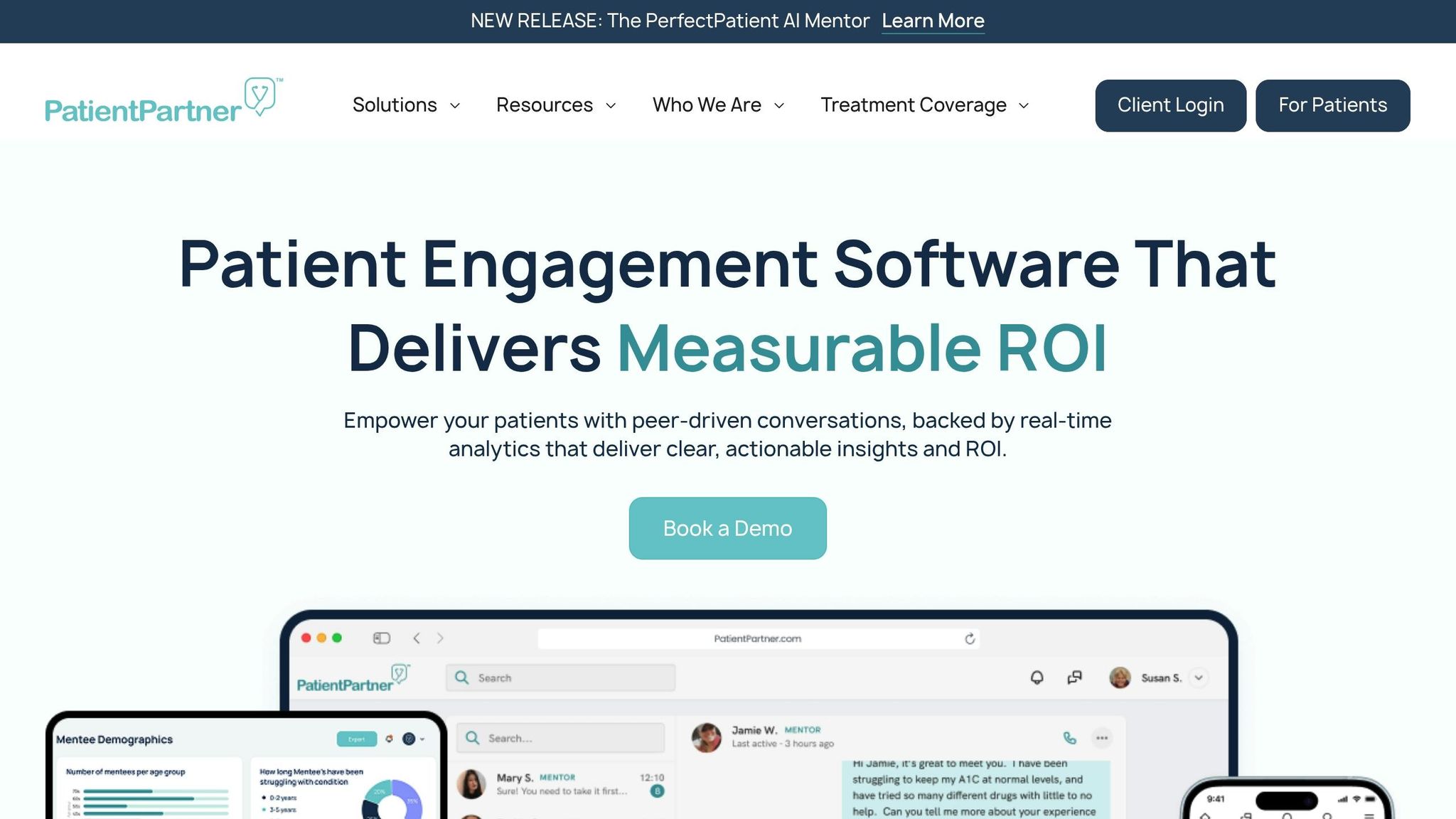
PatientPartner integrates patient engagement into everyday operations, achieving a 30% increase in treatment adoption and a 20% improvement in adherence within the first year.
Regulatory Compliance
PatientPartner ensures full compliance with HIPAA, SOC 2, ISO 27001, and GDPR standards. The platform prioritizes security with encryption, role-based access, and audit trails to safeguard every patient interaction. Automated oversight systems monitor mentor-patient conversations, maintaining strict privacy without manual intervention. Additionally, it generates verifiable data on patient engagement and adherence, supporting FDA post-market surveillance and real-world evidence collection. This reduces the administrative workload tied to compliance reporting.
Patient-Centric Capabilities
At its core, PatientPartner connects patients with mentors at critical moments when they are most open to treatment information. Its matching system creates personalized support pathways throughout the healthcare journey. Patients paired with mentors are 68% more likely to start their prescribed treatment and 90% more likely to feel confident about their decision. This mentorship leads to lasting adherence, with patients staying on treatment an average of 133.5 days longer. Overall, mentorship programs deliver a 29% improvement in adherence.
"Patient Partner is a unicorn in the industry, setting a new standard with their clear dedication to the mission of positively impacting patients' lives through innovation and compassionate support." – Melissa B., Sobi Pharmaceuticals
PatientPartner also tracks engagement metrics, enabling pharmaceutical companies to identify patients likely to stick with their treatments long-term. These insights support proactive interventions, aligning patient outcomes with organizational goals. This robust patient engagement framework complements the platform's advanced automation features.
Automation and AI
Using real-time analytics, PatientPartner provides insights that enhance engagement while maximizing ROI. Automated systems streamline patient-mentor matching, significantly reducing the operational challenges of traditional support programs while keeping the experience personal. By analyzing data, the platform uncovers patterns in treatment adoption barriers and adherence challenges, helping companies make informed decisions about product positioning and support strategies.
"We knew patient trust was shifting, but seeing just how dramatically patients now prefer peer-to-peer engagement over traditional methods is a game-changer for our upcoming strategies." – Sara W., Marketing Director | Rare Disease
This data-driven approach not only improves patient outcomes but also supports broader operational goals.
Environmental Features
PatientPartner's efficiencies extend to sustainability efforts. Better treatment adoption and adherence reduce the environmental impact tied to failed treatments and wasted medication. Real-time engagement data helps optimize medication distribution, cutting overproduction and waste - an advantage that can enhance ESG reporting. Additionally, the platform’s cloud-based design eliminates the need for on-site infrastructure, conserving resources further.
2. Other SaaS Platforms in Pharma
Pharma SaaS platforms are evolving to tackle both compliance and sustainability challenges. From enterprise resource planning systems to supply chain management tools, these solutions offer diverse functionality tailored to the pharmaceutical industry. While PatientPartner focuses on integrating patient engagement with compliance, other platforms address more specialized needs, helping companies navigate complex regulatory and environmental landscapes. Unlike all-in-one platforms like PatientPartner, these solutions often take varied approaches to blend compliance with sustainability goals.
Regulatory Compliance
Navigating the intricate web of regulations is a core focus for pharmaceutical SaaS platforms. Standards such as 21 CFR Part 11, EU Annex 11, GDPR, HIPAA, and ISO 13485 must be seamlessly incorporated into their workflows. Unlike generic software solutions, these platforms are designed to embed compliance into every aspect of their operation, making it a central feature rather than an afterthought. For example, Scilife provides validation packages that simplify compliance by offering pre-prepared documentation, reducing the workload for regulated companies.
General-purpose systems like SAP S/4 HANA, while excellent for financial tracking and SOX compliance, often require extensive customizations to meet the specific needs of the pharmaceutical sector. In contrast, purpose-built SaaS solutions cater directly to these requirements, offering built-in safeguards. Clear Service Level Agreements (SLAs) are essential in this context, detailing release schedules, validation support, and data management responsibilities to ensure alignment between providers and clients.
Modern platforms also leverage automation to enhance compliance. For instance, QPharma's Titanium® platform integrates compliance, training, quality management, and operational workflows within a secure cloud environment. Its AI-driven monitoring capabilities allow companies to remain audit-ready without relying heavily on manual processes.
Automation and AI
AI is becoming a cornerstone of pharmaceutical SaaS platforms, driving automation and improving regulatory readiness. Tools like Source Intelligence use AI for tasks such as document processing, supplier communication, and data extraction. These platforms not only streamline operations but also provide predictive monitoring and continuous security updates, helping organizations stay compliant without the need for major system overhauls.
For clinical trials, SaaS platforms offer features like automated compliance checks, user-friendly consent forms, efficient patient tracking, and advanced data analysis tools. In 2024, pharmaceutical companies led the drug discovery SaaS market with a 55% share, driven by their ability to address key challenges in patient recruitment, data management, and regulatory compliance.
The financial upside of optimizing SaaS tools is considerable. Companies typically manage around 275 SaaS applications, spending an average of $49 million annually. For instance, Biogen's former VP of IT Infrastructure set a goal to save $1 million on SaaS renewals and achieved it within the first year through effective management.
Environmental Features
Sustainability is another area where pharma SaaS platforms are making an impact, particularly in supply chain compliance and environmental reporting. Solutions like Source Intelligence automate Extended Producer Responsibility (EPR) reporting for packaging, Waste Electrical and Electronic Equipment (WEEE), and batteries across different jurisdictions.
These platforms centralize supply chain data, helping companies identify gaps in compliance with environmental regulations such as REACH and global PFAS restrictions. They also support responsible sourcing by flagging risks like deforestation and other environmental concerns. With their configurable designs, these tools allow pharmaceutical companies to scale their sustainability efforts by efficiently collecting and acting on Environmental, Social, and Governance (ESG) data.
Environmental compliance now extends beyond patient safety to include waste management, emissions tracking, and cleanroom contamination prevention, often monitored through ERP systems. As regulations evolve, centralized data systems are becoming critical for staying ahead of product-specific mandates and global restrictions.
Platforms like Assent take a proactive approach by embedding regulatory insights and automated guidance directly into their systems. This helps organizations anticipate changes, mitigate risks from raw materials to finished products, and address issues like component obsolescence by flagging potential problems early. Real-time dashboards powered by AI further enhance decision-making by pinpointing compliance gaps, streamlining operations, and supporting both regulatory and environmental objectives.
sbb-itb-8f61039
Advantages and Disadvantages
Selecting the right SaaS platform for pharmaceutical compliance and sustainability involves weighing the strengths and limitations of each option. Platforms like PatientPartner, which specialize in patient engagement, are tailored for strict regulatory adherence in patient interactions. On the other hand, systems designed for supply chain or operational management target different areas, each offering distinct benefits and trade-offs. Let’s break down how these platforms compare across key areas.
Compliance Strengths and Weaknesses
PatientPartner shines in patient interaction compliance, offering tools like encryption, role-based access, and detailed audit trails to safeguard patient data while staying compliant with regulations like HIPAA and GDPR. In contrast, supply chain compliance platforms focus on product-level regulations. These systems centralize supplier data and automate reporting for standards such as REACH, RoHS, and TSCA. While they provide excellent supply chain visibility, they often overlook the complexities of patient-facing compliance.
Sustainability Capabilities and Limitations
When it comes to environmental sustainability, supply chain platforms lead the way. They automate compliance with regulations such as Extended Producer Responsibility (EPR) and Waste Electrical and Electronic Equipment (WEEE), while also identifying risks like deforestation. Operational management systems add another layer by integrating real-time environmental monitoring, tracking emissions, and waste at facilities. However, patient engagement platforms like PatientPartner remain narrowly focused on regulatory compliance for patient interactions, with minimal features for sustainability initiatives.
Financial and Operational Considerations
The financial and operational impacts of these platforms vary significantly. For example, companies can save up to $1 million in software renewal costs within the first year by strategically managing SaaS platforms. Those with built-in compliance features reduce manual tasks like document control and audit preparation, lowering overall costs. However, even cloud-based solutions require upfront investments for setup, validation, and ongoing monitoring, which can be substantial.
AI and Automation Trade-offs
AI-powered automation is a game-changer for compliance and operational efficiency. Tasks like document processing, supplier communication, and data extraction can be automated, reducing manual workloads. Real-time dashboards driven by AI pinpoint compliance gaps, but their effectiveness hinges on high-quality training data and expert oversight. Continuous updates from regulatory experts are essential to ensure these systems remain accurate and reliable.
Scalability and Flexibility
Modern SaaS platforms are built for scalability, with automatic updates that help companies adapt to regulatory changes quickly. Configurable systems allow for rapid adjustments to product updates and new compliance requirements. However, the level of flexibility varies. Supply chain platforms excel in compliance management but may lack integration with broader operational workflows. Conversely, operational management systems are robust for internal processes but often provide limited supply chain visibility. Patient engagement platforms like PatientPartner focus on patient compliance but do not extend to supply chain or environmental monitoring. Balancing these trade-offs remains a challenge, especially when trying to align regulatory compliance with environmental goals.
| Platform Type | Key Advantages | Primary Disadvantages |
|---|---|---|
| Patient Engagement (PatientPartner) | Exceeds HIPAA, SOC 2, and ISO 27001 standards; offers automated compliance monitoring, end-to-end encryption, and proactive oversight. | Focused on patient interaction compliance with limited functionality for environmental sustainability. |
| Supply Chain Compliance | Automates environmental reporting (e.g., EPR, WEEE); centralizes supplier data; manages product-level regulations like REACH, RoHS, and TSCA. | Does not address patient-facing compliance and often requires extensive supplier engagement. |
| Operational Management | Integrates compliance with training, quality management, and operational workflows; provides real-time facility monitoring. | High implementation complexity and significant investments in change management and validation are required. |
| Generic ERP Systems | Strong financial tracking and established enterprise infrastructure. | Requires extensive pharmaceutical-specific customization and often lacks built-in compliance features, increasing costs. |
Conclusion
Choosing the right SaaS platform for your company is all about understanding your specific compliance and operational needs. With platforms addressing everything from patient engagement to supply chain management, it's crucial to pinpoint the areas where your organization requires the most support.
Some platforms take a focused approach, like PatientPartner, which prioritizes patient compliance with features such as end-to-end encryption, role-based access, and detailed audit trails. Its strength lies in regulatory adherence for patient data, rather than tackling broader environmental reporting needs.
On the other hand, supply chain compliance platforms are designed to handle environmental reporting for regulations like Extended Producer Responsibility (EPR) and Waste Electrical and Electronic Equipment (WEEE). They also ensure adherence to product-level standards, including REACH, RoHS, and TSCA. By centralizing supplier data and identifying compliance gaps, these platforms are perfect for companies aiming to enhance supply chain visibility and meet environmental goals.
For operational workflows, management platforms integrate compliance with training, quality control, and real-time performance tracking. They leverage automation, predictive monitoring, and continuous security updates to keep operations audit-ready and adaptable to changing regulations - all without the need for expensive system overhauls.
When evaluating SaaS platforms, consider key factors like cloud infrastructure, Software Development Lifecycle (SDLC) practices, incident management capabilities, and audit trail functionality. Ensure the platform supports critical standards such as ISO 13485, FDA requirements, and privacy laws like GDPR and HIPAA. Real-time reporting, version control, and well-defined Service Level Agreements (SLAs) that outline release timelines and validation support are also essential.
Cost is another important consideration. For example, one pharmaceutical executive managed to save $1 million in software renewals within a year, proving the financial benefits of strategic SaaS management.
Ultimately, combining compliance with sustainability is essential for maintaining operational efficiency. No single platform can solve every challenge, so the key is to identify your organization's most pressing needs. Whether it’s prioritizing patient engagement compliance with a platform like PatientPartner, improving supply chain environmental reporting, or streamlining operational workflows, look for solutions that are scalable, flexible, and capable of evolving with regulatory demands.
FAQs
How do SaaS platforms support pharmaceutical companies in balancing compliance with sustainability goals?
SaaS platforms have become essential for pharmaceutical companies striving to navigate strict regulatory compliance while also advancing sustainability efforts. These platforms streamline operations by centralizing data management and automating key processes, making it easier to track and report compliance metrics. This not only reduces administrative headaches but also ensures companies stay aligned with industry regulations.
On the sustainability front, SaaS solutions offer clear advantages. Cloud-based platforms eliminate the need for extensive physical infrastructure, which helps cut down on energy use and waste. They also improve supply chain management by optimizing resource allocation and reducing surplus inventory - steps that align with broader environmental goals.
Take PatientPartner, for example. This platform goes a step further by improving patient engagement and adherence through mentorship programs. Not only does this lead to better healthcare outcomes, but it also supports compliance and sustainability objectives, creating a win-win for both patients and the industry.
What key features should a SaaS platform offer to help pharmaceutical companies meet regulatory compliance and sustainability goals?
Pharmaceutical companies searching for SaaS platforms should focus on solutions that balance regulatory requirements with eco-conscious practices. Here are some key features to keep in mind:
- Comprehensive compliance tools: The platform should meet critical industry standards like HIPAA and FDA regulations, ensuring secure data storage and detailed audit trails for accountability.
- Sustainability-oriented features: Opt for platforms that reduce resource consumption, promote digital workflows to cut down on paper usage, and incorporate environmentally friendly IT practices.
- Adaptability for growth: Choose a platform that can evolve with changing regulatory demands and support future sustainability goals, ensuring it remains valuable over time.
By investing in platforms with these capabilities, pharmaceutical companies can align compliance efforts with environmental stewardship, creating positive impacts for both patients and the planet.
How do AI and automation in SaaS platforms improve compliance and efficiency in the pharmaceutical industry?
AI and automation are transforming SaaS platforms by making compliance management more efficient and reliable. These tools keep a constant eye on operations, ensuring they align with strict regulations like HIPAA while safeguarding sensitive patient data. Beyond compliance, automation boosts efficiency by taking over repetitive tasks, minimizing human errors, and providing real-time tracking of essential processes.
Take PatientPartner, for example. It uses automation to guarantee that every interaction meets compliance standards and remains secure. This not only helps pharmaceutical companies build trust but also supports improved outcomes for patients.