


Interactive Patient Education: Key Benefits for Pharma
Key Takeaways
Author


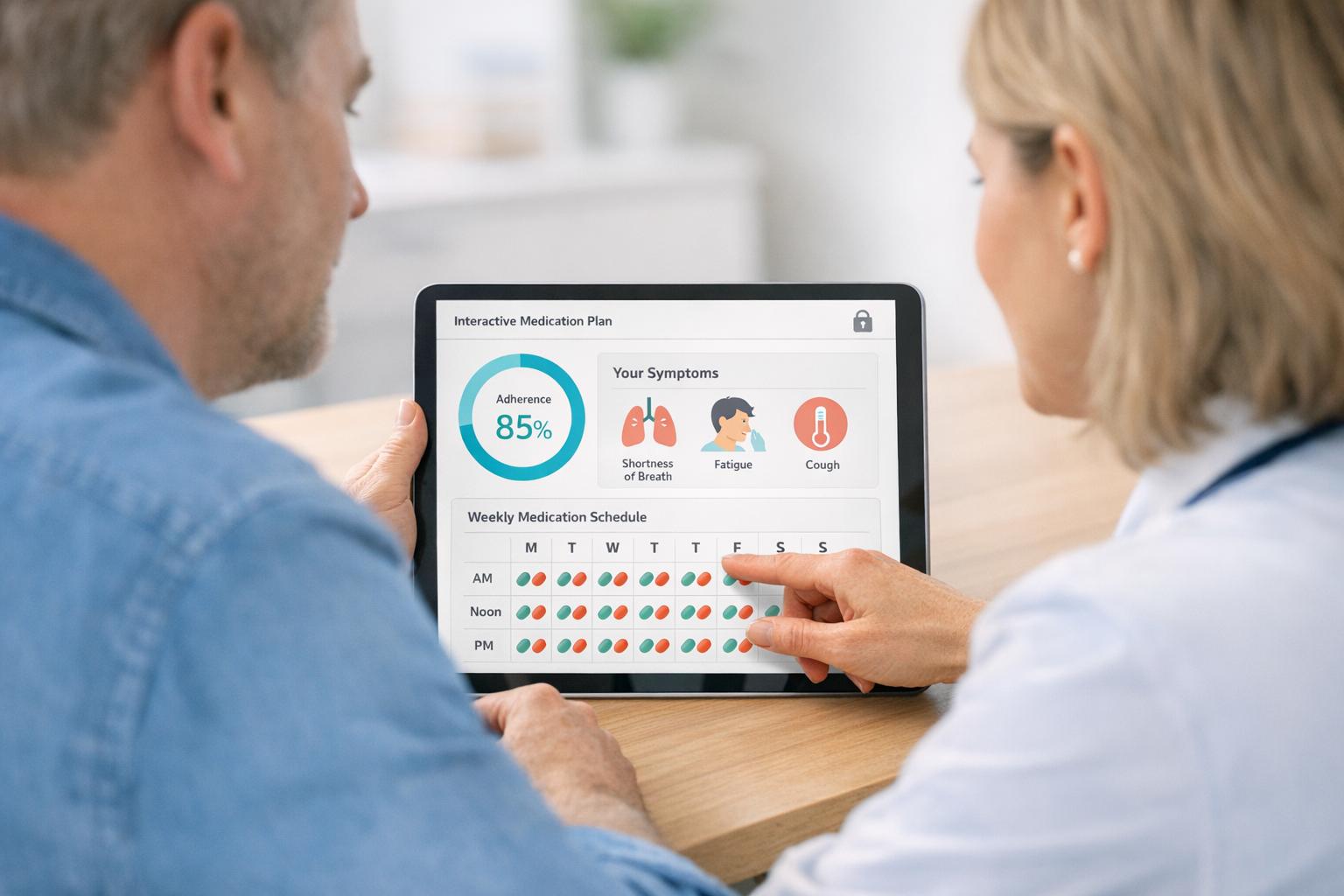
Interactive patient education is changing how people understand and manage their health. Instead of static materials, digital tools and patient services now engage patients with features like real-time feedback, 3D visuals, and mentorship programs. These tools help patients better understand treatments, improve medication adherence, and achieve better health outcomes - all while reducing healthcare costs.
Here’s why this matters for pharmaceutical companies:

Interactive Patient Education Benefits: Key Statistics and Outcomes
Benefits of Interactive Patient Education for Pharmaceutical Companies
Better Patient Knowledge and Satisfaction
Interactive tools like 3D animations, videos, and augmented reality make it easier for patients to grasp complex medical concepts. These tools engage both visual and auditory learners, breaking down barriers for individuals with low health literacy or language challenges. Features like chatbots and teach-back methods also ensure patients truly understand the information, allowing for real-time clarification of misconceptions. This kind of engagement doesn’t just last during the appointment - it extends well beyond it. When patients understand their treatment better, they’re more likely to stick with it.
Higher Medication Adherence and Treatment Compliance
The connection between knowledge and adherence is clear: when patients understand their treatment, they’re more likely to follow it. Interactive education methods have proven especially effective here. A systematic review revealed that 58.6% of interactive eHealth interventions (17 out of 29 studies) led to better medication adherence. Programs that include two-way communication, like bidirectional messaging or adherence reports, tend to perform better than those relying solely on one-way reminders.
Clinical trials back these findings. For example, stroke patients using an AI-based app that verified medication intake achieved a 100% adherence rate, compared to just 50% in a control group. Similarly, type 2 diabetes patients using a voice-based conversational AI saw their insulin adherence improve by 32.7% compared to standard care.
Bart P H Pouls from the Department of Rheumatology Research at Sint Maartenskliniek stated, "Overall, this review supports the hypothesis that interactive eHealth interventions can be effective in improving medication adherence".
Better Clinical Outcomes and Cost Savings
When patients stick to their treatment plans, the benefits go beyond adherence - they lead to better health outcomes and cost reductions. Therapeutic Patient Education (TPE) interventions have demonstrated strong results, showing a 0.73 standardized mean difference (SMD) in adherence and a 0.48 SMD in biological outcomes. Patients who understand their conditions and follow their medication plans are less likely to face expensive complications that require intensive care.
The financial impact of non-adherence is staggering, costing the U.S. healthcare system between $100 billion and $300 billion annually. Digital solutions can help mitigate these costs. For instance, a study by van de Hei and colleagues showed that digital inhaler-based tools improved adherence and inhaler technique for asthma patients, reducing the need for costly biologic treatments.
sbb-itb-8f61039
How Real-Time Mentorship Supports Patient Engagement
Personalized Patient Support
Real-time mentorship connects patients with mentors who offer tailored guidance throughout their healthcare journey. This approach fosters open, two-way conversations that help address both practical challenges and emotional barriers. What makes this method especially effective is that peer mentors often rely on behavioral and cognitive coping strategies more frequently than clinical specialists.
Through tools like phone calls, SMS, or app-based messaging, interactive tele-feedback enhances medication management and encourages greater involvement in treatment plans. For example, platforms like PatientPartner pair patients with mentors who have faced similar health challenges, offering support beyond the walls of clinical environments.
"Intervention strategies that improve patients' treatment involvement and their medication management skills are most promising and should be considered for implementation in practice." - Bart P H Pouls, PharmD
This mentorship model not only benefits patients on an individual level but also provides pharmaceutical companies with valuable insights into patient engagement.
Data-Driven Insights for Pharmaceutical Companies
Mentorship platforms offer pharmaceutical companies a window into patient sentiment and engagement trends, helping them refine strategies to support new treatment adoption. These platforms monitor two types of engagement: "Little e" engagement, which includes behavioral metrics like app log-ins, and "Big E" engagement, which reflects meaningful health outcomes such as improved medication adherence. Notably, 58.3% of studies show a positive link between higher engagement with digital health tools and better adherence outcomes.
However, user engagement tends to drop over time in 77% of cases. Real-time mentorship counters this by using data to trigger personalized outreach through an AI mentor when patient interaction wanes. Machine learning models can even identify patterns of non-adherence, enabling proactive interventions based on dosing behaviors. By shedding light on patient behavior, mentorship platforms empower pharmaceutical companies to adjust their support strategies, driving better treatment adoption and sustained adherence over the long term.
Compliance Requirements for Interactive Patient Education
Key Compliance Frameworks
Pharmaceutical companies using interactive patient education tools must adhere to various regulatory frameworks to protect patient data and maintain trust. In the U.S., HIPAA (Health Insurance Portability and Accountability Act) ensures the protection of patient health information, while 21 CFR Part 11 sets standards for electronic records and signatures, making them as reliable as traditional paper documents. Additionally, 21 CFR Parts 50 and 56 govern informed consent and Institutional Review Boards for FDA-regulated clinical trials.
In the European Union, the GDPR (General Data Protection Regulation) outlines strict data protection rules whenever patient data is collected or processed. For digital health tools classified as medical device software, compliance with the Medical Device Regulation (MDR 2017/745) is required. For instance, smartphone applications like Floodlight™ MS and Konectom™, which monitor neurological function in Multiple Sclerosis patients, are categorized as Class IIa Medical Device Software under EU MDR. Their developers collaborated with the European Medicines Agency's Innovation Task Force to address software validation and regulatory equivalence.
"Understandable means that the information presented to subjects is in a language and at a level the subject can comprehend, including an explanation of scientific and medical terms." - U.S. Food and Drug Administration
To meet compliance standards, companies should adopt risk-based identity verification approaches, such as using government-issued ID checks, biometric authentication, or security questions to confirm user identities. They can also request formal certifications from software vendors, ensuring systems align with regulations like 21 CFR Part 11. While these measures establish a solid regulatory foundation, the challenge lies in maintaining patient engagement alongside these safeguards.
Maintaining Engagement While Protecting Privacy
Beyond regulatory compliance, interactive platforms must earn and retain patient trust. Striking a balance between patient engagement strategies and privacy is crucial, especially as concerns about data ownership - such as fears of information being shared with insurers - can discourage adoption. Clear communication about how data is safeguarded and utilized is a key step in building trust.
Offering flexible options can help address these concerns. For example, allowing patients to choose between digital and paper-based education ensures inclusivity for those with limited digital literacy or physical challenges. For healthcare professional (HCP) portals, simplifying credential verification while clearly marking content as "intended for HCPs only" can reduce barriers without compromising compliance with promotional regulations. These strategies help maintain accessibility while adhering to privacy standards.
Digital platforms must also maintain detailed audit trails, capturing the date and time of patient consents and educational milestones for regulatory inspections. Enhanced verification methods, such as AI-driven identity confirmation, can further improve compliance and outcomes. These comprehensive audit systems not only meet regulatory demands but also strengthen the credibility of digital tools in patient care.
How to use interactive video for patient education?
Conclusion
Interactive patient education has shown measurable benefits, significantly improving health knowledge (SMD 1.22), treatment adherence (SMD 0.73), and clinical outcomes (SMD 0.48). These improvements foster a more informed and engaged patient population, which directly contributes to better outcomes and higher satisfaction - key priorities as the healthcare industry shifts toward value-based care.
The move from a "paternalistic" to a "collaborative" clinical model empowers patients to take an active role in their health. When patients fully understand their treatment plans and feel supported in managing their conditions, adherence improves, and clinical results follow suit. This evolving dynamic presents a major opportunity for pharmaceutical companies to play a pivotal role in supporting patient success.
"Incorporating patients' perspectives and insights into the medicines development process results in better health outcomes and benefits for all involved stakeholders." - Maria Cavaller-Bellaubi, PharmD,
To support this shift, PatientPartner offers real-time mentorship by connecting patients with experienced guides. This peer-led approach enhances adherence and empowers patients to make informed decisions. Research shows that interactive interventions - especially those providing personalized feedback and skill-building - are highly effective in boosting both motivation and the ability to stick to treatment plans. By leveraging compliance-ready infrastructure and data-driven insights, solutions like these allow pharmaceutical companies to scale patient support without losing the personal touch that drives engagement.
FAQs
How is ROI measured for interactive patient education?
Measuring the return on investment (ROI) for interactive patient education involves analyzing its cost-effectiveness and financial impact on health outcomes. Common methods include cost-utility analysis, which calculates metrics like the cost per quality-adjusted life-year (QALY) gained, and expected net present value (ENPV) assessments.
These methods connect improvements in areas such as patient adherence, reduced protocol amendments, and higher retention rates to measurable financial benefits. By doing so, pharmaceutical companies can better understand the monetary value of their patient engagement efforts.
What types of patient data can pharma use without violating HIPAA or GDPR?
Pharmaceutical companies have access to various data sources, including health records, survey responses, and digital engagement metrics, to improve patient engagement and adherence. However, they must carefully navigate regulations like HIPAA and GDPR to ensure compliance. This means avoiding the disclosure of Protected Health Information (PHI) without explicit patient consent. One way to stay compliant is by ensuring that data is either de-identified or aggregated, which reduces the risk of revealing sensitive information while still providing valuable insights.
How do you keep patients engaged after the first few weeks?
To keep patients engaged beyond the first few weeks, using interactive digital tools can make a big difference. Things like educational videos, personalized reminders, and mobile apps help maintain adherence and encourage long-term participation. Incorporating real-time mentorship and customized content adds another layer of support, making it easier to sustain engagement and achieve better outcomes over time.
Related Blog Posts
- How Real-Time Mentorship Drives Patient Adoption in Pharma
- Transforming Patient Support: Innovative Technologies for Pharma Leaders
- The Future of Patient Engagement: Trends Every Pharma Leader Should Know
- How Real-Time Patient Support Transforms Patient Engagement
{"@context":"https://schema.org","@type":"FAQPage","mainEntity":[{"@type":"Question","name":"How is ROI measured for interactive patient education?","acceptedAnswer":{"@type":"Answer","text":"<p>Measuring the return on investment (ROI) for interactive patient education involves analyzing its cost-effectiveness and financial impact on health outcomes. Common methods include <strong>cost-utility analysis</strong>, which calculates metrics like the cost per quality-adjusted life-year (QALY) gained, and <strong>expected net present value (ENPV)</strong> assessments.</p> <p>These methods connect improvements in areas such as patient adherence, reduced protocol amendments, and higher retention rates to measurable financial benefits. By doing so, pharmaceutical companies can better understand the monetary value of their patient engagement efforts.</p>"}},{"@type":"Question","name":"What types of patient data can pharma use without violating HIPAA or GDPR?","acceptedAnswer":{"@type":"Answer","text":"<p>Pharmaceutical companies have access to various data sources, including health records, survey responses, and digital engagement metrics, to improve patient engagement and adherence. However, they must carefully navigate regulations like HIPAA and GDPR to ensure compliance. This means avoiding the disclosure of Protected Health Information (PHI) without explicit patient consent. One way to stay compliant is by ensuring that data is either de-identified or aggregated, which reduces the risk of revealing sensitive information while still providing valuable insights.</p>"}},{"@type":"Question","name":"How do you keep patients engaged after the first few weeks?","acceptedAnswer":{"@type":"Answer","text":"<p>To keep patients engaged beyond the first few weeks, using interactive digital tools can make a big difference. Things like <strong>educational videos</strong>, <strong>personalized reminders</strong>, and <strong>mobile apps</strong> help maintain adherence and encourage long-term participation. Incorporating real-time mentorship and customized content adds another layer of support, making it easier to sustain engagement and achieve better outcomes over time.</p>"}}]}