


How Motivational Psychology Drives Patient Adherence
Key Takeaways
Author


Motivational psychology helps solve a major healthcare problem: patients not sticking to their treatment plans. Non-adherence leads to poor health outcomes, avoidable deaths, and $500 billion in annual U.S. healthcare costs. Here's how it works:
- Why Patients Struggle: Motivation drops over time, complex regimens overwhelm, and financial barriers persist. For example, 54% of older adults manage four or more prescriptions, and 25% cite high costs as a reason for skipping medication.
- Psychological Factors: Low self-efficacy and limited health literacy hinder adherence. Personality traits also play a role, with "Thinking" types 18% less likely to follow plans than "Feeling" types.
- Motivational Tools: Strategies like goal-setting, self-monitoring, and peer mentorship improve adherence. For instance, PatientPartner's mentorship program boosts treatment initiation by 68% and adherence by 29%.

Patient Non-Adherence Impact and Solutions: Key Statistics
The Patient Adherence Problem: Challenges and Impact
What Prevents Patients from Following Treatment Plans
Adherence to treatment plans often falters due to more than just forgetfulness. One of the biggest challenges is a drop in motivation, especially for those dealing with chronic conditions that require long-term care. While patients may start off committed, the demands of daily life can erode that initial resolve over time.
Psychological factors play a major role as well. For instance, patients with low self-efficacy - those who doubt their ability to manage their condition - are less likely to stick to prescribed plans. Similarly, limited health literacy can leave patients unsure about why their medications or lifestyle changes are important. Add to this the increasing complexity of healthcare. Many patients juggle multiple medications with different schedules, creating a mental load that can feel overwhelming. For example, 54% of older adults take four or more prescription drugs, making daily medication management a significant challenge.
Practical obstacles only add to these struggles. Fast-paced, stressful lifestyles often disrupt regular health routines. Financial constraints are another hurdle - over 25% of people cite high prescription costs as a key reason for non-adherence. Even digital health tools, designed to help, can backfire. A study on mHealth apps found that 44% of inactive users abandoned the tool early on, often due to frustrating initial setups.
Personality traits also influence adherence, sometimes in surprising ways. Research by Sun and Shaw found that individuals with a "Thinking" personality type were 18.15% less likely to adhere naturally compared to those with a "Feeling" type. Sun explained:
People with a thinking personality type prefer applying analytical and logical principles to make objective decisions... whereas people with a feeling personality type may opt to make decisions by referencing their own and others' values.
This highlights the limitations of one-size-fits-all solutions. To improve adherence, strategies need to address both individual motivations and systemic barriers. Without such efforts, these challenges not only harm health outcomes but also lead to significant economic consequences.
The Cost of Non-Adherence
The impact of non-adherence is staggering, affecting both lives and the healthcare system. Over 100,000 Americans die each year because they don't take their medications as prescribed. If this were classified as a distinct cause of death, it would rank as the 7th leading cause in the U.S.. The National Council on Patient Information and Education has even referred to this issue as:
America's other drug problem.
The financial toll is equally severe. Medication non-adherence and related issues cost the U.S. healthcare system more than $500 billion annually. These costs arise from preventable complications, emergency visits, and hospital readmissions. Non-adherence contributes to up to 10% of all hospital admissions, and patients who fail to follow their treatment plans are twice as likely to be readmitted within a month of discharge.
Certain conditions highlight the consequences even more starkly. For example, about 50% of U.S. adults with high blood pressure don't take their medications as directed, significantly increasing their risk of strokes and heart attacks. Less than 60% of patients stick to their cholesterol-lowering statins, and over 20% of women with breast cancer fail to follow prescribed treatments. The stakes are especially high for patients managing both diabetes and cardiovascular disease - non-adherence can shorten their life expectancy by approximately 12 years.
These statistics reflect real lives impacted by preventable health declines. For pharmaceutical and med-tech companies, the message is clear: even the best treatments are ineffective if patients don't use them consistently. Addressing adherence isn't just a healthcare challenge - it’s a human one.
sbb-itb-8f61039
Enhancing motivation and adherence in health contexts talks
Applying Motivational Psychology in mHealth Apps
Motivational psychology helps mHealth apps address challenges like low motivation, limited health literacy, and complex healthcare regimens by focusing on core psychological needs.
Using Self-Determination Theory to Empower Patients
Self-Determination Theory (SDT) highlights three key psychological needs - autonomy, competence, and relatedness - to improve treatment adherence and encourage long-term behavior change. By addressing these needs, mHealth apps can shift from being simple reminders to becoming active partners in patient care. For example:
- Fostering autonomy: Apps can create a private, judgment-free space where users feel safe exploring their health concerns. Features like self-monitoring tools and personalized feedback empower patients to take control of their care.
- Building relatedness: Social networking features and support groups reduce feelings of isolation, offering a sense of community and shared experience.
As Federico Diano, Luigia Simona Sica, and Michela Ponticorvo explain:
"Emotional help assistants can provide support to help people develop their coping and emotional regulation skills, promoting autonomy and self-efficacy".
Interestingly, while many mHealth apps lose users after just 5.5 days, mindfulness-based apps that integrate SDT principles often keep users engaged for more than 15 days. Adding structured goal-setting and timely nudges further helps patients turn motivation into action.
Goal-Setting and Nudge Theories in Digital Tools
Goal-setting gives patients clear objectives, while nudges help bridge the gap between their intentions and actions. Research shows these methods boost both app engagement and positive health behaviors. For instance:
- Users with physical activity maintenance goals tend to use their app an average of 2.176 more days.
- Those aiming for improvement-oriented goals log about 3.258 additional activities.
Using SMART goals (Specific, Measurable, Achievable, Relevant, Time-bound) enhances a sense of accomplishment and confidence.
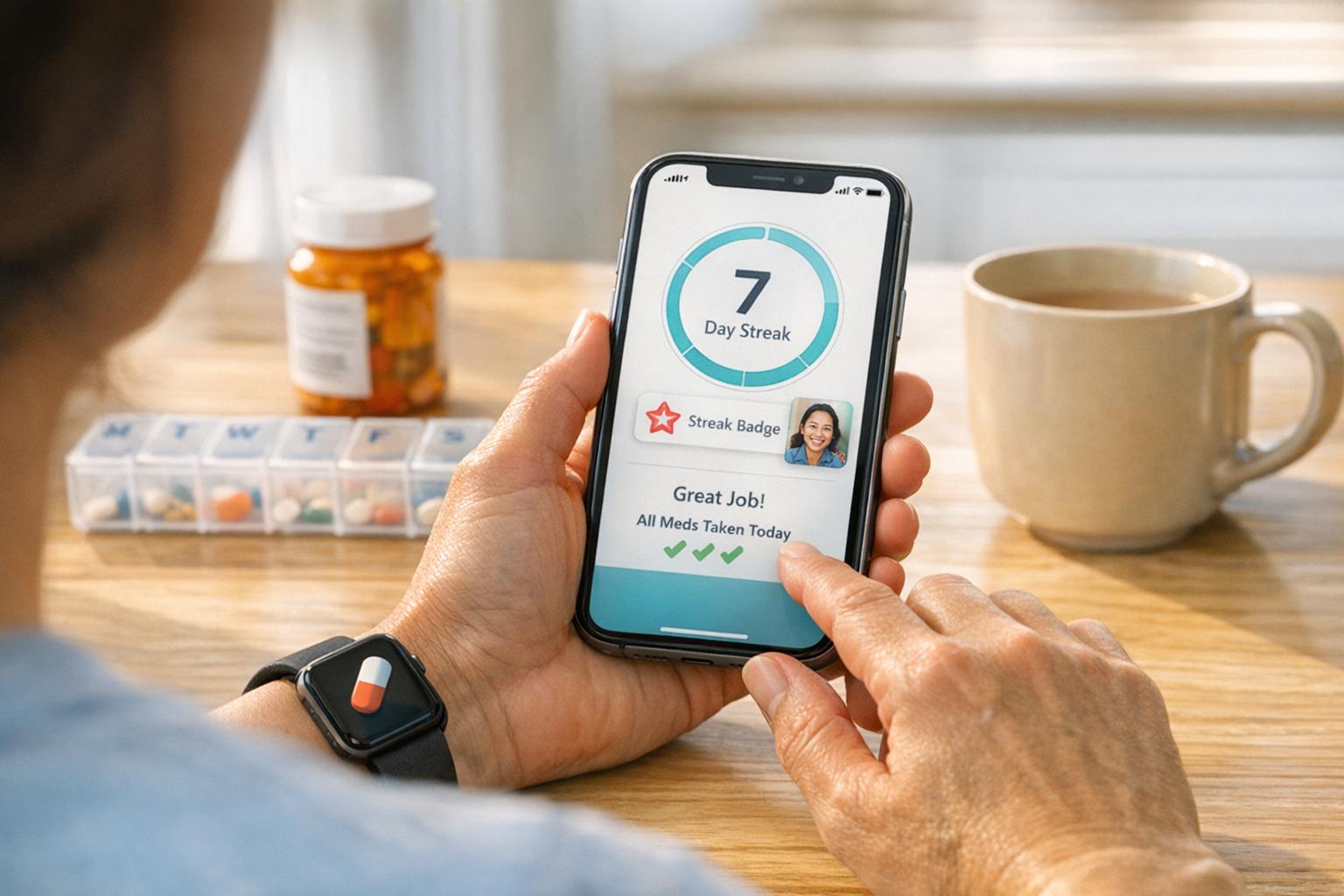
In the Fogg Behavior Model, nudges act as triggers, sparking behavior when motivation, ability, and prompts align. Tools like visual progress trackers - horizontal bars or color-coded indicators - provide timely feedback, keeping users on track. Gamification and personalized support further amplify these effects.
Gamification and Real-Time Support
Gamification addresses motivational barriers by adding game-like elements such as points, leaderboards, and rewards. These features tap into users' intrinsic motivation by supporting their sense of competence, autonomy, and relatedness. For example, Duolingo’s use of gamified mechanics has helped it retain over 21 million daily active users. In healthcare, gamification can improve understanding of medication and foster healthy competition and collaboration.
Real-world programs also highlight these strategies' potential. In April 2023, the Government of South Australia launched the "Incentive to Quit" trial, investing Aus $500,000 (US $325,000) in supermarket vouchers for participants who achieved smoking cessation milestones. This initiative aims to cut into the annual Aus $1.5 billion (US $975 million) public health costs related to smoking.
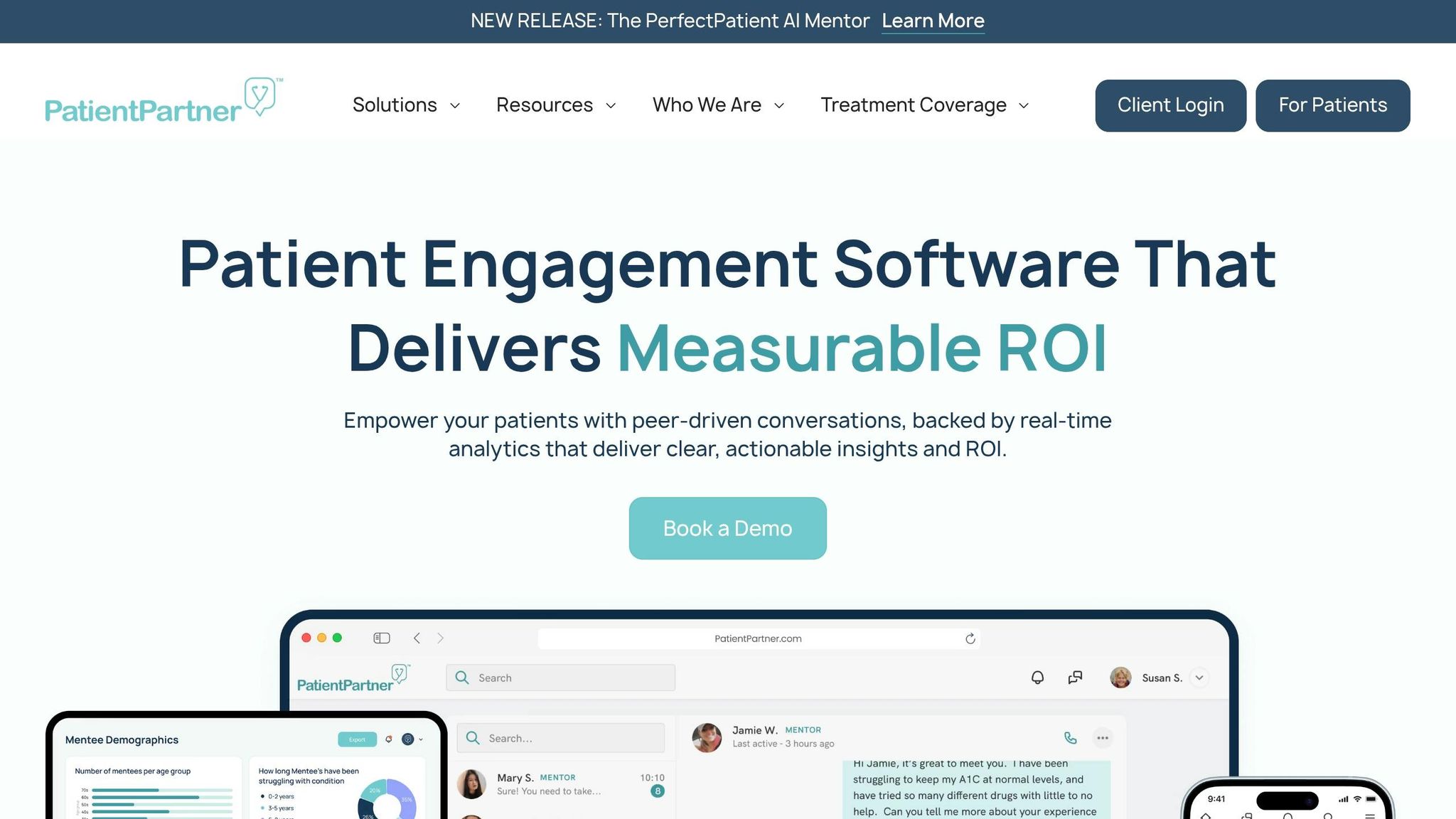
Real-time mentorship adds another layer of support. Platforms like PatientPartner combine the scalability of mHealth apps with human guidance by connecting patients with mentors who offer personalized advice and encouragement. This human element strengthens relatedness and provides immediate, situation-specific help that automated tools alone can’t deliver. When mHealth apps incorporate features like tailored incentives, intuitive designs, and alignment with individual goals, they transform adherence into an engaging and sustainable process, paving the way for long-term success.
Case Study: How PatientPartner Improves Patient Adherence
Real-Time Mentorship at PatientPartner
PatientPartner tackles psychological obstacles by connecting patients with mentors who have firsthand experience with similar healthcare challenges. This peer-to-peer model aligns with Self-Determination Theory, emphasizing the importance of relatedness, autonomy, and competence. Patients feel understood and supported by mentors who share relatable experiences, helping them make informed decisions and offering practical advice. Whether it's managing side effects, staying consistent with medications, or pushing through tough moments, mentors provide real-life strategies that make a difference.
The platform ensures mentorship is available at the right time, turning uncertainty into action. Brad A. from Mainstay Medical highlights this impact:
Patient Partner has been influential in helping patients understand the benefits of our product, offering personalized guidance rooted in real-life experience.
This personal connection fills the emotional gaps that automated tools and educational materials often miss. By fostering trust and showing patients they’re not alone, PatientPartner sets the stage for more effective engagement strategies.
Using Data to Improve Patient Engagement
PatientPartner combines the power of human mentorship with data analytics to refine its approach to patient adherence. The platform monitors patient sentiment and behavior in real time, using automated systems to ensure every interaction remains compliant with HIPAA, SOC 2, and ISO 27001 standards. These insights help identify patients who may be struggling, enabling timely interventions. For example, if data shows that adherence typically drops around the third week, mentors can proactively reach out during this crucial period to provide personalized support.
This feedback loop not only strengthens the mentorship process but also ensures interventions are targeted and effective, leading to measurable improvements in adherence.
Measured Results with Patient-Centered Solutions
By integrating real-time mentorship with data-driven strategies, PatientPartner achieves impressive outcomes. Patients who engage with mentors are 68% more likely to start treatment and show 29% better adherence, staying on therapy an average of 133.5 days longer. Additionally, 90% of these patients report feeling more confident about continuing their treatment.
For pharmaceutical and med-tech companies, these patient-level successes translate into broader business advantages. Companies using PatientPartner report a 30% increase in treatment adoption and a 20% improvement in first-year adherence rates. The platform integrates seamlessly into existing workflows within four months, delivering results quickly. Melissa B. from Sobi Pharmaceuticals shares:
Patient Partner is a unicorn in the industry, setting a new standard with their clear dedication to the mission of positively impacting patients' lives through innovation and compassionate support.
These results underscore how embedding motivational psychology and genuine human connections into digital health platforms creates lasting improvements in patient adherence, making it more sustainable over time.
Conclusion: Motivational Psychology for Long-Term Adherence
Key Takeaways for Pharmaceutical Leaders
Motivational psychology plays a central role in supporting patients effectively. While 87% of patients have experimented with mHealth apps, many stop using tools that aren't personalized or theory-driven. The most effective solutions are built on solid theoretical frameworks like Self-Determination Theory, the Information-Motivation-Behavioral model, and the Fogg Behavior Model, ensuring they encourage consistent engagement.
Pharmaceutical leaders should focus on segmenting their audiences based on psychological traits. For instance, research shows that patients with "feeling" personality types adhere to treatments 18.15% more effectively when exposed to emotionally resonant messages. On the other hand, "thinking" types see a 27.34% improvement when presented with logical arguments and regular reminders. Combining these approaches with peer mentorship and real-time feedback creates an environment where patients feel valued, supported, and motivated to stay on their treatment plans.
Future of Patient Engagement with Digital Tools
The healthcare landscape is steadily moving toward evidence-based, user-centered platforms that align closely with clinical care. Modern digital tools now integrate patient-generated data with Electronic Health Records, enabling providers to monitor progress and make adjustments in real time. This shift from passive information delivery to active, personalized support underscores the importance of motivational psychology in patient engagement. It’s a significant change in how pharmaceutical and med-tech companies approach long-term adherence.
A great example of this transformation is PatientPartner, which combines human mentorship with advanced data analytics to address emotional and psychological barriers. The results speak for themselves: patients stay on therapy an average of 133.5 days longer, and companies experience a 30% boost in treatment adoption rates. As digital health continues to evolve, platforms that blend human connection with technological innovation will become the benchmark for improving adherence and achieving better patient outcomes.
FAQs
How do you personalize adherence support for different personality types?
Personalizing adherence support means adjusting strategies to fit a person's unique personality traits, including openness, conscientiousness, extraversion, agreeableness, and neuroticism. For instance, extroverts often thrive with peer support, while those who are more conscientious might respond better to structured reminders and schedules. Tools like PatientPartner take this a step further by pairing patients with mentors whose guidance aligns with their personality. This approach helps boost motivation, adherence to treatment plans, and overall health outcomes.
Which mHealth features best improve adherence without annoying patients?
The most effective mHealth features for boosting medication adherence are those that provide personalized support while fitting naturally into everyday routines. Tools like in-app refill ordering and medication tracking simplify the process, making it more convenient without being disruptive.
Apps such as PatientPartner take this a step further by offering real-time mentorship tailored to each user's specific needs. This kind of personalized guidance helps build motivation and provides ongoing support. Together, these features create a user-friendly experience that promotes consistent adherence without adding unnecessary stress.
How can mentorship be added to an app while staying HIPAA compliant?
To align mentorship features in an app with HIPAA requirements, it's crucial to prioritize data privacy and security. Start by implementing encrypted communication to safeguard sensitive exchanges, ensuring that data remains protected during transmission. Use secure data transmission protocols to prevent unauthorized access, and establish role-based access controls to limit data access only to authorized individuals.
Additionally, stay updated by regularly reviewing HIPAA guidelines and conducting security audits to identify and address potential vulnerabilities. Adopting compliant data handling practices is key to protecting patient information while enabling safe and secure real-time mentorship within the app.