


Patient Mentorship vs. Traditional Adherence Models

Key Takeaways
Author


Patient adherence is a major healthcare challenge, with 50% of chronic condition patients not following treatment plans. This issue leads to 125,000 preventable deaths annually in the U.S., costs $100–$300 billion, and causes 50% of treatment failures and 25% of hospital admissions. Traditional adherence models focus on education, reminders, and monitoring but often fail to address individual barriers or provide continuous support.
Patient mentorship offers a peer-to-peer approach where mentors with similar health experiences guide patients, improving adherence by 29% and boosting confidence by 90%. Platforms like PatientPartner connect patients with mentors, providing real-time, personalized guidance that extends beyond clinical interactions. This approach has shown measurable success: patients stay on therapy longer and are more likely to adopt treatments.
| Feature | Traditional Models | Patient Mentorship |
|---|---|---|
| Relationship | Formal, expert-to-patient | Peer-based, shared experiences |
| Focus | Task-oriented | Emotional and practical support |
| Interaction | Scheduled | On-demand |
| Personalization | Standardized | Tailored advice |
| Patient Confidence | Baseline | 90% increase |
| Adherence Improvement | Limited | 29% higher |
Patient mentorship bridges gaps left by older methods, offering a scalable, secure, and patient-focused way to improve outcomes and reduce costs.

Patient Mentorship vs Traditional Adherence Models Comparison
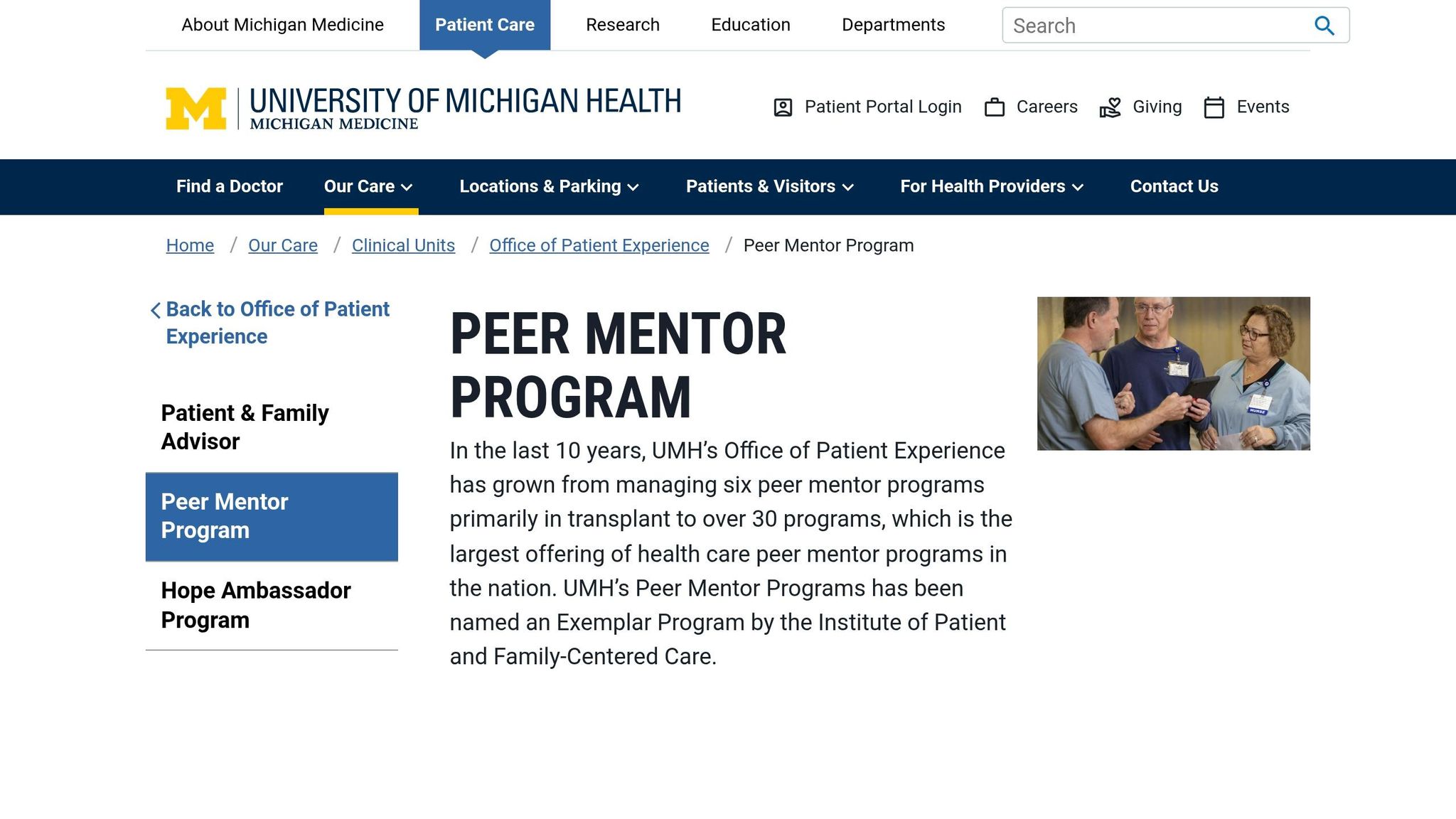
Michigan Medicine Peer Mentor Program
sbb-itb-8f61039
What Are Traditional Adherence Models?
Traditional adherence models focus on how well patients stick to the instructions provided by healthcare professionals (HCPs) regarding medication timing, dosage, and frequency. According to the World Health Organization, adherence refers to "the extent to which a person's behavior - taking medication, following a diet and/or executing lifestyle changes - corresponds with agreed recommendations from a HCP".
Core Components of Traditional Models
These models rely on four main interventions to encourage adherence:
- Patient education: Provides essential information about the consequences of diseases and the importance of treatments. The goal is to address intentional non-adherence by improving understanding.
- HCP counseling: Involves direct communication between healthcare providers and patients to explain treatment plans and answer questions.
- Reminder tools: Includes practical aids like pill organizers and automated text messages to combat forgetfulness. This is critical, as 62% of adults with chronic illnesses admit to missing doses.
- Clinical monitoring: Uses indirect methods such as pill counts, self-reports, and electronic tracking to assess adherence behavior.
These strategies aim to build trust and improve the relationship between patients and their providers. However, their success often depends on the quality of communication. For example, patients treated by physicians with poor communication skills are almost 20% more likely to be non-adherent compared to those treated by effective communicators.
Limitations of Traditional Approaches
While traditional models have been widely adopted, they face major challenges when it comes to offering personalized, real-time support. Generic solutions often overlook individual patient barriers, such as fear of needles (trypanophobia) or difficulty swallowing pills (dysphagia). Additionally, limited resources in healthcare systems make it difficult to provide the frequent, hands-on engagement many patients require.
Another significant issue is the static nature of communication. Follow-ups are typically sporadic, leaving patients without consistent guidance between appointments. For instance, 68% of patients discharged from hospitals feel that a simple follow-up call would have improved their adherence. Monitoring methods also show inconsistencies - adherence rates range from 44% when electronically tracked to 77% when self-reported, illustrating potential biases in measurement. Moreover, 21% of recently discharged patients report difficulty understanding their prescriptions, further exposing gaps in communication.
The shortcomings of these traditional, one-size-fits-all approaches highlight the need for more dynamic and personalized solutions. This creates an opportunity to explore innovative mentorship models that offer continuous, tailored support for patients. Research into mentorship’s impact on patient decision making shows how these models can bridge the gaps left by traditional care.
What Is Patient Mentorship?
Patient mentorship is a one-on-one relationship where a mentor, who has firsthand experience with a particular healthcare challenge, provides guidance to another patient. It goes beyond standard education or occasional check-ins by creating a supportive, ongoing coaching relationship. This approach helps patients feel more empowered and capable as they navigate their treatment journey.
The impact of mentorship is striking: patients with mentors are 68% more likely to start treatment, show a 29% improvement in adherence, and report a 90% increase in confidence when making healthcare decisions.
How Patient Mentorship Works
Patient mentorship platforms connect patients with mentors who have faced similar health challenges. Matches are often based on factors like specific conditions, treatment types, or even time zones to ensure compatibility and comfort.
What sets mentorship apart is its immediacy. Instead of waiting weeks between appointments, patients can access real-time support when they need it most. Modern platforms use tools like AI for precise matching and automated systems to handle administrative tasks. This technology allows for the creation of an AI mentor that combines empathy with data-driven insights. These platforms also track key metrics - such as therapy duration and adherence rates - while maintaining strict compliance with standards like HIPAA, SOC 2, and ISO 27001. These features ensure mentorship programs are both effective and secure, offering clear insights into their return on investment.
This real-time, data-driven approach highlights how mentorship can significantly improve treatment outcomes.
PatientPartner's Approach to Mentorship
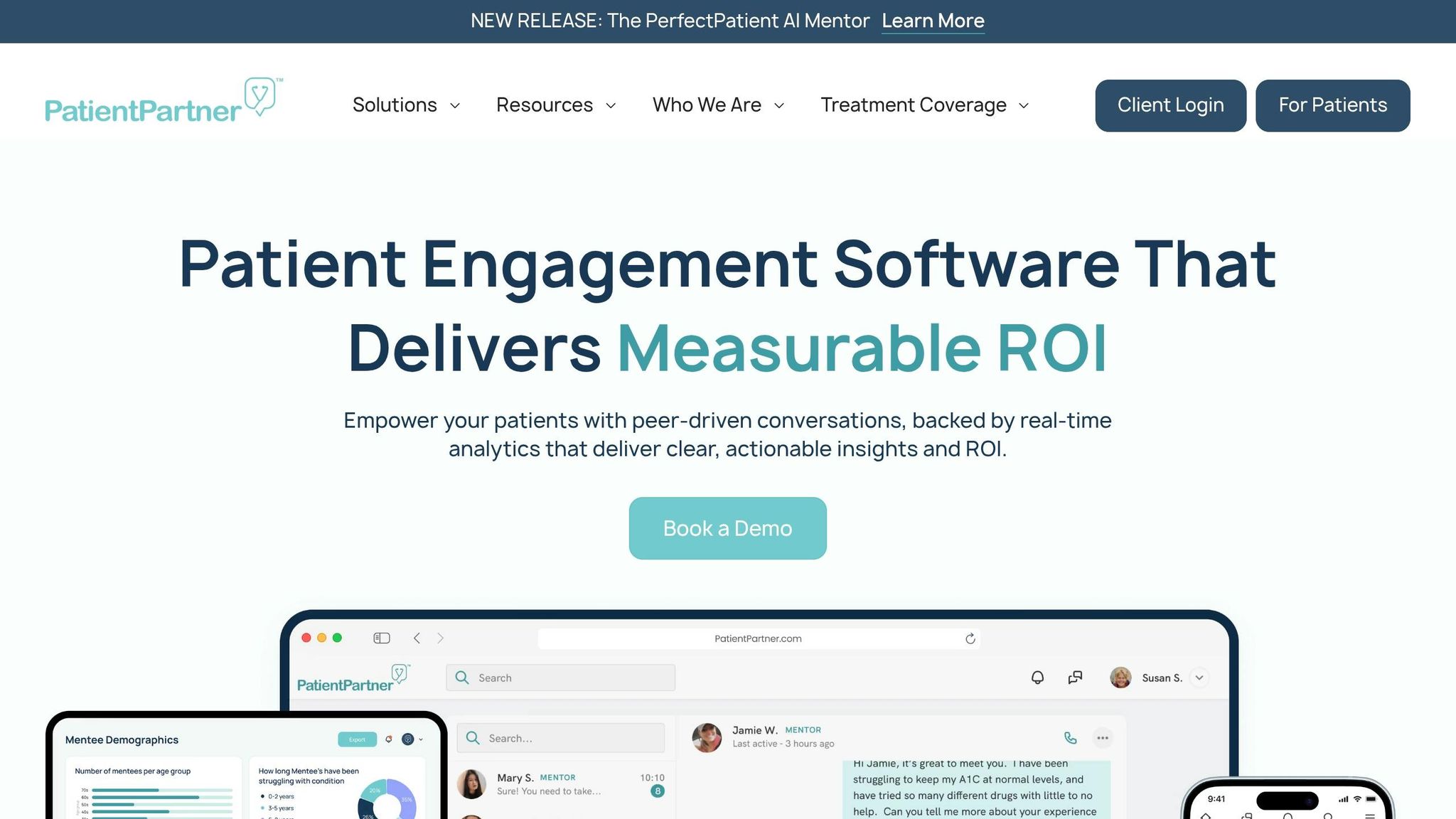
PatientPartner has taken mentorship to the next level by focusing on authentic peer relationships. The platform connects patients with mentors who have walked similar paths, creating a sense of trust and understanding. George Kramb, CEO & Co-Founder of PatientPartner, emphasizes that these peer connections are key to increasing treatment adoption and long-term adherence.
PatientPartner’s impact is measurable. Patients supported by the platform stay on therapy for an average of 133.5 days longer than those without mentorship. Additionally, users experience a 30% increase in treatment adoption rates and a 20% boost in adherence within the first year.
Several organizations have seen the benefits firsthand. For instance, Sobi Pharmaceuticals has praised the platform for its compassionate approach, with Melissa B. calling it a "unicorn" in patient engagement. Similarly, Mainstay Medical has partnered with PatientPartner to help patients better understand their treatment options. Brad A. highlighted the platform's role in improving patient decision-making through personalized support.
"We knew patient trust was shifting, but seeing just how dramatically patients now prefer peer-to-peer engagement over traditional methods is a game-changer."
Sara W., Marketing Director | Rare Disease
Patient Mentorship vs. Traditional Adherence Models
When exploring strategies to improve patient adherence, it's clear that traditional models and patient mentorship take very different paths in both execution and the outcomes they achieve.
Differences in Approach
Traditional adherence models follow a structured, top-down approach. They usually involve a formal relationship between a healthcare professional and a patient, where the professional provides guidance and monitors progress. This setup often feels clinical, with a focus on achieving specific goals and completing tasks. The relationship tends to be one-sided, with the professional delivering knowledge while the patient listens and follows instructions.
Patient mentorship, however, is rooted in a peer-to-peer connection. Instead of being assigned, these relationships grow naturally, built on trust and shared experiences. A mentor doesn’t just provide information - they listen, empathize, and offer advice that comes from their own journey. This approach prioritizes emotional support and addresses the broader psychosocial factors that influence a patient’s willingness to stick with treatment. Rather than focusing solely on tasks, mentors provide insights that help patients navigate the challenges of their condition in a more personal and meaningful way.
This difference in structure and focus leads to significantly different outcomes for patients.
Impact on Patient Outcomes
The outcomes of these two approaches couldn’t be more distinct. Traditional models, with their emphasis on education and reminders, often fall short in building the emotional connection needed for lasting behavior change. They may not fully address the underlying fears or feelings of isolation that many patients experience.
Mentorship, on the other hand, creates a supportive environment that leads to better results. Patients in mentorship programs report a 90% increase in confidence when making healthcare decisions. This approach also fosters accountability through shared goals and ongoing peer support, which helps patients feel empowered and understood.
Side-by-Side Comparison
Here’s a closer look at how these two approaches differ:
| Feature | Traditional Adherence Models | Patient Mentorship |
|---|---|---|
| Relationship Structure | Expert-to-patient; formal or assigned | Peer-based; built on personal connection |
| Primary Focus | Task-oriented guidance | Emotional support and shared experiences |
| Interaction Frequency | Scheduled appointments | On-demand support when needed |
| Accountability Method | Progress tracking and deliverables | Shared goals and mutual accountability |
| Personalization | Standardized materials | Individualized advice based on personal experiences |
| Scalability | Limited by healthcare professional availability | Scales through peer networks |
| Patient Confidence | Baseline levels | 90% boost in decision-making confidence |
| Treatment Adoption | Average rates | 68% higher likelihood of starting treatment |
The data makes one thing clear: mentorship doesn’t just guide patients - it connects with them on a deeper level, which can make all the difference in their journey.
Benefits of Patient Mentorship for Healthcare Leaders
Patient mentorship programs aren't just about improving patient outcomes - they also deliver valuable insights and create scalable, compliant systems that healthcare leaders can rely on.
For pharmaceutical and med-tech leaders, these programs offer distinct advantages that go well beyond traditional adherence models. From access to actionable data to impressive financial returns, the benefits are clear.
Access to Data and Analytics
Patient mentorship platforms provide insights that traditional models simply can't match. These platforms analyze hundreds of data points, including clinical usage trends, socio-demographic factors, and digital engagement patterns. This data creates a feedback loop that enhances predictive models and enables more precise interventions.
For instance, a study involving 20,000 Medicare Advantage members revealed the power of predictive analytics. By identifying high-influence individuals, the program reduced disenrollment rates by 2.7x, retained 186 members, and generated $1.1 million in financial value - all while achieving a 776% ROI within three years. Other findings show that advanced matching algorithms can lead to a 20% improvement in engagement outcomes, a 25% boost in retention, and a 30% increase in match rates over two years.
These insights not only improve how interventions are tailored but also lay the groundwork for scalable and compliant solutions.
Compliance and Scalability
Patient mentorship platforms are designed with strict compliance standards in mind. They use secure data handling, consented reminders via text and email, and scientifically validated frameworks that respect patient autonomy. This ensures that as the program grows, it remains compliant without adding unnecessary administrative complexity.
Scalability is another major advantage. Unlike traditional adherence models, which often depend on in-person resources, digital mentorship programs expand their reach through remote onboarding and self-guided assessments. These tools maintain high patient completion rates while addressing the costly issue of non-compliance.
Consider this: research shows that only 50% of patients with chronic conditions stick to their prescribed treatments. However, mentorship platforms that simplify instructions and offer visual or auditory aids have increased adherence rates from 63% in control groups to 71% among participants.
With compliance and scalability in place, the financial benefits of these programs become even more apparent.
Return on Investment
The return on investment (ROI) for patient mentorship programs isn't just about cutting costs - it also comes from gaining deeper clinical insights and improving patient outcomes. Traditional adherence models often track activity metrics, but 92% of organizations admit these metrics fall short, with only 3% finding them effective in measuring true value. Mentorship programs, on the other hand, focus on impact-driven metrics like adherence rates, patient sentiment, and care quality.
One case study highlights this impact: over two years, a structured mentorship program found that 82% of participants described the sessions as "very helpful" or even a "breakthrough", while 84% credited the program with contributing to their professional success. As the ACMA explains:
"ROI in Medical Affairs is often viewed as a multi-dimensional impact assessment: how well MA activities support strategy, enhance evidence, and improve patient outcomes, relative to resources invested." - ACMA
These examples show how mentorship platforms like PatientPartner are reshaping the landscape for healthcare leaders, offering tools that improve patient care while driving operational efficiency.
Conclusion
The move from traditional adherence models to patient mentorship is reshaping how healthcare leaders engage with patients. Unlike older methods, patient mentorship fosters a personal, two-way relationship where experienced mentors offer tailored guidance throughout a patient’s healthcare journey. This evolution brings a more individualized and effective approach to patient care.
By addressing each patient’s unique needs, mentorship provides the emotional support and accountability that traditional models often overlook. This approach has shown potential to improve adherence rates, boost patient satisfaction, and enhance retention.
PatientPartner builds on these principles, offering scalable and compliant solutions that merge human connection with data-driven insights. Unlike static traditional methods, real-time mentorship platforms tackle challenges with adaptable, data-informed strategies.
Research underscores the importance of mentorship in advancing patient care. Healthcare leaders who embrace this model can leverage actionable data, create sustainable programs, and achieve better outcomes for their patients. The pressing question is how quickly organizations can implement real-time mentorship to stay ahead in today’s patient-focused healthcare environment.
FAQs
How do you match patients with the right mentor?
Matching patients with the right mentor means taking into account their specific healthcare needs, past treatment experiences, and how they prefer to communicate. Platforms like PatientPartner make this process easier by using real-time tools to pair patients with mentors who share similar experiences and communication styles. This customized approach builds trust, encourages stronger engagement, and helps patients stick with their treatments, ultimately improving their overall health outcomes.
What kinds of patients benefit most from mentorship?
Mentorship can be a game-changer for patients beginning new treatments, medications, or surgeries. It offers tailored support, which can lead to improved adherence and better health results - for example, helping diabetics achieve more stable blood sugar levels. This kind of guidance is particularly helpful for individuals who want to actively engage in their healthcare journey and prefer personalized information and assistance.
How is patient privacy protected in real-time mentorship?
Patient privacy in real-time mentorship is protected through several key steps. First, patient identity is verified at the beginning of each session to ensure secure access. Next, potential privacy risks are addressed openly, ensuring patients are aware of how their information is handled. Finally, strict confidentiality is maintained throughout all interactions. These practices follow telehealth guidelines to provide a secure and private experience for every patient.