


Real-Time Peer Support: Future of mHealth Engagement
Key Takeaways
Author


Real-time peer support is transforming mHealth apps by connecting patients with trained mentors instantly through text, calls, or video. This approach provides patient services and support programs when patients need it most, improving outcomes and engagement. Here's what you should know:
- 24/7 Access: Patients can reach mentors anytime, filling gaps between clinical visits.
- Personalized Matching: Pairing patients with mentors who share similar experiences builds trust and understanding.
- Proven Results: Studies show reduced depression symptoms by 50.1%, increased treatment adherence, and better confidence in healthcare decisions.
- Key Features: Secure communication, progress tracking, and real-time analytics ensure safety and engagement.
- Implementation Tips: Focus on simple onboarding, data security, and mentor training to ensure success.
Platforms like PatientPartner are leading this shift, showing measurable improvements in treatment adoption and adherence. Real-time peer support is redefining how patients stay connected and supported in their healthcare journey.
Real-Time Peer Support in mHealth: Key Statistics and Outcomes
Empowering Recovery: Transformative Peer Support in Behavioral Health | Expanding Access Podcast
sbb-itb-8f61039
What is Real-Time Peer Support in mHealth?
Real-time peer support connects patients directly with Certified Peer Support Specialists (CPSs) - individuals who have personal experience with similar challenges and are trained to offer emotional and practical help. This support is delivered through apps, enabling instant communication via text messaging, private chats, and digital dashboards. Unlike traditional clinical care that depends on scheduled appointments, this approach offers constant availability, allowing patients to seek guidance whenever they need it. This immediacy helps establish trust through mutual accountability.
A key strength of this model is "reciprocal accountability", where both the peer supporter and the patient help and learn from one another. As Karen L. Fortuna, PhD, from The Geisel School of Medicine at Dartmouth, explains:
"Peer relationships thrive on reciprocal accountability, where specialists and consumers mutually support and learn from one another".
This reciprocal relationship is central to the behavioral principles that drive its success.
Real-time peer support leverages behavioral science principles - such as social influence, emotional connection, and self-efficacy - through the "Four Pillars of Social Health": being seen and heard, feeling valued, belonging, and having dependable support. These elements encourage what experts call "Big E" engagement, which refers to meaningful changes in health behaviors, rather than just surface-level participation.
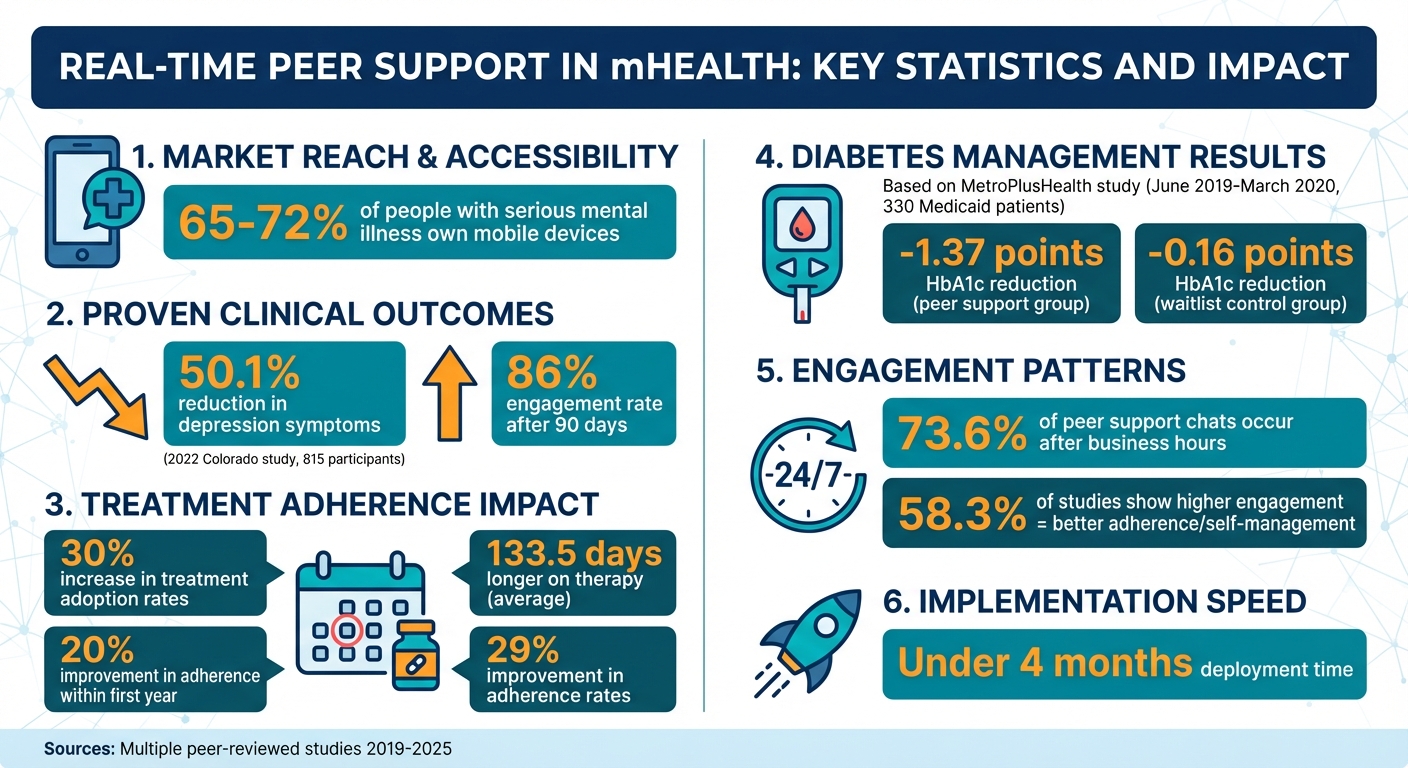
The impact of this approach is evident in a 2022 study conducted in Colorado, involving 815 participants from diverse ethnic and social backgrounds. Using a real-time peer support app, the study reported a 50.1% reduction in depression symptoms and an 86% engagement rate after 90 days.
Accessibility is another cornerstone of this model. With 65% to 72% of people with serious mental illness owning mobile devices, mHealth platforms are an ideal way to deliver support. Real-time peer support meets patients where they already spend time - on their smartphones - offering weekly check-ins and frequent text updates, eliminating the need to wait for traditional clinical appointments. Patients can join a support community to begin building these vital connections.
Benefits of Real-Time Peer Support for mHealth Engagement
24/7 Accessibility and Convenience
Real-time peer support eliminates the delays often experienced in traditional healthcare settings. Patients can connect with mentors whenever challenges arise - whether it’s managing unexpected medication side effects in the middle of the night or dealing with anxiety before a procedure. This immediate access fills a critical gap in mHealth, offering a human connection that automated reminders and dashboards simply can’t replicate.
For example, a study published in July 2025 highlighted the PeerTECH intervention, which used a dual-app system where Certified Peer Support Specialists sent at least three text messages weekly in addition to formal sessions. This real-time communication boosted self-confidence and empowerment among individuals with serious mental illness in New England. It also addressed barriers like technology literacy through hands-on guidance. This kind of on-demand support not only meets urgent needs but also lays the foundation for meaningful mentor-patient relationships.
Personalization and Trust Building
Pairing patients with mentors who share similar backgrounds creates a sense of understanding and trust right from the start. A case in point: between June 2019 and March 2020, Pyx Health collaborated with MetroPlusHealth to assist 330 Medicaid patients in New York City struggling with uncontrolled diabetes. Mentors, matched based on race and language, provided at least two focused sessions per month via phone and app. The results were impressive - participants saw an average reduction of -1.37 points in HbA1c scores, compared to a mere -0.16 reduction in a waitlist group.
These shared experiences between mentors and patients foster mutual accountability and help reduce stigma. Building trust through such connections is essential for encouraging long-term commitment to treatment plans.
Better Adherence and Long-Term Results
Round-the-clock, personalized support has a direct impact on health outcomes. A systematic review revealed that in 58.3% of studies, higher engagement with mHealth tools led to improved treatment adherence or better self-management results. Real-time peer support not only keeps patients engaged but also motivates them to stick to their treatment plans.
Additionally, peer mentors assist in overcoming practical barriers that might otherwise derail progress. Beyond improving adherence, this support model also reduces mental health costs by decreasing re-hospitalizations and inpatient stays. For instance, PatientPartner uses this approach to help pharmaceutical and med-tech companies ensure that patients start and continue their treatments long enough to achieve meaningful outcomes.
Core Features of Real-Time Peer Support Platforms
These features work together to provide a safe, engaging, and effective peer support experience for patients in real time.
Personalized Mentor Matching
The success of peer support often hinges on pairing patients with mentors who truly understand their experiences. Modern platforms use algorithms to match patients with mentors based on shared medical conditions, treatment paths, and healthcare experiences. This tailored approach helps establish trust early on and reduces the initial reluctance many patients feel when starting a new treatment.
For example, platforms like Minchalle and WeChat have demonstrated how effective matching can drive better outcomes. Between October 2022 and March 2023, researchers at Keio University used Minchalle to group older adults in Japan into teams of five based on shared physical activity goals. The results? An impressive 88% retention rate and a 1,000-step daily increase in activity for participants. Another study in 2024 by Guangzhou Sport University paired pre-obese university students into small groups using WeChat. At the six-month mark, these peer-support groups achieved greater BMI reductions and higher physical activity levels compared to the control group.
Once effective matches are made, maintaining trust relies heavily on secure communication.
Private and Secure Communication Channels
Without privacy, trust quickly fades. Secure communication channels are essential for protecting sensitive health information and creating a safe environment for open discussions about fears, side effects, and treatment challenges. Platforms achieve this by adhering to strict standards like HIPAA, GDPR, SOC 2, and ISO 27001. They employ tools such as end-to-end encryption, role-based access controls, and detailed audit trails.
"Compliance is at the core of everything we do. PatientPartner's platform is fully HIPAA and GDPR compliant, employing end-to-end encryption, role-based access controls, and audit trails to protect patient data." - PatientPartner
In addition to technical safeguards, platforms often deploy human moderators and AI-driven oversight systems to monitor interactions. This ensures psychological safety and activates crisis protocols when needed - a critical feature, especially since the majority of peer support chats (73.6%) take place after business hours. Anonymous interfaces further encourage honesty, helping reduce the stigma often associated with discussing emotional struggles in clinical settings.
While secure communication builds trust, tracking progress ensures patients stay engaged.
Progress Tracking and Feedback Loops
Keeping patients engaged requires ongoing monitoring and timely interventions. Progress tracking systems flag early signs of disengagement (a common issue, with 77% of mHealth studies reporting declining user interaction over time) and allow mentors to step in before patients drop out. These tools link behavioral patterns to tangible health outcomes, such as better treatment adherence and improved self-management.
The numbers back up these benefits. Research shows that 58.3% of studies connect higher engagement levels with improved adherence or self-management outcomes. On PatientPartner’s platform, mentorship programs supported by real-time tracking have improved treatment adherence rates by 29%, with patients staying on therapy for an average of 133.5 days longer compared to those without such support. Interactive feedback tools like quizzes and practice questions also help reduce anxiety, making patients feel more prepared for their medical journey.
How to Implement Real-Time Peer Support in mHealth Apps
Setting up real-time peer support in mHealth apps can greatly improve patient engagement and adherence to treatment plans. The process involves simplifying enrollment, ensuring strong data security, and providing thorough training for peer mentors.
Simple Enrollment and Onboarding
A complex sign-up process can discourage users from adopting your app. To make the experience user-friendly, consider incorporating a brief screener during enrollment. For example, the American Psychological Association's eight-question screener is effective in clinical settings without overwhelming new users. For older adults, the MOLD-US framework can address barriers like cognitive or physical challenges, ensuring the app is accessible.
Before launching your platform, use evaluation models such as the APA App Evaluation or THESIS to test accessibility and privacy features. These tools can help identify potential issues that might deter users during the enrollment process.
Once users are onboarded, safeguarding their data becomes essential.
Data Security and Regulatory Compliance
Embedding HIPAA compliance from the start is crucial to avoid costly revisions later. Alarmingly, 93% of healthcare organizations have reported data breaches in the last three years. In 2024 alone, the OCR Data Breach Portal recorded 725 major healthcare breaches, impacting over 275 million records. Two of the largest breaches occurred that same year.
To protect user data, implement AES-256 encryption for stored information and TLS 1.3 for data in transit. Additional features like multi-factor authentication, role-based access controls, and automatic logoff can secure communications between users. Use tools like AWS CloudTrail to maintain detailed audit logs, tracking who accessed sensitive data and any changes made. Make sure all third-party vendors sign a Business Associate Agreement (BAA), as sharing protected health information without one violates HIPAA regulations.
"Understanding and implementing HIPAA compliance isn't just about avoiding penalties - it's about protecting patient data and maintaining trust in digital healthcare solutions." – HIPAA Partners Team
Budget planning is key: developing a HIPAA-compliant app can cost between $75,000 and $400,000, with annual maintenance expenses ranging from $4,000 to $12,000. Additionally, collect only the data that is absolutely necessary to minimize risks.
Once enrollment and security are in place, the next step is to focus on training mentors to provide effective peer support.
Mentor Training and Support Programs
The success of peer support hinges on having well-trained and supervised mentors. For instance, the UK-based platform Big White Wall (now Togetherall) employed "Wall Guides" - qualified counselors who worked six-hour shifts to offer 24/7 moderated support. Strict anonymity was enforced, and clear escalation protocols were in place for high-risk situations like self-harm or suicidal ideation. Thanks to these measures, 70% of users reported improved well-being, with recovery rates for depression and anxiety matching those of traditional offline NHS services.
Consider implementing tiered moderation, tailoring the level of oversight to your user population's needs. For example, you can use post-review moderation or pre-moderation for sensitive topics. Lead mentors should supervise peer supporters, ensuring consistent support quality through ongoing training. Additionally, establish clear clinical escalation protocols so mentors know when and how to involve healthcare professionals.
Design Best Practices and Challenges
Best Practices for Scalability and User Experience
When scaling real-time peer support, design choices play a crucial role in balancing scalability with user satisfaction. One standout approach is AI-driven matching, which goes beyond simple diagnosis-based pairings. By factoring in clinical situations, socio-demographics, and interpersonal compatibility, this method creates more personalized connections. A great example of this is the nonprofit Buddy Project. Since 2015, it has successfully paired more than 236,000 adolescents and young adults (ages 12-25) by matching them based on age and five ranked interests, such as music or religion. This strategy also integrates existing social media platforms like Twitter and Instagram, allowing users to vet their "buddy" before connecting. This step has been highlighted by participants as essential for building trust.
Another key feature is multimodal communication, which ensures accessibility for a diverse range of users. For example, some individuals - especially those impacted by social determinants of health - may prefer phone calls over app-based communication. Research has shown that combining phone and app-based interactions can significantly improve engagement and outcomes.
Anonymity options also play a vital role in reducing stigma and encouraging open discussions. As Dr. Nazanin Andalibi from the University of Michigan explains:
"The design of Buddy Project provided a sense of anonymity and separation from pre-existing ties, making it easier for participants to disclose struggles".
Allowing users to browse peer profiles before making a connection further empowers them to take control of their support journey. However, while these practices enhance user experience, it's equally important to remain aware of the potential risks and challenges.
Risks and Limitations to Consider
Real-time peer support offers immense potential, but it also comes with trade-offs. Here’s a breakdown of key features, their benefits, and the associated risks:
| Feature | Advantages | Risks & Limitations |
|---|---|---|
| AI Matching | High personalization; scalable; considers complex affinities. | Potential for algorithmic bias; requires high-quality user data. |
| Anonymity/Pseudonyms | Reduces stigma; encourages open sharing of struggles. | Risk of lack of accountability; potential for cyberbullying. |
| Multimodal (Phone/App) | Increases accessibility for users with low tech literacy. | Higher operational costs; harder to monitor compliance compared to text-based systems. |
| Interest-Based Matching | Builds authentic connections; avoids focusing solely on diagnosis. | May overlook specific clinical needs if diagnosis is not considered. |
| Shared Diagnosis | Offers deep empathy and shared lived experiences. | Risk of unhealthy coping strategies or comparisons of illness severity. |
One critical consideration is avoiding overly broad diagnosis-based matching. While shared diagnoses can foster empathy, they can also lead to harmful comparisons, such as "who has it worse", or the exchange of unhelpful coping mechanisms. For instance, with around 25% of young adults experiencing suicidal ideation, platforms must clearly define their mission and signal that discussing sensitive health topics is safe and supported. Balancing these risks while maintaining user engagement and prioritizing data security is essential for creating a trustworthy and effective peer support system.
PatientPartner's Approach to Real-Time Peer Support
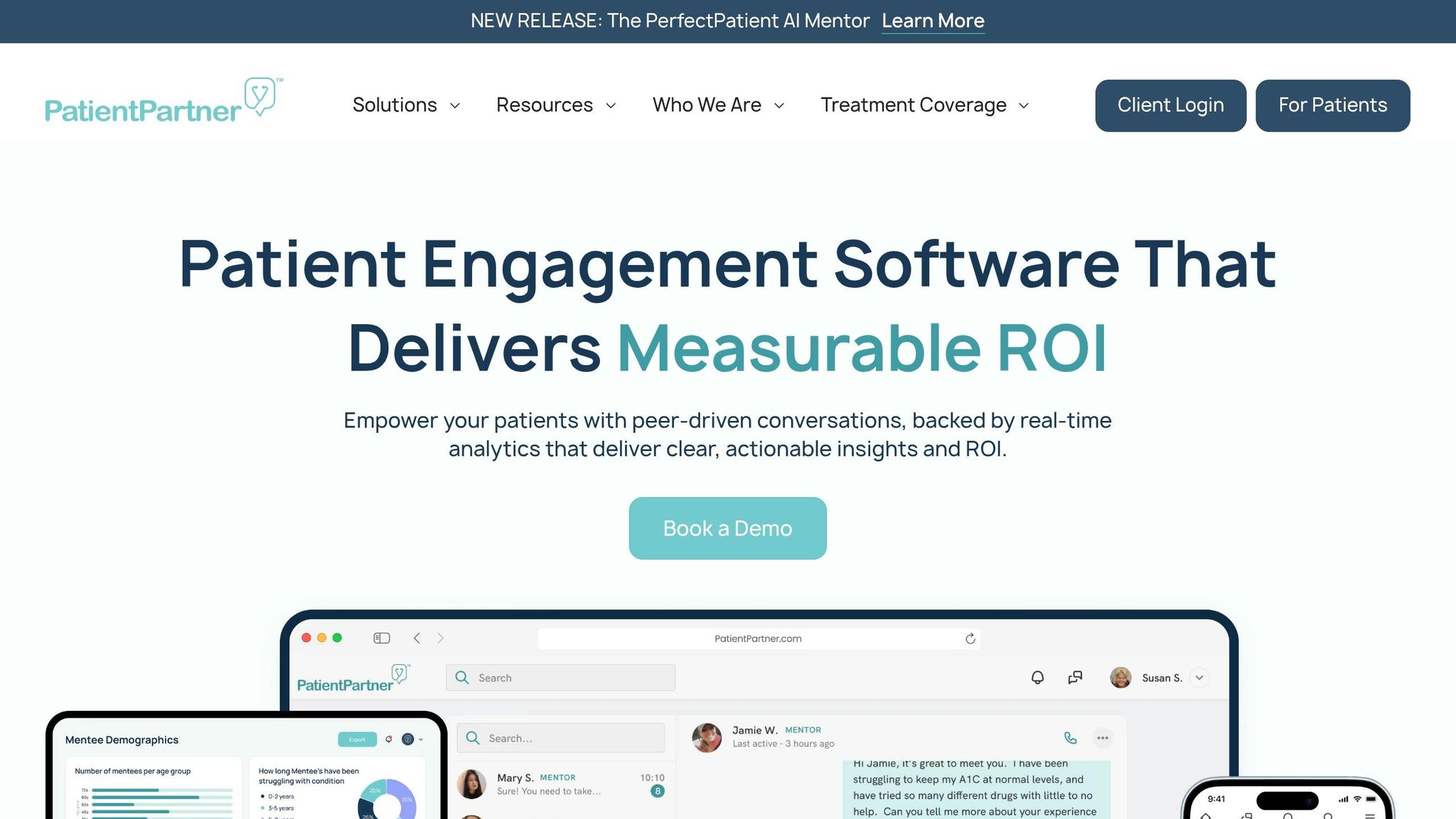
PatientPartner offers a specialized solution aimed at helping pharmaceutical and med-tech companies improve patient adoption and treatment adherence. By connecting prospective patients with mentors who have faced similar health challenges, the platform provides meaningful peer support just when patients need it most. These real-time connections, grounded in lived experiences, help transform uncertainty into confidence, encouraging patients to commit to their treatment plans.
The platform's mentor matching system uses "PerfectPatient AI Mentor", an AI-powered tool that ensures personalized pairings. Automated oversight is also in place to monitor interactions, ensuring both safety and privacy. This focus on secure, tailored connections plays a key role in improving treatment adherence. As Brad A. from Mainstay Medical puts it:
"Patient Partner has been influential in helping patients understand the benefits of our product, providing them with personalized guidance and real-life experiences to support their decision-making."
PatientPartner prioritizes data security and privacy, meeting stringent standards like HIPAA, SOC 2, and ISO 27001. This is achieved through encryption of protected health information (PHI) both in transit and at rest, alongside strict access controls and privacy-by-design principles. Additionally, real-time analytics allow commercial teams to fine-tune their patient support strategies, reinforcing the importance of sustained engagement.
The results speak for themselves. Companies using PatientPartner have reported a 30% increase in treatment adoption rates and a 20% improvement in adherence within the first year. Patients supported by the platform also stay on therapy an average of 133.5 days longer, with adherence improving by 29%. The platform is designed to integrate seamlessly into existing workflows and can be deployed in under four months, offering tailored solutions for pharma, med-tech, and clinical trials.
Melissa B. from Sobi Pharmaceuticals highlights the platform's impact, stating:
"Patient Partner is a unicorn in the industry, setting a new standard with their clear dedication to the mission of positively impacting patients' lives through innovation and compassionate support."
Conclusion
Real-time peer support is reshaping mHealth by making guidance more accessible, personal, and impactful. By connecting patients with mentors who share similar experiences, these platforms help build confidence and improve adherence. Research highlights that combining 24/7 availability, tailored matching, and secure communication significantly enhances patient outcomes and engagement.
For healthcare innovators, this approach offers a clear advantage. Patient-focused solutions address real needs, and studies confirm that real-time connections - whether through text, phone, or video - foster lasting engagement where traditional methods often fall short. Features like progress tracking, mentor profiles, and crisis protocols transform apps into reliable companions rather than tools that users abandon.
This shift is especially crucial for pharmaceutical and med-tech companies. Platforms like PatientPartner illustrate this evolution, showing a 30% improvement in treatment adoption rates and extending therapy adherence by an average of 133.5 days. By leveraging AI-driven mentor matching and real-time support, the platform achieves these results while deploying in under four months and meeting rigorous compliance standards, including HIPAA, SOC 2, and ISO 27001.
The future of mHealth lies in platforms that prioritize human connections at scale. Success will come from co-designed solutions that align with user needs, blend professional oversight with peer insights, and integrate seamlessly into existing systems. As organizations realize that adherence requires more than reminders or tracking, real-time peer support emerges as a critical element in patient engagement strategies.
The evidence is clear: peer support works. Companies adopting this approach today are setting the stage for the next wave of patient-centered healthcare.
FAQs
How do you choose the right peer mentors?
Selecting peer mentors requires attention to individuals who bring relevant experience, strong communication abilities, and a natural connection to the intended audience. Ideal candidates demonstrate empathy, reliability, and a solid understanding of the specific health condition they’ll address. To ensure they provide consistent and impactful support, it’s crucial to offer thorough training and continuous resources. This approach helps mentors build meaningful relationships, boosting participation and adherence within mHealth programs.
What happens if a user is in crisis after hours?
If someone faces a crisis outside regular hours, platforms like PatientPartner offer instant access to real-time peer support. These platforms connect users with experienced mentors who provide tailored guidance and support, helping them manage their situation with understanding and care.
How do you prove ROI from peer support in an app?
To prove the return on investment (ROI) for peer support in an app, it's crucial to highlight both financial and health-related advantages. These benefits often stem from cost savings achieved through:
- Fewer hospital readmissions
- Reduced lengths of inpatient stays
- Better medication adherence
For instance, some peer support programs have shown ROI ratios ranging from $2.28:1 to $5.39:1. These impressive figures are largely due to lower healthcare costs and improved management of chronic conditions, which not only save money but also lead to better long-term outcomes for patients.