


Ultimate Guide to Gamified Patient Reward Systems
Key Takeaways
Author


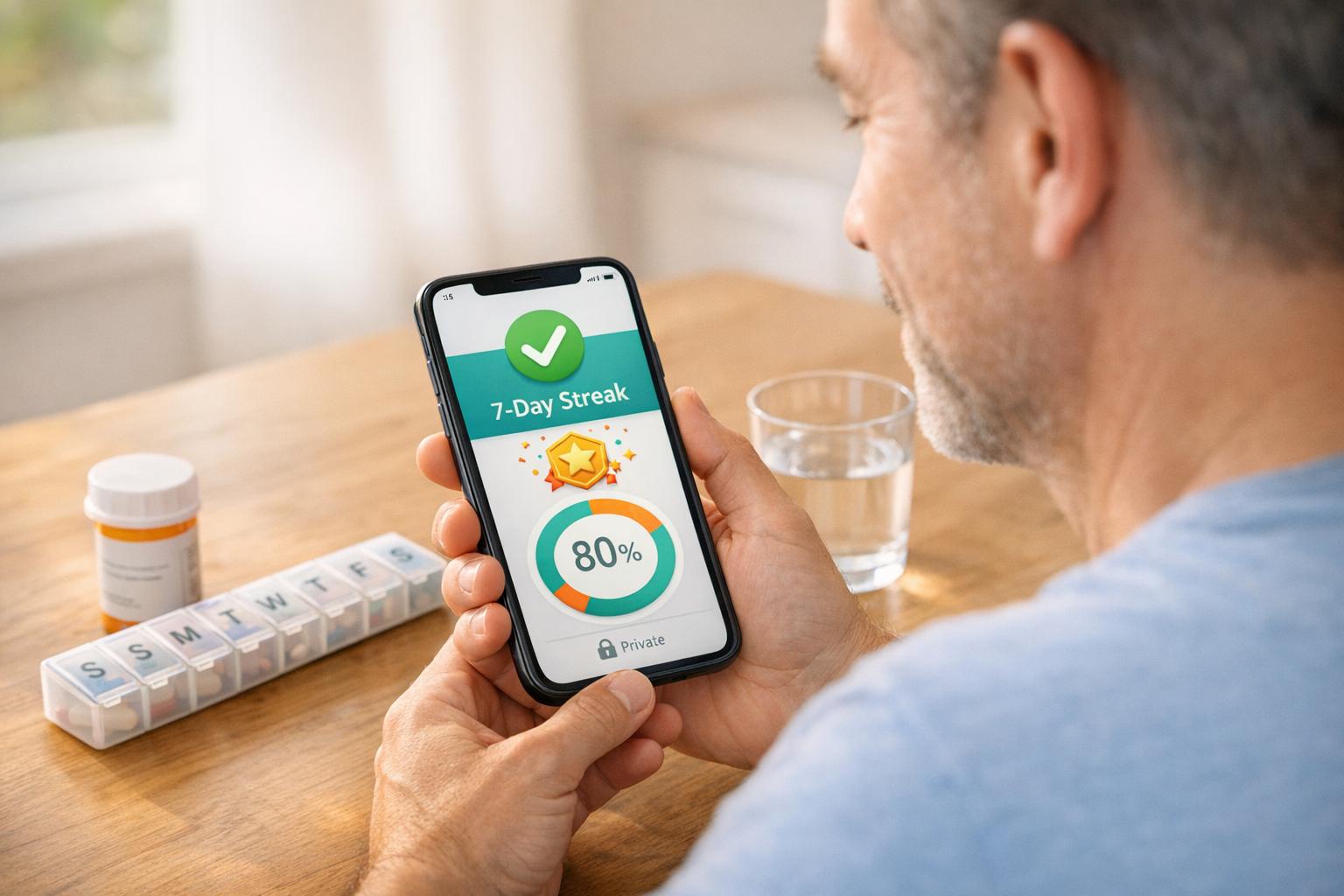
Gamified patient reward systems use game-like elements - points, badges, challenges, and progress tracking - to make health management more engaging. These systems aim to improve patient adherence, especially for chronic conditions, by turning routine care into rewarding activities. With proven success in boosting medication adherence, physical activity, and treatment adoption rates, they are becoming a key tool in healthcare.
Key Insights:
- Why It Matters: Traditional patient engagement methods often fail to sustain long-term commitment. Gamification counters this by creating active participation through instant feedback, clear goals, and rewards.
- Core Benefits: Apps like eddii and Fitbit have shown measurable health improvements, while platforms like PatientPartner combine gamification with mentorship to achieve higher retention and adoption rates.
- Design Elements: Effective systems use points, badges, levels, leaderboards, and quests, tailored to patient preferences, with real-time feedback to drive engagement.
- Rewards: A mix of virtual (badges), social (peer recognition), and physical (gift cards) rewards ensures diverse patient motivations are addressed.
- Future Trends: AI personalization, including AI mentors that boost retention, wearable integration, and immersive tech like VR are shaping the next wave of gamified healthcare.
Gamification transforms passive health tasks into interactive and rewarding experiences, offering a scalable way to improve outcomes and reduce healthcare costs.

Gamified Patient Reward Systems: Key Types, Mechanics & Proven Results
Key Elements of an Effective Gamified Reward System
Game Mechanics and Features
A well-crafted gamified system combines multiple elements to keep users engaged. Points, badges, levels, leaderboards, and quests each play a unique role in motivating patients, but their true strength lies in how they work together.
- Points provide instant feedback, letting users see the results of their actions right away.
- Levels showcase progress and growing expertise over time.
- Badges celebrate important milestones, giving users a sense of accomplishment.
- Leaderboards tap into friendly competition, encouraging patients to stay active by comparing their progress with others.
- Quests and narrative layers, like those in Zombies, Run!, transform mundane tasks into enjoyable experiences that users look forward to.
An essential feature is adaptive difficulty, which adjusts challenges based on a user’s ability to keep them in the "flow" state. For instance, the bant app for teenagers with Type 1 diabetes used adaptive difficulty alongside Bluetooth-enabled glucose tracking. This approach led to a nearly 50% increase in daily blood glucose measurements. And don’t underestimate the importance of onboarding - Zichermann and Cunningham emphasize that "The first minute of use of a given application heavily determines whether that user will continue to use the application in the long-term or whether they will delete it altogether.".
While engaging mechanics are key, aligning rewards with patient goals is just as important.
Types of Rewards for Patients
To complement engaging mechanics, a variety of rewards should address different patient motivations. The most effective systems use a mix of virtual, social, informational, and physical rewards, each tailored to specific needs.
- Virtual rewards, like points and badges, emphasize competence and mastery.
- Physical rewards, such as gift cards or vouchers, remove real-life barriers to care. For example, the Mango Health app rewarded users for taking their medications on time with prizes like $5 Target gift cards or $1 donations to the ASPCA. Research shows that patients often prefer non-cash rewards over direct cash, which can feel less meaningful.
- Social rewards, like peer recognition or mentorship, build trust and foster long-term engagement in ways that virtual rewards alone cannot.
Interestingly, framing rewards around loss aversion can boost adherence. Systems where patients risk losing points for missed tasks often see higher engagement than those offering only gains. Here's a quick look at how different reward types meet patient needs:
| Reward Type | Psychological Driver | Best Use Case |
|---|---|---|
| Points/Badges | Competence (SDT) | Immediate daily feedback |
| Leaderboards | Relatedness (SDT) | Social comparison and peer motivation |
| Gift Cards/Vouchers | Extrinsic Incentive | Reducing financial barriers to care |
| Narrative/Quests | Autonomy/Immersion | Making routine self-care engaging |
| Peer Mentorship | Trust/Relatedness | Long-term adherence and support |
When paired with strong feedback systems, these rewards create a dynamic and engaging experience.
Feedback Systems and Real-Time Engagement
Feedback is the lifeblood of gamified systems. Without real-time responses, even the best-designed rewards lose their impact. Real-time feedback loops - delivered through dashboards, push notifications, or wearable devices - connect daily actions to visible progress. This immediacy reinforces positive behaviors and drives measurable improvements in health management.
For example, Pfizer's "Sidekick" app, developed with The Octalysis Group for patients with Ulcerative Colitis and Crohn's Disease, replaced simple reminders with a feedback-rich system. By tracking factors like sleep, nutrition, and emotional well-being, the app achieved a 30% reduction in patient dropouts and a 3x increase in health goal achievement. Similarly, the Medisafe app’s gamified feedback improved medication adherence by 19%.
"Instant feedback is central to gamification, as it reinforces positive actions and alerts users to issues promptly." - Seif Allah El Mesloul Nasri, Lead Author, Aston University
Immediate feedback is non-negotiable. Whether it’s logging a dose, completing a check-in, or hitting a step goal, the system must respond instantly. Any delay risks losing the user’s momentum. Streaks are another powerful motivator - patients often work harder to maintain a 10-day streak than to earn a new badge.
sbb-itb-8f61039
Designing Gamified Systems for Patient Engagement
Mapping Patient Behaviors to Clinical Goals
The first step in designing effective gamified systems is identifying the specific behaviors that influence clinical outcomes. These systems should focus on modifiable behavioral risk factors - like skipping medications, missing follow-up visits, or avoiding physical activity - and use game mechanics to address these behaviors directly.
A proven method involves applying Behavior Change Techniques (BCTs) such as goal-setting and self-monitoring. Research has shown that gamified interfaces can lead to measurable improvements in critical clinical behaviors. Start by listing the top target behaviors, defining what success looks like, and assigning a game mechanic - like a streak, quest, or badge - to reinforce each one.
Once the behaviors are mapped, the next step is tailoring the system to fit the unique needs of individual patients.
Personalizing Gamification for Diverse Patients
Patients differ in many ways - age, health literacy, condition severity, and even cultural background. Effective gamified systems take these differences into account. For example, older patients may prefer clear progress charts over playful avatars, while younger patients might engage more with virtual companions or social challenges.
A clinical trial coordinator highlighted the challenges of digital access:
"We noticed that some older participants had difficulty installing the app and following the digital instructions. Without additional support, they would likely have dropped out of the study." - Sophie, Clinical Trial Coordinator
Similarly, a clinical project manager shared how shifting from competitive rankings to personal goal structures improved outcomes:
"We removed competitive rankings because some participants felt discouraged. Instead, we introduced personal goals and congratulatory messages for consistency." - Thomas, Clinical Project Manager
The takeaway? Give patients options. Let them choose between social competition or private, personal-best goals. To reduce early drop-off, include short onboarding tutorials - like a simple 6-frame walkthrough - or offer a brief 30-minute introductory session for patients with lower digital literacy.
Adding Narrative and Social Elements
Once personalization is in place, introducing narrative and social components can further enhance engagement. A compelling narrative can turn mundane tasks into immersive experiences. Formats like "Choose Your Own Adventure" allow patients to make health decisions for fictional characters, creating a safe and engaging way to learn. For instance, the PatientPartner (CyberDoctor) mobile game used a narrative approach tied to HgbA1C as a marker, resulting in a 37% increase in medication adherence after just 15 minutes of gameplay.
Social features also play a key role in boosting engagement. When patients share their progress, join team challenges, or connect with peers facing similar diagnoses, the experience becomes communal rather than solitary. These social engagement loops help new users adapt quickly by normalizing success. Platforms like PatientPartner take this further by connecting users with experienced mentors who have undergone similar treatments. This approach has been linked to a 30% increase in treatment adoption rates and a 20% improvement in adherence within the first year.
The most effective gamified systems combine narrative and social support, giving patients both a story to follow and a community to share their journey with. This dual approach can significantly improve clinical outcomes while keeping patients motivated and engaged.
Gamification in Healthcare: How Two Founders Are Using Games to Heal
Implementing and Scaling Gamified Reward Systems
Once you've got the design and personalization nailed down, the next step is putting gamified systems into action and making them scalable for meaningful patient engagement.
Integrating Gamification into Existing Workflows
The key to successful implementation? Build on tools already in place. By integrating gamified features into existing EHRs, patient portals, and mobile apps, you can make these systems a natural part of patient care workflows. This approach not only enhances engagement but also avoids overwhelming users with entirely new platforms.
A modular rollout strategy works best. Start by defining clear objectives, selecting the right game mechanics, and ensuring compatibility with current systems. Then, pilot the program on a small scale to fine-tune before a broader launch. Engaging clinicians early in the process is critical. When healthcare providers help shape the metrics, they’re more likely to align with clinical KPIs, making adoption smoother.
Once integration is set, the next step is ensuring patient data remains secure.
Ensuring Compliance and Data Privacy
With gamification comes the responsibility of protecting sensitive patient information. Since these systems handle protected health information (PHI), strict safeguards are necessary. For large-scale implementations or partnerships with third-party vendors, having a Business Associate Agreement (BAA) in place is a must. This agreement clearly defines each party's role in safeguarding PHI.
To ensure data security, adopt measures like AES-256 encryption, multi-factor authentication, and role-based access controls. A privacy-by-design approach is also essential - conduct privacy impact assessments early, and collect only the data that’s absolutely necessary for clinical purposes.
"Healthcare loyalty programs collect, store, and process vast amounts of protected health information (PHI) alongside personal preferences... This intersection of marketing technology and healthcare data requires specialized compliance strategies." - HIPAA Partners Team
It’s worth noting that 26% of patients and clinical staff cite data privacy as a major concern with gamified systems. Beyond meeting legal requirements, being transparent about how data is used builds trust - an essential ingredient for sustained patient engagement.
While technical safeguards are vital, adding a human touch can truly elevate the system’s effectiveness.
Using Patient Mentorship to Support Gamified Systems
Gamification is great for encouraging behavior, but it doesn’t always address the emotional hurdles patients face. That’s where mentorship steps in. Whether it’s medication confusion, pre-procedure anxiety, or a dip in motivation, having a mentor who’s been through a similar experience can make all the difference. This personal connection offers something digital rewards alone can’t provide.
Platforms like PatientPartner blend this human element with digital tools. By pairing patients with mentors who’ve undergone similar treatments, it creates a sense of community often referred to as the “Village Effect.” This social connection helps patients feel less isolated, especially in the context of chronic disease management. The result? Improved engagement and better long-term outcomes - all without adding extra strain on clinical staff.
Optimizing Gamified Systems for Better Outcomes
Building a gamified reward system is just the beginning; the real challenge lies in evaluating its impact and refining it for better results.
Defining Success Metrics and KPIs
To turn design into meaningful outcomes, it's essential to track the right metrics. A well-rounded framework that includes clinical, engagement, behavioral, psychological, and operational indicators ensures a complete evaluation. For example, clinical metrics like Time-in-Range or dyspnea scores can help assess health improvements, while engagement metrics such as login frequency or points earned provide insight into user activity. Behavioral logs, psychological scores (like PHQ-9 or GAD-7), and operational measures like treatment activation rates are equally important to ensure the program's long-term viability.
| Metric Category | What to Track |
|---|---|
| Clinical | Time-in-Range, glycemia risk index, dyspnea scores |
| Engagement | Login frequency, points earned, challenge completion |
| Behavioral | Medication adherence, daily step counts |
| Psychological | Self-efficacy, anxiety/depression scores |
| Operational | Treatment activation rate, cost per patient |
For instance, a 2024 study on the Karaz mobile health platform monitored 384 diabetes patients in Saudi Arabia over three months. Patients who earned "cherries" (reward points) for positive health behaviors saw their Time-in-Range improve from 43.1% to 45.89%. This was a noteworthy improvement for previously uncontrolled patients.
These metrics form the foundation for using data and analytics to refine gamified systems and boost engagement.
Using Data and Analytics to Improve Engagement
Behavioral mapping is a powerful tool for visualizing where users lose interest. If data reveals consistent drop-off points, it's a signal to introduce fresh challenges, variable rewards, or timely mentor interventions.
Predictive analytics can also identify early signs of disengagement, such as reduced login frequency or slower response times. This allows for preemptive action before a user fully drops out. Additionally, A/B testing can help compare different reward systems - like points-based incentives versus social leaderboards - to determine which approach yields better results in both engagement and clinical outcomes.
"Gamification is not about entertainment but about creating positive emotions through timely feedback and transforming self-management tasks into spontaneous behavioral habits." - ScienceDirect
For example, when a smartwatch logs a completed walk and the app immediately awards points, the instant reward reinforces the behavior, making it easier for users to develop lasting habits.
Avoiding Common Pitfalls in Gamification
Tracking and analysis are essential, but refining reward strategies is just as critical. One common pitfall is the over-justification effect, where users perform tasks solely for external rewards like badges or gift cards. Once the rewards stop, so does the behavior.
Fixed rewards can also lead to disengagement over time. As Yu-kai Chou, a gamification expert, explains:
"Fixed rewards breed entitlement, not gratitude. Users feel grateful on the first reward. By the second delivery, it becomes expected. After the fourth or fifth time, they feel cheated if it's missing."
Switching to variable reward schedules - such as randomized point ranges or surprise bonuses - can keep users engaged. A study with Caixa Econômica Federal demonstrated this: shifting from fixed to variable rewards boosted participation from 10% to 92% in just three months.
Another mistake is focusing too much on micro-engagement, like app logins or time spent in-app, instead of macro-engagement, which measures actual health improvements. For example, the MyHeartMate app, tested in a 6-month RCT ending in 2025, achieved high user satisfaction but failed to deliver significant improvements in physical activity or cardiovascular risk factors. This highlights the importance of aligning KPIs with clinical goals rather than just app activity.
Conclusion and the Future of Gamified Patient Rewards
Key Takeaways for Healthcare Leaders
Gamification in healthcare has evolved from being a buzzword to becoming a core strategy. By 2025, the global healthcare gamification market is projected to hit $4.16 billion, growing at an impressive CAGR of 23.19%. With healthcare providers and pharmaceutical companies accounting for 61.25% of the market share, it's clear that gamification is now a well-established approach rather than an experimental concept.
The most effective programs share some common traits. They prioritize instant and seamless rewards, ensuring that users stay engaged without delays in redemption. Game mechanics focus on driving actions that have real clinical value, rather than superficial metrics like app logins. Importantly, successful systems strike a balance between external motivators - such as points and badges - and deeper psychological drivers like autonomy, competence, and a sense of connection.
"Patient engagement is no longer just about communication. It's about action, motivation, and completion." - appyReward
The results speak for themselves. For instance, the dacadoo platform achieved a 62% increase in user activation and retained users seven times longer after implementing gamification. Similarly, Pfizer's "Sidekick" app, which uses behavioral design principles, reported a 68% long-term retention rate at six months and a 300% increase in health goal achievement. These examples highlight how thoughtful design grounded in behavioral science can deliver measurable outcomes.
With these successes, the stage is set for new innovations that will reshape how patients engage with their health.
Emerging Trends in Gamified Healthcare
Three key forces are set to define the future of gamified patient engagement: AI-driven personalization, wearable integration, and immersive technology. AI is already enabling tailored experiences by adapting challenges and rewards based on real-time behavioral data, making interactions feel personal rather than one-size-fits-all. Wearables add another layer by providing instant feedback - imagine a smartwatch recognizing a completed workout and triggering an immediate reward, reinforcing healthy behaviors at just the right moment.
Immersive technologies are also gaining traction. For example, Otsuka America Pharmaceutical's Rejoyn app, FDA-approved in March 2024 for major depressive disorder, uses gamified cognitive-behavioral therapy to maintain engagement in a clinically structured way. Meanwhile, VR-based "therapeutic gardens" are being explored to help COPD patients manage emotional stress, and AR tools are simplifying complex clinical trial procedures.
Sander Maenhout, Engagement Engineer at StriveCloud, emphasizes this shift:
"Gamification for mHealth apps is no longer an optional 'extra' - it is the primary driver for apps looking to stand out in a market that continues to expand rapidly in 2026."
Ultimately, the organizations that will excel in patient engagement aren't necessarily those with the flashiest technology - they're the ones that make the reward process simple, fast, and rewarding enough to keep patients coming back. By blending emerging tools with well-designed gamification strategies, healthcare leaders can build systems that not only engage patients but also improve long-term health outcomes.
FAQs
How do you choose rewards that motivate patients without backfiring?
To choose rewards that genuinely encourage patients, prioritize personalization and clarity. Steer clear of coercive methods, such as pushy notifications or overly complicated interfaces, as these can push users away. Instead, focus on aligning rewards with each patient's specific health goals and celebrating meaningful milestones. Incorporate A/B testing and feedback loops to fine-tune the system, ensuring it remains supportive, motivating, and respectful rather than feeling manipulative or insignificant.
Which patient behaviors should be gamified to improve clinical outcomes?
Gamified systems can play a pivotal role in promoting behaviors essential for managing chronic diseases and improving long-term health. Some of the primary areas to target include:
- Medication adherence: Ensuring patients take their medications regularly can slow disease progression and improve outcomes.
- Physical activity and rehabilitation: Gamification can help patients stick to exercise routines or rehabilitation programs, making these activities more engaging.
- Symptom management: Encouraging patients to monitor and manage symptoms effectively can lead to better daily health management.
- Healthier lifestyle choices: From smoking cessation to adopting better eating habits, gamification can motivate lasting positive changes.
- Educational engagement: Interactive learning modules can improve health literacy, empowering patients to make informed decisions about their care.
By addressing these key areas, gamified systems can contribute to improved health and better patient experiences.
How do you measure ROI and success for a gamified patient program?
To evaluate ROI, examine the total program costs alongside the financial savings and clinical benefits achieved. For example, a program might yield a $3.20 return for every $1.00 invested. Key metrics to focus on include treatment adherence, lower hospital readmissions, and effective disease management.
To gauge engagement, monitor factors like participation rates, daily active users, and retention over time - specifically at 30, 90, and 180 days. Additionally, patient satisfaction scores provide insights into the qualitative impact of the program, complementing the quantitative data.