


Custom Branding for Patient Engagement Platforms
Key Takeaways
Author


Custom branding in patient engagement platforms isn’t just about logos or colors - it’s about creating trust, improving treatment adherence, and addressing patient needs at every stage of their healthcare journey. Here's why it matters:
- Patients trust familiar branding: 72% of healthcare consumers expect consistent, personalized support, yet only 16% are aware of available services. Custom branding bridges this gap.
- Improves adherence and engagement: Branded platforms can increase treatment adherence by up to 35% and extend therapy duration by over 133 days.
- Supports complex therapies: Clear, branded messaging eases anxiety around new or complex treatments, boosting patient confidence by 90%.
- Drives measurable results: Platforms with peer mentorship see 68% more patients starting treatments and a 30% boost in adoption rates.
Custom branding transforms generic tools into trusted healthcare solutions, combining visual identity, tone, and design to meet patient and business needs.
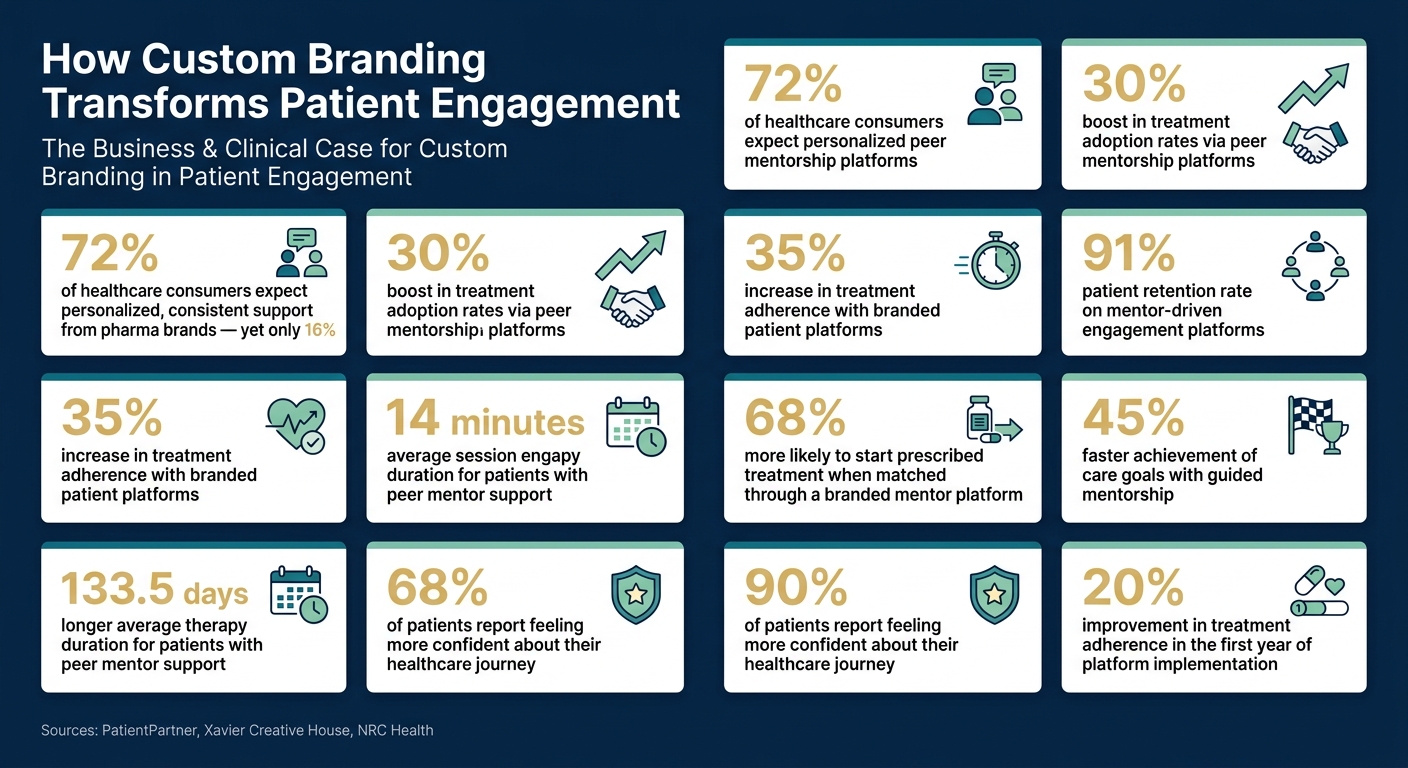
Custom Branding Impact on Patient Engagement: Key Statistics
What Custom Branding Means for Patient Engagement
What Is Custom Branding?
Custom branding in patient engagement goes beyond just placing a logo on a portal. It involves tailoring every aspect of a digital platform - like colors, fonts, imagery, and messaging - to align with your company's identity. For pharmaceutical and med-tech companies, this approach is crucial. While standard branding prioritizes visibility, custom branding seamlessly integrates into the patient experience, building trust throughout the treatment process.
"When PSPs are backed by strategic branding, they become much more than support tools - they become vital brand extensions that foster loyalty, adherence, and better outcomes." - Xavier Creative House
This approach transforms a generic portal into one that reflects your therapy's values and mission.
Core Elements of Branding and Theming
Personalization relies on three key components:
| Branding Element | What It Does | Why It Matters |
|---|---|---|
| Visual Identity | Ensures consistent use of colors, fonts, and logos | Reduces confusion and creates a sense of familiarity for patients |
| Tone of Voice | Balances empathetic, reassuring communication with clinical accuracy | Helps patients feel supported without being overwhelmed |
| Experience Design | Aligns content with treatment milestones and emotional needs | Anticipates patient concerns and removes obstacles |
Together, these elements create a platform that feels cohesive and patient-focused.
Some platforms go a step further with dynamic personalization, adjusting visuals, messaging, and content based on individual patient profiles and their stage in therapy. This isn't just about aesthetics - it directly impacts whether patients feel confident enough to begin and stick with their treatment.
By combining these elements, platforms not only achieve consistency but also enhance the impact of patient mentorship programs.
How Branding Affects Patient Mentorship Programs
Branding plays a pivotal role in peer-to-peer mentorship programs. A well-designed, consistent platform fosters trust and credibility. The visual identity, tone, and experience design described earlier work together to create an environment that feels professional and reliable, encouraging patients to engage.
PatientPartner's platform is a prime example. By offering a mentor-matching experience rooted in brand-specific content and empathetic design, they’ve facilitated over 10,000 successful connections between patients and mentors across 150+ disease states. The results speak volumes: patients matched through the platform are 68% more likely to start their prescribed treatment, and 90% report feeling more confident about their healthcare journey.
"We didn't build another chatbot. We built a human‑like mentor that thinks, listens, and responds like a real patient advocate - powered by brand‑specific content and the emotional intelligence pharma has never had at scale." - George Kramb, Co-Founder & CEO, PatientPartner
The message is clear: branding isn’t just a superficial layer for mentorship programs - it’s what makes the experience trustworthy and engaging, giving patients the confidence to take charge of their health.
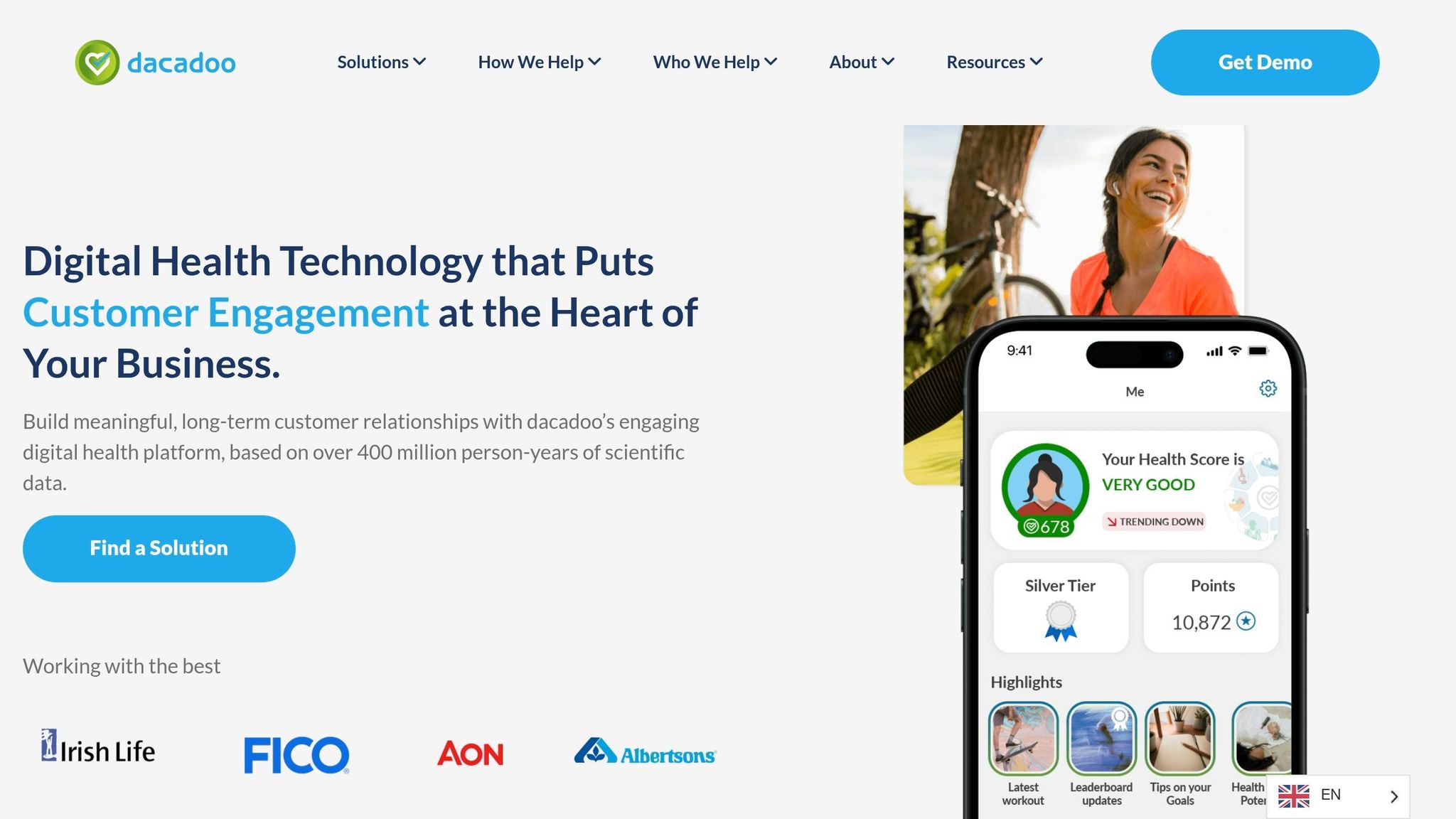
dacadoo's Digital Health Engagement Platform White Label in 30 Seconds
Why Custom Branding Matters for Pharma and Med-Tech Companies
Custom branding goes beyond aesthetics - it builds trust, encourages engagement, and addresses patient concerns throughout their treatment journey.
Building Patient Trust and Credibility
Patients often judge a program's credibility based on its design and messaging before diving into clinical details. A sleek, professional interface suggests legitimacy, while empathetic communication shows care. Together, they bridge the gap between marketing promises and the actual patient experience. This connection is crucial: while 68% of consumers expect healthcare organizations to meet or exceed their expectations, only 42% feel those expectations are met.
"Visuals act as the 'silent recruiter.' Long before a patient reads the informed consent form, they have already made a subconscious decision about the study's safety and relevance."
"Overpromising and underdelivering is actually harder to recover from than having a weaker brand with better experiences." - Michelle Silva, Strategic Advisor, NRC Health
Driving Engagement, Activation, and Adherence
Effective branding ensures a seamless, cohesive experience at every touchpoint, which keeps patients engaged and committed to their therapy. When branding aligns with patient needs, it reduces friction and doubt, making it easier for individuals to stay on track. For example, PatientPartner’s mentor-driven platform combines empathetic branding with personal connections, leading to patients staying on therapy an average of 133.5 days longer.
"Patient Partner has been influential in helping patients understand the benefits of our product, providing them with personalized guidance and real-life experiences to support their decision-making." - Brad A., Mainstay Medical
This consistency not only improves adherence but also becomes essential when introducing complex or groundbreaking treatments.
Supporting Complex Therapies and New Treatments
Custom branding plays a key role in easing the anxiety tied to complex or unfamiliar therapies. Patients often feel skeptical about new treatments, and a generic, clinical presentation can amplify those concerns. A well-branded platform, however, can make the process feel more approachable and human.
"A study needs to feel like a brand, not to sell it, but to make it more human. Without a brand, patients are left with a collection of dry documents and generic, emotionless flyers." - Fanni Hoffmann, Creative Director, Clariness
For instance, translating a complicated treatment plan into a visual journey map or breaking down onboarding into clear, illustrated steps can make daunting processes easier to navigate. The results speak volumes: patients using branded platforms with peer mentorship report a 90% increase in confidence when starting a new treatment, and guided mentorship can help patients reach their care goals 45% faster. For companies introducing innovative therapies, instilling this level of confidence is not just helpful - it’s essential for success.
Key Features to Look for in a Branded Patient Engagement Platform
Building on the advantages of custom branding, let’s dive into the essential features that make a patient engagement platform stand out.
Visual Identity Customization
The best branded platforms ensure your brand takes center stage by offering full white-labeling. This means no vendor logos or generic designs - just your brand’s color schemes, typography, logos, and layouts seamlessly integrated across all devices, whether it’s a desktop, mobile app, or in-clinic kiosk.
For a more personalized touch, advanced platforms go a step further by allowing you to customize AI mentor visuals, voices, and narratives to align with specific patient profiles and therapy journeys. Studies show that branded patient services can increase treatment adherence by up to 35%, while AI-powered mentors have achieved engagement rates above 95%.
"Branding isn't just about visibility. It's about helping brands truly live alongside their patients - earning trust, building confidence, and empowering better healthcare outcomes." - Xavier Creative House
Here’s a practical tip: host your patient portal on a custom domain. This not only reinforces your brand identity but also reassures patients about the security of their health information.
Equally important is ensuring the platform’s content resonates with patients.
Content Personalization and Messaging
A visually appealing platform is only part of the equation - it also needs to communicate effectively. This involves configurable content templates, therapy-specific educational resources, and onboarding flows tailored to your brand voice and each patient’s unique circumstances.
Platforms that use personalized, mentor-driven engagement have seen impressive results, including a 91% patient retention rate, a 30% boost in treatment adoption, and average session times of 14 minutes. PatientPartner takes personalization further with sentiment analysis, which detects patient hesitations in real time and adjusts messaging accordingly.
"We didn't build another chatbot. We built a human‑like mentor that thinks, listens, and responds like a real patient advocate - powered by brand‑specific content and the emotional intelligence pharma has never had at scale." - George Kramb, Co-Founder & CEO, PatientPartner
Don’t overlook multilingual support - it ensures messaging remains empathetic and accessible across diverse languages and backgrounds.
Patient Journey and Experience Theming
A cohesive patient journey is critical for guiding users from initial awareness to long-term engagement. End-to-end journey theming creates a structured experience, starting from the first brand interaction and continuing through treatment adherence.
This approach bridges the gap between a patient’s first interaction and their treatment initiation. For example, patients engaging in mentor-led journeys are 68% more likely to begin prescribed treatments, and structured engagement programs can improve adherence rates by 29%. A well-designed journey moves through key phases - initial education, guided onboarding, ongoing adherence support, and eventually turning successful patients into peer advocates.
"The moment a patient clicks a branded ad is the beginning of a journey, but most brands lose sight of what happens next. Our platform closes that gap, giving commercial teams both the insight and the mechanism to drive real action." - Patrick Frank, Co-Founder & COO, PatientPartner
Effective platforms also cater to specialty-specific workflows - recognizing that, for instance, oncology journeys differ significantly from dermatology ones. They integrate with existing CRM or HUB systems and incorporate peer feedback loops, enabling experienced patients to return as mentors.
sbb-itb-8f61039
Compliance, Governance, and Implementation Best Practices
A patient engagement platform with custom branding must prioritize regulatory compliance, enforce strong governance, and ensure rigorous data protection from the outset.
Meeting Regulatory Standards
Custom branding in patient engagement operates within a complex regulatory landscape. For example, HIPAA's Privacy and Security Rules mandate safeguarding all Protected Health Information (PHI), which includes details like IP addresses and device identifiers. Additionally, the FTC's Health Breach Notification Rule applies to non-HIPAA entities using tracking technologies for health data. Meanwhile, FDA/OPDP regulations require branded prescription drug content to provide "fair balance", and state laws like California's CCPA/CPRA and Washington's My Health My Data Act impose further obligations for sensitive data.
To navigate these requirements:
- Set up Business Associate Agreements (BAAs) with all vendors interacting with PHI, including analytics providers, CRM systems, and hosting services.
- Deploy a compliance layer to intercept and scrub PHI before it reaches third-party marketing tools.
- Conduct regular audits of tracking technologies - like pixels, SDKs, and scripts - to prevent unintentional PHI capture.
"A generic marketing consent checkbox often does not meet HIPAA's content, revocation, and disclosure requirements." - Matt O'Haver, Content Manager, Pulse Health
Beyond meeting regulations, maintaining brand integrity demands structured internal processes.
Brand Governance Workflows
Ensuring that branded content is both consistent and compliant across an organization requires careful planning. A cross-functional governance council can oversee the approval process and monitor branded assets. Tools like a RACI matrix and stage-gate approval workflows help prevent non-compliant materials from being published.
To streamline execution and reduce risks, establish a centralized Brand Center. This repository should include pre-approved templates, compliant claims, and necessary disclaimers. Such measures not only protect the brand but also reinforce trust through consistent design and messaging.
"Effective co-branding in healthcare blends strong governance, precise Regulatory Compliance, and everyday execution discipline." - Kevin Henry, HIPAA expert
Technology can further enhance these efforts by automating compliance checks on live content, flagging outdated or non-compliant materials before they pose a risk.
Security and Privacy Considerations
Effective security measures are essential to protect patient data and support governance efforts. Key practices include:
- Encryption: Use TLS 1.2 (or higher) for data in transit and AES-256 for data at rest, with centralized key management and regular key rotation.
- Role-Based Access Control (RBAC): Limit PHI access to only those roles that require it, adhering to the "minimum necessary" principle.
- Multi-Factor Authentication (MFA): Require MFA for administrative and high-risk roles to add an extra layer of security.
For multi-tenant platforms, ensure tenant isolation to prevent cross-tenant data access. Maintain detailed audit logs that track record access, including timestamps and locations, and retain these logs for at least six years as required by HIPAA.
PatientPartner exemplifies these practices with a security system that continuously monitors and updates controls every 12 hours to meet policy standards. The platform also holds certifications like SOC 2 and ISO 27001. As George Kramb, CEO & Co-Founder of PatientPartner, emphasizes:
"Compliance is at the core of everything we do. PatientPartner's platform is fully HIPAA and GDPR compliant, employing end-to-end encryption, role-based access controls, and audit trails to protect patient data."
Finally, branded notifications should avoid including PHI in SMS or push notification previews. Instead, use alerts to direct patients to a secure, authenticated portal.
How to Measure the Impact of Custom Branding on Patient Engagement
Measuring the effects of branding goes beyond just tracking clicks. It involves connecting patient behaviors to both clinical and business outcomes. To do this effectively, assign clear ownership and action thresholds to each metric. This approach enables a thorough analysis of both quantitative engagement data and qualitative patient feedback.
Essential Engagement Metrics
Metrics like session duration and the frequency of mentor-patient interactions offer a deeper understanding of engagement. For example, AI-powered peer mentor platforms report an average engagement time of 14 minutes per session. Combining these insights with the volume of personalized conversations helps paint a clearer picture of how well branding encourages active participation.
Tailored branding can also lead to measurable improvements in patient behavior. For instance, mentor-guided support has been shown to accelerate dosing schedules by 35% and improve side effect management by 50%. These outcomes highlight how a strong branding strategy can build patient confidence early in their journey.
Measuring Patient Satisfaction and Outcomes
While quantitative data captures user behaviors, qualitative metrics shed light on the emotional aspects of branding. Tools like Net Promoter Score (NPS) and Likelihood to Recommend (LTR) can help assess patient satisfaction. Combining sentiment analysis with branded content performance can reveal emotional highs, recurring concerns, and potential psychological challenges.
For example, if patients frequently report confusion or anxiety at a certain stage of their journey, it may indicate that your branded content or messaging isn't aligning with their expectations. Michelle Silva, Strategic Advisor at NRC Health, emphasizes:
"Patients don't rate us on safety and outcomes alone. They rate us on the entire experience, every interaction across the journey."
Platforms that integrate sentiment tracking with real-time dashboards empower teams to act quickly - whether by refining messages, updating educational content, or identifying patients who might need extra support.
Analyzing Business and Clinical Outcomes
The true value of custom branding becomes evident when engagement metrics link directly to outcomes. Key business indicators include new patient starts, treatment adoption rates, and long-term retention. Peer-driven engagement platforms, for example, have achieved patient retention rates as high as 91%, while mentor-driven strategies have boosted treatment adoption rates by 30%.
On the clinical side, platforms have documented a 20% improvement in treatment adherence during the first year of implementation. By integrating data from branding platforms with existing CRM or HUB systems, organizations can track these results over time, clearly connecting branding efforts to tangible outcomes.
| Metric Category | Key Indicators | Insight |
|---|---|---|
| Engagement | Avg. session duration, connection frequency, personalized conversations | Measures how branding encourages active participation |
| Adherence | Retention rate, dose titration speed, side effect identification time | Evaluates whether branding supports sustained patient behavior |
| Satisfaction | NPS, LTR scores, sentiment analysis trends | Gauges how patients perceive their branded experience |
| Business & Clinical | New patient starts, treatment adoption rate, long-term retention | Tracks the commercial and health impact of branding efforts |
Conclusion: Making the Most of Custom Branding in Patient Engagement
Custom branding plays a key role in shaping how patients perceive and engage with their healthcare journey. By reflecting the trusted identity of a brand, it helps reduce patient drop-off rates while building credibility that lasts. In fact, around 72% of healthcare consumers expect personalized and consistent support from pharmaceutical brands throughout their treatment experience. Custom branding is the mechanism that allows this level of consistency to be delivered effectively and at scale. By blending thoughtful design with strategic intent, it turns patient engagement into meaningful healthcare outcomes.
The impact of custom branding is evident in the numbers. For example, patients who connect with mentors through a branded platform are 68% more likely to start their prescribed treatment and, on average, continue therapy for 133.5 days longer compared to those without peer support. These results highlight how branding influences both clinical success and business goals.
Patrick Frank, Co-founder and COO of PatientPartner, captures this idea perfectly:
"Building a trusted brand in the healthcare space is no easy task. We developed a brand identity for PatientPartner that communicated authority, empathy, and innovation... to inspire trust in both patients and healthcare providers."
This balance of authority and empathy is what makes custom branding so impactful. It elevates patient support programs from simple tools into platforms that patients feel connected to - and rely on for their healthcare needs.
FAQs
How do we brand a platform without making it feel like marketing?
To build a platform that feels genuine, center your branding around patient-focused communication. Offer real value - whether that’s emotional support or practical advice - that truly resonates with the needs of patients. Use friendly, approachable design and language to create a sense of trust and connection. Steer clear of overly promotional messaging, and make sure your branding reflects the care patients expect by consistently providing the promised support. This approach helps the platform seamlessly integrate into the patient care journey.
What platform integrations are needed to measure branding impact on starts and adherence?
PatientPartner works effortlessly with your current marketing, patient support, and commercial systems to gauge how custom branding influences patient starts and adherence. It connects with communication tools - like phone, chat, and messaging platforms - ensuring a seamless omnichannel experience. Plus, its customizable real-time dashboards offer a clear view of patient metrics, ROI, and branding performance, helping you monitor engagement and outcomes at every stage of the patient journey.
How can we personalize branding while staying HIPAA- and FDA-compliant?
To align your branding efforts with HIPAA and FDA requirements, make regulatory standards a core part of your brand strategy. Incorporate these guidelines directly into your workflows, ensuring that marketing and legal teams can collaborate seamlessly while minimizing compliance risks. Tools like PatientPartner simplify this process with features such as encryption, role-based access controls, and audit trails. These built-in functionalities allow for secure, personalized communication, ensuring compliance is baked into the system from the start - eliminating the need for constant manual oversight during patient interactions.