


How to Improve Patient Adherence in Pharma: A Field-Tested Playbook for Marketing and Patient Services Teams
Key Takeaways
Author


Patient adherence is a major challenge in healthcare, but it’s also a chance for pharma companies to improve outcomes and build trust. Here’s what you need to know:
The takeaway: Combining real-time data, automation, and human connection can transform adherence programs. Let’s break down the details.
Why Patient Adherence Stays Low (and 4 Ways to Fix It)
sbb-itb-8f61039
Building Physician and Patient Engagement Strategies

Traditional vs. Personalized Patient Engagement: Key Stats & Outcomes
Supporting patients effectively hinges on having strong systems in place. A proven way to improve adherence is by ensuring collaboration between pharma marketing, patient services teams, and physicians. The challenge lies in turning this collaboration into actionable results rather than leaving it as a theoretical goal.
Strengthening Physician Partnerships
Traditionally, pharma outreach happens after the prescription is written. By then, patients may have already faced obstacles like a confusing prior authorization (PA) process, unexpected costs at the pharmacy, or simply forgetting their doctor’s instructions. Shifting support to earlier in the prescribing process can make a big difference.
For example, embedding detailed information - such as patient-specific benefits, copay assistance, and PA requirements - directly into electronic prescribing platforms can ease the administrative load on physicians. This proactive approach helps ensure treatments stay on track. It’s worth noting that 42% of physicians surveyed admitted to not contesting non-medical medication switch requests simply to avoid the hassle of appeals. Reducing these friction points protects prescriptions and improves outcomes.
Another game-changer is the source of patient communication. Outreach that comes from a provider’s office, rather than a pharma brand, sees engagement rates soar - from 15–20% with traditional methods to an impressive 73–85% with provider-branded messaging. Patients trust their doctors, and tapping into that trust can significantly boost engagement.
While aligning efforts with physicians simplifies workflows and enhances engagement, addressing each patient’s unique challenges is just as important. Combining these strategies creates a powerful framework for success.
Personalizing Patient Engagement
Patients face different obstacles, and a one-size-fits-all approach doesn’t work. For instance, someone struggling with a $250 out-of-pocket cost has very different needs than someone unsure about how to use an injectable medication. Sending generic messages not only wastes resources but can also undermine trust.
To personalize effectively, you first need to identify each patient’s specific barrier - whether financial, logistical, or clinical - and respond in a way that addresses it directly. Multi-channel outreach, such as text messages, emails, or phone calls, is most effective when it’s both timely and tailored. Reaching out within minutes of a doctor’s visit, while the conversation is still fresh in the patient’s mind, can significantly boost engagement rates.
For cost-related issues, integrating tools like electronic coupons and financial assistance into the engagement process at critical moments can prevent abandonment. This is crucial since 69% of patients stop taking their medication when out-of-pocket costs hit $250. By addressing these barriers in real time, personalized engagement solutions can increase prescription fill rates by up to 10%.
"Patient centricity is a push toward a more patient-first approach to healthcare. It defines a true partnership between patients, their families, and healthcare providers (HCPs) where the patient's wants, needs, and preferences are front and center of any decisions that affect them." -
Here’s a quick comparison of traditional outreach versus integrated, personalized engagement:
Engagement Factor
Traditional Outreach
Integrated Personalized Engagement
Days/weeks after prescribing
At the point of prescribing
Pharma brand or third party
Provider's office
15–20%
73–85%
One-size-fits-all
Tailored to real-time barriers
Low/reactive
Up to 10% increase
Using Data and Technology to Support Adherence
Understanding why patients struggle with adherence is just as important as personalized outreach. Data and technology give pharma teams the tools to spot potential issues early and step in before patients abandon their treatment plans.
Pulling Data from Multiple Sources for Patient Insights
One of the biggest challenges in adherence programs is fragmented data. Patient information often lives in separate systems - pharmacy claims in one, electronic health records in another, and payer data somewhere else. Without connecting these dots, teams are left reacting to problems instead of preventing them.
Bringing together data from patients, providers, insurers, and pharmacies creates a clearer picture of why patients may not stick to their treatment. For instance, if a patient stops refilling due to a high copay, financial assistance might solve the problem. On the other hand, if side effects are the issue, a follow-up from a pharmacist or provider could make the difference. Breaking down adherence barriers into four categories - social and economic factors (like social determinants of health), condition-related factors (such as comorbidities), drug-related factors (like side effects), and health system factors (such as copay costs) - helps teams design targeted solutions.
The numbers are striking: out of every 100 prescriptions written in the U.S., only 25 to 30 are taken correctly, and just 15 to 20 are refilled as prescribed. Advanced tools, including AI-powered platforms, now provide real-time patient risk scores and insights, helping teams identify at-risk patients before they drop off treatment.
With this data in hand, automated tools can deliver the right outreach at the right time.
Applying Automated Reminders and Real-Time Tools
When data is centralized, automated reminders - via SMS, email, or app notifications - become a powerful way to keep patients engaged. SMS, in particular, stands out with a 98% open rate compared to just 20% for email, making it perfect for urgent alerts like refill reminders or follow-ups on missed doses.
It’s essential to match the communication channel to the message. Use SMS for quick nudges and email for more detailed information, such as medication guides or insurance-related documents. For patients on complex therapies, like oncology treatments or biologics, automated reminders can also cover lab work or infusion appointments - not just pill schedules. The goal is to create systems that adapt to patient needs rather than sending out one-size-fits-all messages.
"Patients don't disengage because they don't care. They disengage when communication breaks down or shows up too late to help." -
Real-time tools become even more impactful when they’re integrated with care teams. If a patient misses a dose or flags a concern, the system can immediately escalate the issue to a nurse navigator, pharmacist, or patient services representative. This quick response can prevent a small problem from turning into a major setback. For example, IQVIA's Pharmacy Patient Adherence Program reported an 8.6% boost in medication use, proving how timely, data-driven interventions can make all the difference.
Setting Up Targeted Interventions and Support Systems
By leveraging data and automation, it's possible to pinpoint at-risk patients and create interventions that address their specific needs. These tailored strategies not only improve patient outcomes but also make support systems more efficient. A generic, one-size-fits-all approach often falls short when dealing with diverse patient populations.
Microsegmenting Patients for Targeted Interventions
Microsegmentation takes into account factors like behavior, treatment stage, and demographics to deliver personalized content. This approach can boost engagement by as much as 28%. For instance, someone newly diagnosed with Type 2 diabetes will require entirely different resources than a person who's been managing the condition for years.
Here's how it can work in real life: imagine a patient portal that recognizes a diagnosis of Rheumatoid Arthritis. Instead of offering a generic medication guide, it might automatically present tools like a symptom tracker or a pain diary. Similarly, sending a late refill reminder at the right time could bring up to 23% of non-adherent patients back to therapy. A structured way to implement such interventions is the "5 A's" framework:
This method ensures that every intervention is tailored to meet the unique needs of each patient.
While microsegmentation helps deliver the right content, pairing it with real-time mentorship adds a much-needed human element to address emotional challenges.
Using PatientPartner for Real-Time Patient Mentorship
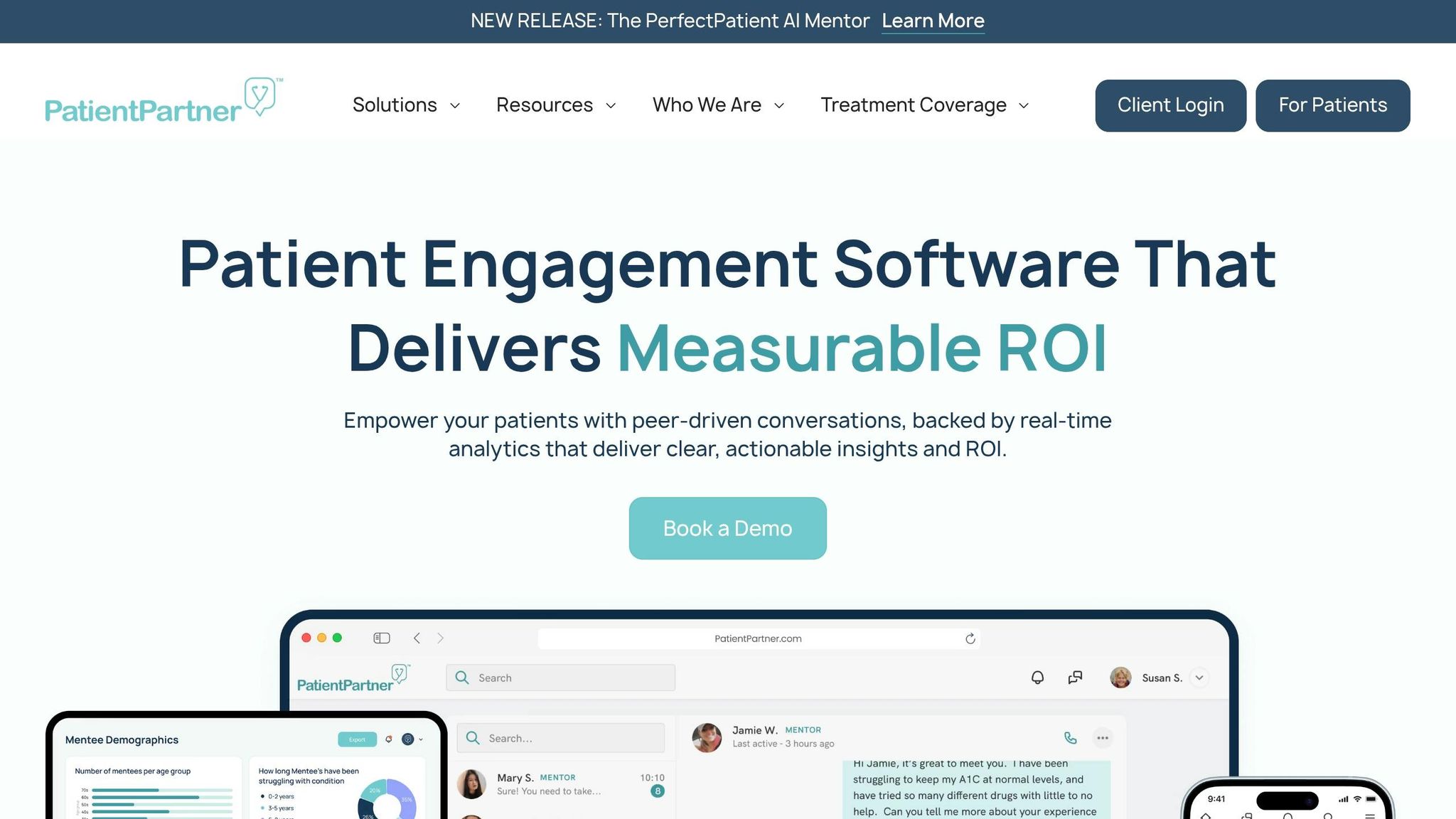
Even the best segmentation strategies can fall short when patients feel isolated or unsure about their treatment. This is where peer mentorship becomes invaluable. PatientPartner bridges this gap by connecting patients with mentors who have firsthand experience navigating similar treatment journeys, offering guidance that goes beyond standard clinical support.
"Patients are more likely to stay adherent when they truly understand their disease and the importance of their therapy." -
This personal connection can make a huge difference. Mentors help patients tackle concerns about side effects, learn proper injection techniques, and set realistic expectations during the early stages of a new therapy - all without requiring a doctor's appointment. PatientPartner enhances this process through features like personalized mentor matching, patient ambassador programs, and compliance-ready infrastructure. Together with data-driven strategies, these tools ensure that support reaches patients in the everyday moments when adherence is most critical.
Measuring and Scaling Adherence Programs
Using data-driven insights, it's time to focus on tracking and expanding adherence programs to maintain and improve patient outcomes.
Tracking Adherence with Key Metrics
To evaluate the success of adherence strategies and identify opportunities for improvement, tracking key performance indicators (KPIs) is essential. These metrics provide a clear picture of patient behavior and program effectiveness, validating the impact of personalized outreach and data integration efforts.
The Medication Adherence Rate (MAR) is a core metric, with programs aiming for rates above 80%. Another critical metric, the Refill Synchronization Rate (RSR), measures whether patients are aligning all prescriptions to a single refill date. A rate below 95% may indicate operational inefficiencies. Additionally, engagement metrics offer insights into where patients might disengage. For example, HealthIT.gov reports that "60% of patients have used portals to exchange secure messages with providers", making it a valuable channel to monitor.
For long-term program success, Customer Lifetime (CL) - the average time a patient stays active in the program - is a crucial indicator. The 2026 baseline is 24 months, with a goal of reaching 40 months by 2030. CL can be calculated using the formula: CL = 1 / Monthly Churn Rate (MCR).
KPI
What It Measures
2026 Benchmark
Review Frequency
Medication Adherence Rate (MAR)
Patients taking medications as prescribed
>80%
Monthly
Refill Synchronization Rate (RSR)
Prescriptions aligned to a single pickup date
>95%
Monthly
Customer Lifetime (CL)
Average active duration in the program
24 months
Quarterly
Scaling Adherence Programs That Work
Expanding adherence programs requires treating them as strategic assets rather than short-term projects. A tiered intervention model is particularly effective, combining automated reminders, caregiver notifications, pharmacist reviews, and provider escalation for clinical issues. This approach builds on earlier engagement strategies by ensuring that interventions are appropriately scaled to meet patient needs.
Before scaling, it's critical to address foundational elements like stabilizing dosing schedules and implementing equity measures. These could include multilingual alerts and low-tech options to ensure inclusivity. By prioritizing cross-functional collaboration and personalized engagement, programs can minimize the risk of excluding underserved populations.
"Medication adherence represents the highest-value entry point for enterprise pharmacy AI adoption, provided that governance-first design, workforce upskilling, and equity safeguards are embedded from inception." - Bickkie Solomon, PharmD, US Pharmacist
To scale effectively, establish a cross-functional steering committee that includes representatives from IT, Legal, Medical Affairs, and Marketing. Engaging teams like the Promotional Review Committee (PRC) or Medical-Legal-Regulatory (MLR) early in the design phase can help avoid regulatory setbacks. Programs built with robust governance and comprehensive adherence strategies have shown impressive results, with adherence rates increasing by 10% to 15% in targeted groups.
Conclusion: Key Takeaways for Pharma Marketing and Patient Services Teams
This playbook wraps up with practical strategies to enhance patient adherence. Think of patient adherence as a system where physician partnerships establish clinical trust, personalized patient engagement fosters commitment, and data integration ensures timely and precise interventions. When these elements work together, the results speak for themselves - adherence programs consistently improve outcomes for targeted patient groups.
Technology plays a crucial role in amplifying these efforts. Tools like multi-channel automated reminders, AI-driven microsegmentation, and real-time patient services and support programs such as PatientPartner help align patient intentions with treatment behaviors. A standout example comes from IQVIA's pharmacy adherence program: pharmacies involved in the program experienced an 8.6% increase in medication use, compared to just 2.6% in non-participating locations. These numbers translate to more patients staying on their prescribed treatments and seeing better health outcomes. It’s a clear reminder of how technology can reinforce the tailored engagement strategies discussed earlier.
That said, the human element remains irreplaceable. While data can identify patients at risk, it’s mentorship and personal connection that truly resonate. Peer-to-peer support, personalized outreach, and accessible education build the trust needed for long-term adherence. As Deloitte highlights:
"Pharma-created portals can enrich the patient experience and even support physicians and public health."
FAQs
How can we quickly identify each patient’s main adherence barrier?
The quickest way to pinpoint a patient’s main challenge with adherence is through direct assessment - this can include interviews or using structured tools. These methods help reveal obstacles like forgetfulness, financial constraints, or a lack of understanding about their treatment. By assessing their unique circumstances, healthcare providers can offer personalized solutions to boost medication adherence and overall health outcomes.
What data sources should we connect to predict nonadherence in real time?
To anticipate nonadherence as it happens, it's crucial to tap into various data sources that shed light on patient behavior and potential risk factors. Some key sources to consider include:
By leveraging these data streams, healthcare providers can implement timely, focused interventions to address nonadherence before it becomes a critical issue.
Which KPIs show our adherence program is effective?
Key performance indicators (KPIs) that help gauge the success of your adherence program include:
These KPIs collectively reveal how well your program is improving treatment compliance and fostering patient involvement, giving you a better understanding of its overall impact.
Related Blog Posts
- How Real-Time Mentorship Drives Patient Adoption in Pharma
- The Role of Patient Mentors in Improving Treatment Adherence
- Transforming Patient Support: Innovative Technologies for Pharma Leaders
- Why Patients Stop Taking Prescribed Medication (and What Pharma Can Actually Do About It)
{"@context":"https://schema.org","@type":"FAQPage","mainEntity":[{"@type":"Question","name":"How can we quickly identify each patient’s main adherence barrier?","acceptedAnswer":{"@type":"Answer","text":"<p>The quickest way to pinpoint a patient’s main challenge with adherence is through <strong>direct assessment</strong> - this can include interviews or using structured tools. These methods help reveal obstacles like forgetfulness, financial constraints, or a lack of understanding about their treatment. By assessing their unique circumstances, healthcare providers can offer personalized solutions to boost medication adherence and overall health outcomes.</p>"}},{"@type":"Question","name":"What data sources should we connect to predict nonadherence in real time?","acceptedAnswer":{"@type":"Answer","text":"<p>To anticipate nonadherence as it happens, it's crucial to tap into various data sources that shed light on patient behavior and potential risk factors. Some key sources to consider include:</p> <ul> <li><strong>Retrospective medication adherence data</strong>: This helps identify recurring patterns and potential risks based on past behavior.</li> <li><strong>Population health data</strong>: Offers a broader view of adherence trends within specific groups or demographics.</li> <li><strong>Patient assessments and pharmacy intervention data</strong>: Provides real-time insights for profiling and understanding individual patient needs.</li> <li><strong>Patient portal and digital platform data</strong>: Tracks medication usage and engagement through tools like apps and online platforms.</li> </ul> <p>By leveraging these data streams, healthcare providers can implement timely, focused interventions to address nonadherence before it becomes a critical issue.</p>"}},{"@type":"Question","name":"Which KPIs show our adherence program is effective?","acceptedAnswer":{"@type":"Answer","text":"<p>Key performance indicators (KPIs) that help gauge the success of your adherence program include:</p> <ul> <li><strong>Medication refill rates</strong>: A reliable indicator of whether patients are consistently obtaining their medications.</li> <li><strong>Patient engagement levels</strong>: Reflects how actively patients are participating in their treatment plans.</li> <li><strong>Adherence metrics like MPR or PDC</strong>: Measures such as <em>Medication Possession Ratio (MPR)</em> or <em>Proportion of Days Covered (PDC)</em> provide clear insights into how well patients stick to their prescribed regimens.</li> <li><strong>Patient satisfaction scores</strong>: A direct way to understand how patients feel about the program and their overall experience.</li> </ul> <p>These KPIs collectively reveal how well your program is improving treatment compliance and fostering patient involvement, giving you a better understanding of its overall impact.</p>"}}]}