


Real-Time Patient Support: Case Study Results
Key Takeaways
Author


Real-time patient mentorship is transforming healthcare support by offering immediate, personalized guidance to patients navigating complex treatment decisions. This approach connects patients with trained mentors who provide help with insurance, reimbursement, and treatment techniques, leading to better outcomes.
Key findings from a case study with a pharmaceutical company include:
- 68% increase in new patient starts for those paired with mentors.
- Patients stayed on therapy for 133.5 days longer on average.
- Therapy initiation was faster by 4 days, and patient enrollment rose by 59%.
The program’s success stems from matching patients with mentors who share similar experiences, using omnichannel communication, and integrating seamlessly into existing healthcare systems. This combination improves patient confidence, adherence, and overall engagement.
Patient and mentor testimonials highlight the emotional and practical value of this support, making healthcare decisions less overwhelming and more effective.

Real-Time Patient Mentorship Program Results and Key Metrics
Case Study Overview: Real-Time Mentorship in Action
Background and Goals
A top 10 pharmaceutical company faced mounting challenges with its high-revenue biologic medication for dermatology and rheumatology. The product entered a competitive formulary environment, and patient enrollment began rising unpredictably. This surge in demand strained the company’s existing support infrastructure, which wasn’t equipped to handle the increased volume effectively.
The company needed a solution that could scale quickly. Their objectives were straightforward: boost patient enrollment, accelerate therapy initiation, and ensure long-term adherence. However, they also had to navigate complex reimbursement processes and access challenges. Traditional support models, with fixed staffing and limited flexibility, fell short in addressing these fluctuating demands and the specialized education required for injectable biologics.
A more dynamic and adaptable approach was essential.
PatientPartner's Role
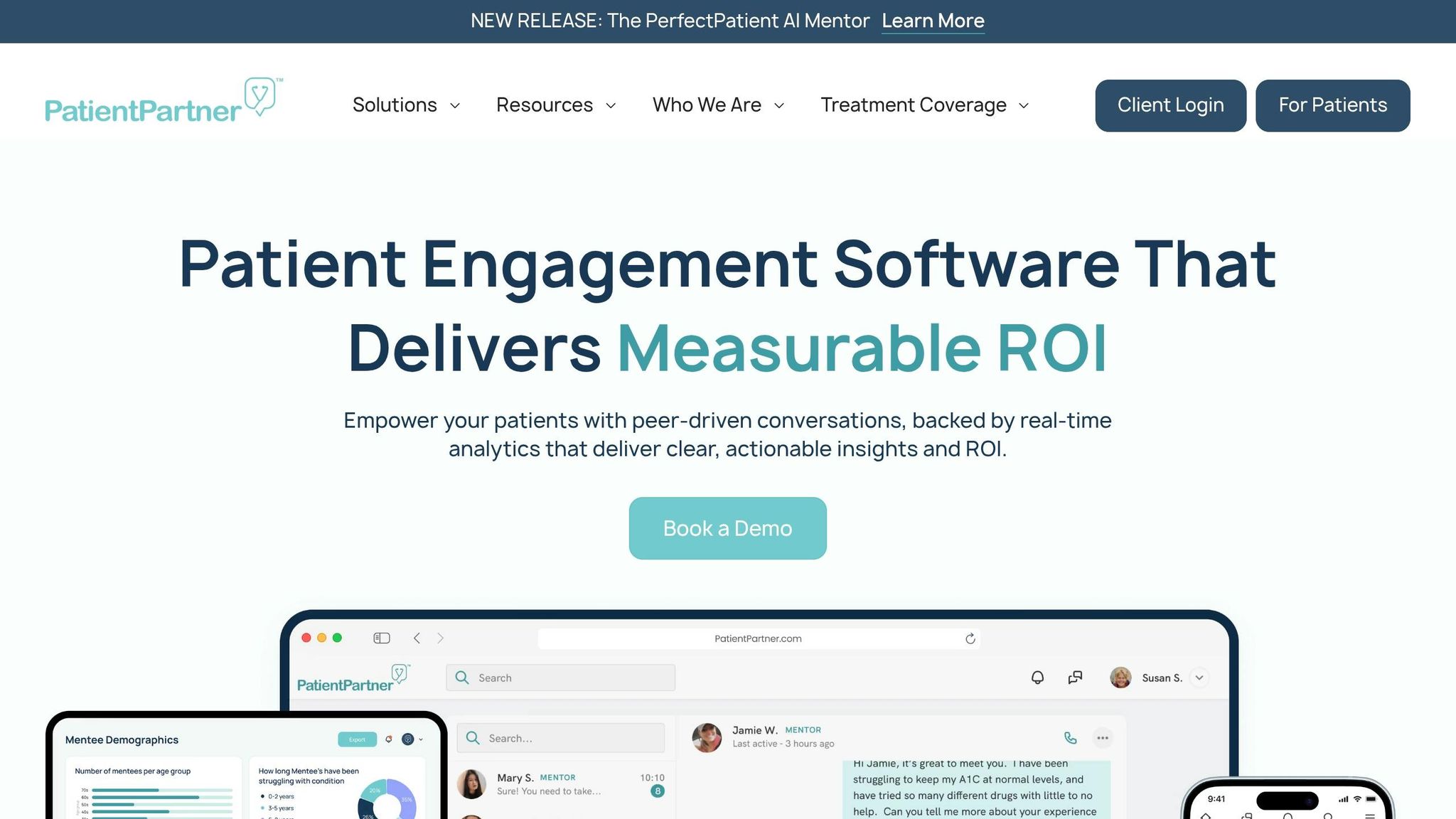
To address these issues, PatientPartner introduced a flexible staffing model that seamlessly expanded the company’s team. Through this program, 12 registered nurses - carefully selected for their expertise in patient education and adherence - were integrated into the client’s operations. These nurses received specialized training in motivational interviewing and empathetic communication, equipping them to address barriers patients faced.
The program was designed to provide timely, personalized guidance while maintaining alignment with the client’s existing systems. PatientPartner implemented an omnichannel approach, enabling nurses to connect with patients through various channels, including phone, chat, and digital platforms. This allowed them to offer comprehensive support throughout the patient journey, covering areas such as disease education, injection training, adverse event management, and reimbursement navigation.
The result was a performance-driven solution that could handle enrollment surges while still delivering personalized, high-quality care to patients. This approach is further enhanced by patient engagement software that combines empathy with compliance to improve long-term outcomes.
sbb-itb-8f61039
Implementation Process
Personalized Mentor Matching
PatientPartner uses a smart, data-driven system to pair patients with mentors who have walked a similar healthcare path. By analyzing patient profiles - including their diagnosis, treatment plans, and personal circumstances - the platform ensures that each patient is matched with someone who truly understands their journey. This isn't just a nice idea; mentorship’s impact on patient decision making is well-documented. According to PatientPartner, patients connected with mentors through the platform are 68% more likely to start their prescribed treatment. Plus, the platform seamlessly integrates with the client’s existing systems, making deployment both swift and compliant.
Integration with Client Workflows
PatientPartner's platform was up and running in just four months, keeping interruptions to the pharmaceutical company’s operations to a minimum. The technology syncs with enterprise marketing, patient support, and commercial teams, creating a streamlined approach to engaging patients.
The integration centers around three key areas:
- HIPAA-Compliant Security: Features like automated oversight, role-based access, end-to-end encryption, and audit trails protect patient privacy and ensure compliance.
- Real-Time Analytics: Clients gain actionable insights into patient engagement and ROI, helping them adjust strategies quickly when needed.
- Omnichannel Communication: Patients can connect with mentors through phone, chat, or digital platforms, all seamlessly integrated into the client’s existing communication tools.
This setup eliminates the need for patients to learn new systems, making it easier for them to get the support they need and start their treatment sooner.
CLF Mentorship Program - Peer Support for Concussion Patients and Caregivers
Results and Metrics
After introducing PatientPartner's real-time mentorship platform, the pharmaceutical company experienced measurable success in key areas: patient starts, adherence rates, and overall patient confidence. These gains directly contributed to stronger patient engagement and better adherence, showcasing the platform's impact in tackling critical challenges.
Increased Patient Starts
One standout result was a 68% rise in new patient starts for those who connected with a mentor. This addressed the company's pressing challenge of turning diagnosed patients into active participants in treatment. Additionally, the company saw a 30% boost in overall treatment adoption rates, proving the platform's ability to encourage patients to begin therapy.
Improved Adherence Rates
The mentorship program also significantly improved adherence, with a 29% increase in patients sticking to their treatment plans. On average, patients supported by mentors remained on therapy for 133.5 days longer than those without this guidance. These results highlight how personalized mentor support can lead to better health outcomes.
"Patient Partner has been influential in helping patients understand the benefits of our product, providing them with personalized guidance and real-life experiences to support their decision-making".
This insight from Brad A. of Mainstay Medical emphasizes how mentorship fosters better patient outcomes through tailored support.
Patient Sentiment Data
Beyond the numbers, patient confidence tells a compelling story. Among those paired with mentors, 90% reported feeling more confident about proceeding with their treatment. This increased confidence often translated into action, as supported patients were more likely to start and stay on therapy.
"We knew patient trust was shifting, but seeing just how dramatically patients now prefer peer-to-peer engagement over traditional methods is a game-changer for our upcoming strategies".
Sara W., a Marketing Director in the rare disease sector, highlights how patient sentiment confirms the value of real-time mentorship in driving better outcomes.
Patient and Mentor Experiences
The data paints a clear picture, but it’s the voices of patients and mentors that truly highlight the impact of real-time mentorship. Their stories reveal how personal connections can make complicated healthcare decisions feel more manageable, turning uncertainty into confidence through peer support.
These personal accounts add depth to the metrics, showing how mentorship reshapes patient care on a deeply human level.
Patient Testimonials
For many patients, mentorship becomes the defining moment in their treatment journey. Talking with someone who has been through a similar experience helps eliminate fear and confusion, replacing hesitation with a sense of direction. Patients often mention how these conversations address practical concerns - like handling side effects or dealing with insurance issues - that medical advice alone doesn’t always cover. They feel less alone and more empowered to advocate for themselves, with mentors offering the encouragement needed to take that first crucial step toward treatment.
The reassurance and guidance provided by mentors go beyond practical advice, offering emotional support that’s just as vital.
Mentor Perspectives
For mentors, the experience is equally rewarding. Many describe a profound sense of fulfillment in helping others avoid the difficulties they once faced. They stress the importance of listening without judgment, giving patients the space to voice their fears and ask questions at their own pace. By sharing both the highs and lows of their journey, mentors build trust quickly. Patients appreciate the honesty about what treatment is really like - from the day-to-day adjustments to the emotional challenges.
Mentors also value the structured framework that keeps their interactions focused and impactful. For them, turning their personal recovery into a resource for others adds a new layer of meaning to their own experience, making their journey feel purposeful.
These stories make it clear: real-time mentorship doesn’t just improve outcomes - it transforms lives.
Lessons Learned and Scalability
Real-world experiences reveal that mentorship programs thrive on structured planning, ongoing oversight, and systems that scale without losing the personal connection that makes them effective.
Challenges and Solutions
One major challenge was patient drop-off caused by fear and uncertainty. Even when patients were paired with mentors, some hesitated to engage or abandoned the process midway. The solution? Focus on relatability. By matching patients with mentors who had experienced similar healthcare journeys, the program saw a consistent increase in treatment initiation rates.
Regulatory compliance posed another obstacle. Ensuring adherence to HIPAA, SOC 2, and ISO 27001 standards while scaling peer-to-peer conversations required automated monitoring systems. These systems had to ensure security without stalling interactions. PatientPartner tackled this by embedding compliance directly into the platform's framework, allowing natural conversations while meeting all necessary security standards.
Another hurdle involved integrating the platform into existing workflows at pharmaceutical and med-tech companies. Brad A. from Mainstay Medical emphasized the importance of personalized guidance in helping patients understand the benefits of specific products. PatientPartner achieved rapid implementation - under four months - minimizing disruption while customizing the platform to each client’s processes.
These challenges underscored the importance of scalable systems that preserve the personalized care patients value most.
Scaling Best Practices
Drawing from these lessons, PatientPartner refined its approach to combine scalability with personalization. Their strategy rests on three key pillars: automated matching algorithms to quickly pair patients with suitable mentors, continuous monitoring to maintain the quality of interactions, and the integration of an AI mentor to provide immediate, tailored support when needed.
The platform’s success is evident in the measurable outcomes achieved by its clients. Melissa B. from Sobi Pharmaceuticals described PatientPartner as:
"Patient Partner is a unicorn in the industry, setting a new standard with their clear dedication to the mission of positively impacting patients' lives through innovation and compassionate support".
This success stems from viewing scalability not as a volume issue but as a challenge of delivering personalized experiences at scale. By leveraging technology, the platform ensures individualized care reaches more patients without sacrificing quality.
PatientPartner’s adaptable design allows it to expand across various healthcare sectors without requiring a complete overhaul. From supporting pharmaceutical product launches to advancing med-tech device adoption or clinical trial recruitment, the platform’s core infrastructure adjusts seamlessly to different needs - all while staying true to its mission of improving patient outcomes through real-time, individualized support.
Conclusion
Real-time mentorship programs are reshaping how pharmaceutical and med-tech companies assist patients during critical treatment decisions. When patients connect with mentors who have firsthand experience navigating similar healthcare challenges, the impact is clear: increased treatment initiation, stronger adherence, and improved health outcomes.
PatientPartner's approach tackles long-standing obstacles in treatment adherence and initiation. By blending personalized mentor matching with a compliance-ready framework, the platform addresses issues such as the staggering 51% of patients who remain out of reach in traditional programs.
What sets this platform apart is its ability to scale while maintaining a personal connection. It demonstrates that technology and human interaction can work hand in hand. Mentors play a pivotal role in enhancing expert care, leading to better adherence and higher patient satisfaction. For pharmaceutical companies introducing new treatments and med-tech firms promoting device adoption, this translates into measurable business benefits while delivering meaningful care.
The flexibility of this model across various healthcare sectors ensures its core mission stays intact - improving patient outcomes.
As the healthcare landscape evolves, real-time patient mentorship isn’t just a small step forward. It represents a reimagined way of supporting patients, offering tangible results for both individuals and the companies dedicated to serving them.
FAQs
How do you match each patient to the right mentor?
Patients are paired with mentors through a system that tailors support to their unique needs and healthcare journey. Factors such as their medical condition, treatment plan, and personal preferences are carefully considered to connect them with the most appropriate mentor. This one-on-one, real-time mentorship plays a key role in boosting treatment adherence and improving overall patient outcomes.
How is patient privacy protected during mentor conversations?
The article does not include any information on the measures taken to ensure patient privacy during mentor conversations.
What does it take to integrate this into our existing patient support workflows?
Integrating real-time patient mentorship into existing workflows involves thoughtful planning and execution. Start by assessing current workflows to pinpoint areas where mentorship can make the most impact. Next, focus on connecting the mentorship platform with tools like EHRs and communication systems to streamline operations. Finally, train your staff to confidently match patients with mentors, ensuring the process runs smoothly. Clear protocols are essential to maintain consistency and enhance patient outcomes.