


Why Compliance Analytics Matters for Pharma Executives

Key Takeaways
Author


Compliance analytics is more than just following regulations - it’s about improving patient trust and ensuring better treatment adherence. By using real-time data, pharmaceutical companies can ensure their communications are accurate, secure, and aligned with regulatory standards. This not only reduces risks like data breaches and off-label marketing penalties but also helps patients stay on track with their treatments.
Key takeaways:
- Patient trust and safety: Protecting data and ensuring honest communication builds confidence in treatment plans.
- Regulatory compliance: Avoid costly penalties by meeting standards like HIPAA, GDPR, and FDA guidelines.
- Improved adherence: Tools like automated reminders and counseling address common barriers like forgetfulness or financial challenges.
- Operational efficiency: Advanced analytics reduce documentation errors, cut compliance costs by up to 40%, and speed up audit processes.
Compliance analytics transforms regulatory obligations into a way to improve patient outcomes and streamline operations, making it a critical investment for the pharmaceutical industry.
Next Gen Pharma Compliance: Data Analytics & Automation | Lextegrity
sbb-itb-8f61039
Main Compliance Risks in Pharmaceutical Communications
Pharmaceutical executives navigate a challenging landscape when it comes to patient communications. Three primary compliance risks stand out, each carrying legal and financial stakes that could disrupt even the most well-established companies. Grasping these risks is essential to ensure communications align with regulatory standards and meet patient expectations.
Data Privacy and Security Requirements
Protecting patient information is a cornerstone of maintaining trust. In the U.S., HIPAA governs the handling of Protected Health Information (PHI), while the GDPR sets similar standards in the European Union. PHI includes sensitive details like names, addresses, diagnoses, and even genomic data. The consequences of failing to safeguard this data are steep. For instance, in 2023 alone, there were 725 reported large-scale security breaches in the U.S. healthcare sector, averaging more than two per day.
Pharmaceutical companies must also meet FDA 21 CFR Part 11 requirements, which ensure electronic records are as reliable as traditional paper records. These regulations often mandate retaining communication data for a minimum of six years, with some clinical trial data requiring indefinite storage. A single breach can have catastrophic results - like the 2024 incident that exposed data from hundreds of millions of patients.
Regulatory Rules for Patient Interactions
The FDA enforces strict guidelines to ensure patient communications are accurate and balanced. The fair balance requirement mandates that advertisements provide truthful information, presenting both the benefits of a drug and its potential risks, including side effects and contraindications. Failing to meet these standards can lead to a drug being classified as "misbranded."
Off-label promotion is another high-risk area. While companies can share certain scientific information on unapproved uses (SIUU), they are strictly prohibited from making promotional claims about a drug's safety or effectiveness for those unapproved indications. Additionally, direct-to-consumer advertisements must include instructions for reporting adverse effects to the FDA.
"A prescription drug is considered 'misbranded' if its labelling or advertising fails to satisfy FDCA requirements and FDA regulations." - ICLG
What Happens When Companies Fail to Comply
Non-compliance with these regulations can lead to severe consequences. A notable example is the $2.2 billion settlement paid by Johnson & Johnson in 2013 to resolve criminal and civil investigations. The case involved allegations of off-label marketing for the antipsychotic drug Risperdal, as well as kickbacks to pharmacists. This remains one of the largest settlements in the pharmaceutical industry and highlights the intense scrutiny regulators apply to communications.
The fallout from non-compliance goes beyond financial penalties. Companies risk product recalls, delays in drug approvals, criminal charges against executives, and long-lasting reputational harm. Rebuilding trust with patients, healthcare providers, and research partners can take years. Moreover, increased regulatory oversight diverts resources away from innovation. However, adhering to compliance standards not only avoids these pitfalls but also reinforces the organization's commitment to transparency and patient safety, which can enhance trust and loyalty in the long run.
How Compliance Analytics Builds Patient Trust and Adherence

How Compliance Analytics Addresses Patient Adherence Barriers in Pharma
Compliance analytics takes compliance beyond just meeting regulations - it becomes a powerful way to build trust and improve treatment outcomes. When patients feel confident that their data is secure and communications are honest, they’re more likely to stick with their treatment plans and share critical health information.
Creating Clear and Accountable Communication
Real-time monitoring tools ensure every patient interaction aligns with regulatory standards while staying transparent. For instance, by recording patient counseling sessions and Medication Therapy Management (MTM) activities, these systems create audit trails that verify accountability. When patients consistently receive messages that prioritize their safety, it reinforces trust and demonstrates that their health comes first - not promotional agendas.
"Trust is the foundation of a patient and provider relationship." - Healthcare Compliance Pros
Automated systems also catch potential issues before they reach patients. For example, Drug Utilization Review (DUR) alerts can flag dangerous drug interactions during dispensing, preventing harmful combinations. This proactive approach reassures patients that their care is being closely monitored, fostering confidence in their treatment plans. Ultimately, this accountability supports data-driven strategies that enhance adherence.
Using Data to Improve Patient Adherence
Transparent communication is just the start - analytics also tackle the root causes of non-adherence. Whether it’s forgetfulness, side effects, or financial hurdles, compliance systems offer targeted solutions. These include automated reminders for refills, digital coupons to lower costs, or medication synchronization that simplifies prescription pickups. The table below outlines how compliance analytics address common adherence challenges:
| Patient Barrier to Adherence | Analytics-Driven Compliance Solution |
|---|---|
| Forgetfulness | Automated text, email, and IVR refill reminders |
| Lack of Understanding | Medication Therapy Management (MTM) and documented counseling |
| Side Effect Concerns | Appointment-based counseling |
| Financial Constraints | Electronic coupons and e-vouchers to reduce out-of-pocket costs |
| Inconvenience | Medication synchronization and mobile delivery tracking |
As healthcare shifts toward value-based care, reimbursement increasingly depends on adherence metrics. Compliance analytics provide performance dashboards that help providers identify patients who may be struggling to meet quality measures. These insights allow for timely interventions, ensuring patients stay on track with their treatments. By leveraging this data-driven approach, pharmaceutical companies and healthcare providers can work together to make adherence a shared goal.
What Makes Compliance Analytics Tools Work
Compliance analytics tools are essential for safeguarding companies against regulatory violations while maintaining patient trust. Here's a closer look at the key elements that make these tools effective.
Real-Time Monitoring and Alerts
Advanced AI systems constantly monitor communication channels like emails, Slack messages, and video calls to identify compliance risks as they occur. For instance, if someone mentions an off-label use or discusses an adverse event, the system flags it immediately and notifies compliance officers. This quick response helps prevent minor issues from escalating into major regulatory problems.
These systems integrate seamlessly with existing platforms, ensuring comprehensive oversight of all interactions. This streamlined approach can significantly cut down audit preparation time, reducing it from weeks to just a few hours.
Sentiment Analysis to Detect Bias
Natural language processing (NLP) tools go beyond basic keyword detection by analyzing tone and intent. By identifying patterns in language, these tools can catch early signs of bias, misconduct, or unethical marketing practices that might harm patient trust or attract regulatory attention.
For example, in 2023, a pharmaceutical analytics company implemented an AI system at a sterile fill-finish facility. This system reviewed thousands of FDA 483 observations and uncovered vulnerabilities in the facility's environmental monitoring program - issues that the human quality team had missed. Addressing these concerns proactively allowed the facility to pass its next FDA inspection without any observations. Considering that human factors account for 40% to 65% of serious Good Manufacturing Practice (GMP) deviations, this kind of analysis is invaluable.
These insights also contribute to more thorough reporting and audit capabilities.
Detailed Reporting and Audit Trails
Automated systems create tamper-proof documentation that complies with FDA 21 CFR Part 11 and EMA standards. These tools generate encrypted audit trails, ensuring that all changes are tracked and preserved. Pharmaceutical companies are often required to store communication data for at least six years, with some clinical trial data needing indefinite retention.
By leveraging these capabilities, companies can ensure their communications remain compliant while also fostering better patient engagement and adherence through personalized support. Predictive compliance tools have been shown to reduce violations by 40% and cut audit findings by 25%. Given that major pharmaceutical firms have paid over $62 billion in fines and settlements over the past 30 years, the importance of robust audit trails cannot be overstated.
| Feature | Function | Regulatory Benefit |
|---|---|---|
| Real-Time Alerts | Flags off-label or adverse event mentions instantly | Prevents immediate regulatory violations |
| Sentiment Analysis | Detects bias or misconduct in communication | Ensures ethical marketing and fair communication |
| Audit Trails | Maintains tamper-proof records of all changes | Satisfies FDA 21 CFR Part 11 and EMA standards |
| NLP Analysis | Extracts obligations from legal texts | Ensures policies align with current global laws |
| Automated Archiving | Captures data across Slack, email, and video | Meets 6-year (or indefinite) retention rules |
PatientPartner: A Compliance-Ready Solution for Pharma
Data-Driven Patient Mentorship
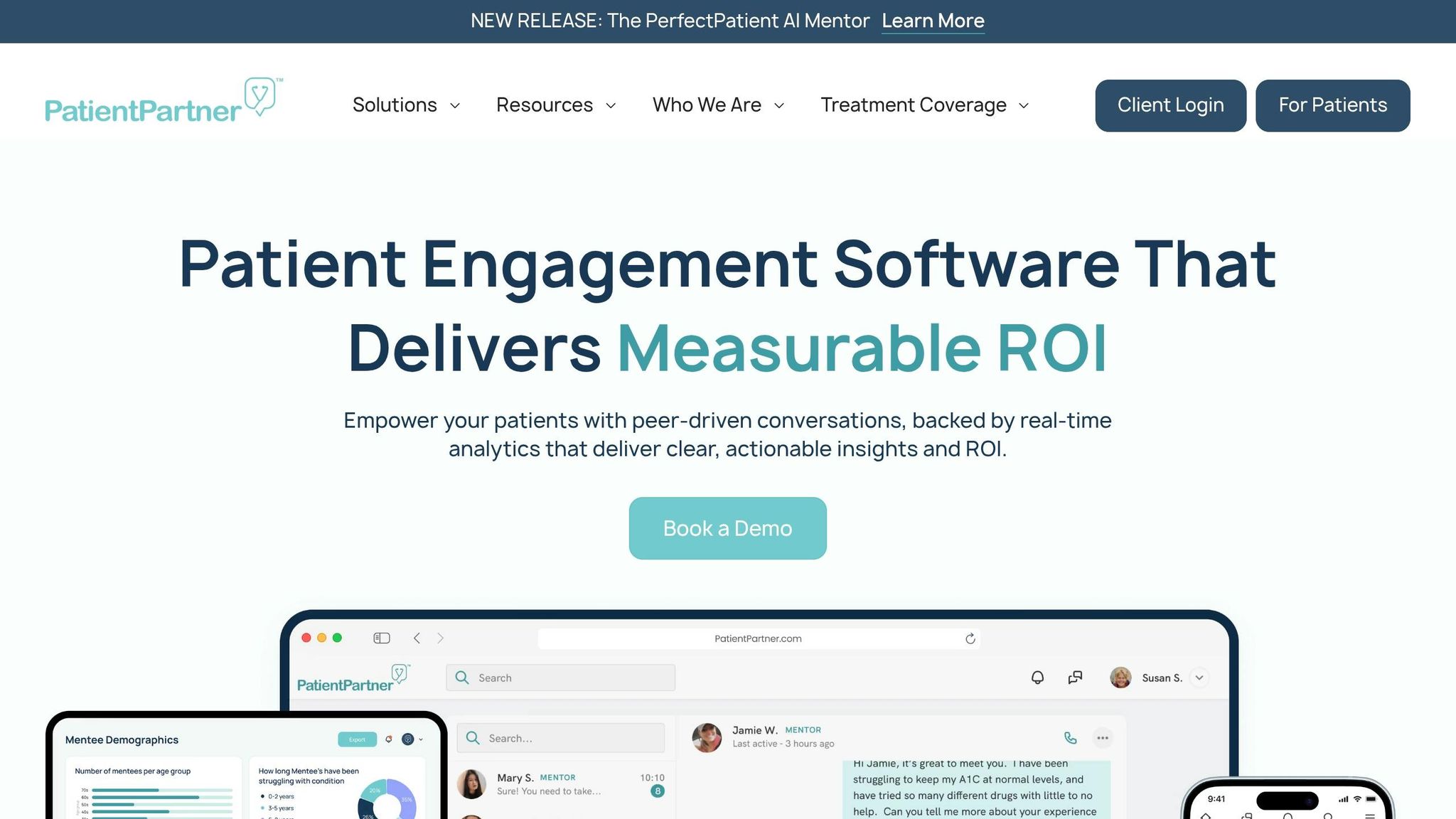
PatientPartner offers regulation-compliant mentorship by ensuring all interactions adhere to approved labels and regulatory guidelines. The platform employs sentiment analysis to identify and address bias in real time, helping pharmaceutical companies maintain uniformity across thousands of patient interactions while reducing compliance risks.
By analyzing enforcement letters from the Office of Prescription Drug Promotion (OPDP), PatientPartner identifies patterns and avoids common errors in patient communication. George Kramb, CEO & Co-Founder of PatientPartner, highlights this focus:
"Compliance is at the core of everything we do. PatientPartner's platform is fully HIPAA and GDPR compliant, employing end-to-end encryption, role-based access controls, and audit trails to protect patient data".
This dedication to compliance extends to monitoring every interaction on the platform at scale.
Compliance Monitoring at Scale
PatientPartner ensures oversight of all peer-to-peer interactions through automated systems that meet HIPAA, SOC 2, and ISO 27001 standards. The platform's automated adverse event (AE) detection scans conversations for potential side effects or medical complaints that require regulatory reporting, flagging them immediately for review. This robust security framework, featuring end-to-end encryption, role-based access controls, and audit trails, directly addresses the compliance risks mentioned earlier.
Real-time analytics provide actionable insights for commercial and patient services teams while maintaining strict regulatory compliance. The platform integrates seamlessly with existing enterprise workflows and can be implemented in under four months, enabling mentorship programs to scale without disrupting operations.
Building Patient Trust and Adherence
PatientPartner's compliance tools go beyond oversight to deliver measurable improvements in patient outcomes. By leveraging these monitoring systems, the platform fosters patient trust and encourages treatment adherence. Mentored patients are 68% more likely to begin treatment, demonstrate 29% higher adherence rates, and stay on therapy an average of 133.5 days longer.
Brad A. from Mainstay Medical shares:
"Patient Partner has been influential in helping patients understand the benefits of our product, providing them with personalized guidance and real-life experiences to support their decision-making".
Calculating the ROI of Compliance Analytics
Metrics to Track
When it comes to compliance analytics, focusing on metrics that showcase tangible business outcomes is key. For pharmaceutical executives, this means moving beyond basic activity tracking and zeroing in on metrics that reveal real financial impact. Some of the most important indicators include EBITDA improvements, cost savings from reduced scrap and rework, and lower labor costs for documentation. In fact, adopting comprehensive compliance analytics can slash overall compliance costs by 25–40%.
Consider this: manual document handling costs about $20 per document, while digital document management reduces that to just $4.82 - a staggering 75% drop in labor costs. And the stakes are even higher with documentation errors, which can cost anywhere from $5,000 to $10,000 each, sometimes reaching as much as $100,000 (excluding product recalls). Digital quality systems, on the other hand, can cut deviation rates by 65–80% and reduce investigation times by 50–70%.
But it’s not just about the financial side. Patient outcomes are equally critical. Analytics-driven adherence programs can improve medication persistence by 35% through clinical trial adherence and timely outreach. Over time, the benefits compound: advanced analytics can increase pharmaceutical EBITDA by 15–30% within five years, with potential growth of 45–75% over a decade. As Amie Harpe from Sakara Digital aptly puts it:
"Data quality is not just a compliance requirement, it is a strategic investment with measurable return".
These quantifiable benefits make it possible to clearly compare compliance practices before and after implementing analytics.
Before and After Analytics Comparison
Switching from reactive to proactive compliance monitoring brings measurable improvements across the board. Before analytics, companies typically relied on manual processes that only flagged violations after they occurred. With analytics in place, organizations can achieve faster market approvals, boost the net present value of new drugs, and build investor confidence by showcasing their commitment to ESG frameworks.
Companies with strong compliance records also experience fewer regulatory delays, which means quicker time-to-market and better protection for stock prices. Beyond avoiding fines and penalties, a proactive compliance approach transforms compliance from a necessary expense into a strategic advantage. It drives better patient outcomes and delivers long-term value for shareholders.
Conclusion
For pharmaceutical executives, compliance analytics lays the groundwork for building patient trust and encouraging long-term adherence. The World Health Organization has noted that "Improving medication adherence would have a greater impact on the health of the population than any new treatments or inventions".
As discussed earlier, monitoring communication patterns plays a central role in creating this trust-driven environment. By focusing on patient-centric interactions, executives can foster a space where patients feel comfortable sharing their challenges with medication adherence. Dr. Marie T. Brown from Rush University Medical Center highlights this need:
"Until we develop a completely blame-free environment, we're never going to provide a safe space for the patient to tell us that they're not taking their medicine".
PatientPartner addresses these challenges through its combination of real-time patient mentorship and advanced compliance monitoring. The platform ensures that every stage - from onboarding to follow-up - delivers clear, non-judgmental communication. This consistent approach not only strengthens patient trust but also helps meet regulatory expectations while turning patient engagement into a competitive advantage. Additionally, by streamlining administrative tasks, compliance analytics allows pharmaceutical companies to focus on improving patient outcomes.
In an industry where trust is key to adherence, compliance analytics provides the edge needed to lead and succeed.
FAQs
How is compliance analytics different from standard compliance?
Compliance analytics takes compliance efforts to the next level by leveraging data-driven insights to actively monitor and address risks. Unlike standard compliance, which often depends on manual checks and periodic audits, compliance analytics works in real time, analyzing communication and operational data. This method enables pharmaceutical companies to identify potential issues, such as off-label promotion or improper payments, as they occur. By doing so, it not only ensures regulatory adherence but also strengthens patient trust and contributes to improved patient outcomes.
What pharma communications should be monitored for compliance risk?
Pharmaceutical communications related to drug promotion, labeling, and advertising require careful oversight due to strict regulations from agencies like the FDA. Claims about a product's efficacy, safety, or approved uses must be accurate and backed by evidence to avoid regulatory issues. Beyond this, it's essential to monitor clinical trial disclosures, adverse event reporting, and digital content - such as social media posts - to ensure compliance with standards and uphold patient confidence.
How do you measure ROI from compliance analytics?
Calculating ROI from compliance analytics involves weighing the benefits against the costs. The key lies in assessing areas like risk mitigation, avoiding penalties, and boosting operational efficiency. These improvements often lead to tangible financial benefits and better overall business performance.