


How AI Coaches Improve Patient Adherence
Key Takeaways
Author


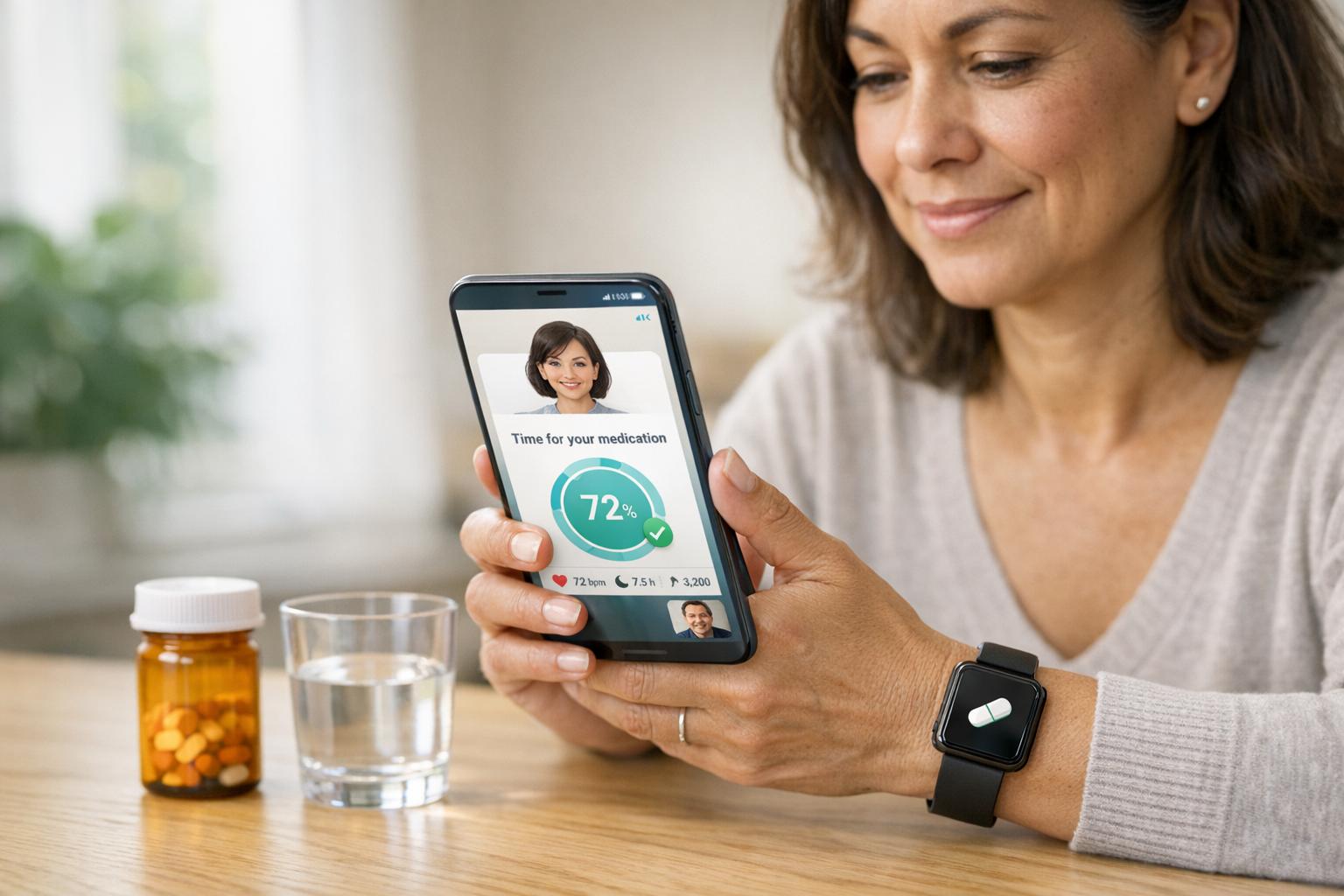
AI coaches are reshaping how patients stick to treatment plans. They provide personalized, real-time support that goes beyond basic reminders, helping patients manage medications, overcome emotional hurdles, and stay engaged. By analyzing emotional cues, tailoring interventions, and addressing common barriers like cost concerns or complex instructions, AI systems make adherence easier and more effective.
Key takeaways:
- Tailored guidance: AI platforms adapt to individual needs, boosting adherence by up to 32.7%.
- Emotional intelligence: They detect frustration or confusion, responding empathetically to keep patients engaged.
- Data-driven support: AI integrates clinical, behavioral, and emotional data to predict risks and offer timely interventions.
- Hybrid approach: Combining AI with human mentors ensures patients receive both scalable and empathetic support.
- Proven results: Programs report a 91% retention rate, faster dose titration, and improved patient outcomes.
AI coaching is transforming patient care by addressing adherence challenges with precision and empathy.

AI Coaching Impact on Patient Adherence: Key Stats & Outcomes
AI Coaching Brings Care Into the Patient’s Moment of Need
sbb-itb-8f61039
Setting Clear Patient Adherence Goals
When it comes to using AI to improve patient adherence, clarity is everything. Without well-defined goals, even the most advanced AI systems can fall short. To achieve measurable outcomes, it’s essential to establish specific targets that align with both patient health objectives and organizational benchmarks. This level of precision is what separates programs that succeed from those that falter.
Identifying Key Adherence Metrics
Two primary metrics - Proportion of Days Covered (PDC) and Medication Possession Ratio (MPR) - are widely used to measure adherence.
- PDC tracks the percentage of days a patient has their medication available, with 80% typically considered the threshold for adherence.
- MPR calculates the ratio of days' supply dispensed relative to the total days in a given period.
Together, these metrics provide a clear, objective picture of how well patients stick to their treatment plans. Research shows that AI-based tools can boost medication adherence by anywhere from 6.7% to 32.7% compared to standard care. However, these gains are only possible when programs are built around clearly defined goals from the outset.
Once metrics are in place, the next step is tailoring interventions to each patient’s unique risk level.
Segmenting Patients by Risk and Need
Not all patients face the same challenges, so grouping them by risk level - high, moderate, or low - makes it easier to provide targeted support. For example, a newly diagnosed patient navigating a complex biologic therapy will need more intensive coaching than someone with a stable routine on oral medication.
Effective segmentation goes beyond clinical data, incorporating factors like health literacy, adherence history, and psychological profiles. This allows AI tools to predict who is most likely to disengage and customize interventions accordingly.
A compelling example comes from a study involving 33,344 Medicare patients. The AllazoHealth AllazoEngine AI platform used risk-based targeting to determine which patients should receive live calls or mailers. The results? Patients in the AI-targeted group were 6.1% more likely to stay adherent than those in the control group. Additionally, the platform’s predictive accuracy improved from 86.9% to 97.7% in just six months.
Once patients are segmented, mapping their journey can reveal where adherence tends to break down.
Mapping the Patient Journey to Find Barriers
Adherence often falters at predictable points in a patient’s journey. For instance:
- Onboarding: Patients learning to manage a new treatment are especially vulnerable.
- Dose Titration: Gradual dose adjustments can be challenging, particularly for complex therapies.
- Refills and Follow-Up Visits: These routine steps can become friction points where patients disengage over time.
Building a Data Foundation for AI Coaching
Once you've set clear goals and segmented patients effectively, it’s time to focus on creating a data infrastructure that powers personalized AI coaching. By identifying support needs and key drop-off points, you can ensure your AI operates with accurate, real-time data. This solid data foundation transforms generic reminders into timely, precise interventions.
Integrating Clinical, Behavioral, and Device Data
For AI coaching to be effective, it must pull insights from multiple data sources simultaneously. Clinical data - such as EHR records, lab results, and prescription histories - offers a medical baseline. Adding behavioral data, like adherence patterns and personal health goals, provides insight into how a patient manages their condition day-to-day. Meanwhile, sentiment and emotional data - analyzed in real time - can detect signs of hesitation or frustration before they lead to disengagement.
By connecting these data streams, integrated platforms can identify side effects 50% faster and help patients reach dosing targets 35% sooner. The challenge lies in unifying data that typically exists in isolated systems - like clinical platforms, CRMs, and patient engagement tools - into a single, comprehensive view of each patient’s journey.
"The moment a patient clicks a branded ad is the beginning of a journey, but most brands lose sight of what happens next. Our platform closes that gap, giving commercial teams both the insight and the mechanism to drive real action." - Patrick Frank, Co-Founder & COO, PatientPartner
This unified data approach enables real-time workflows that respond immediately to patient actions.
Designing Real-Time Data Workflows
Static snapshots of data won’t cut it. AI coaching thrives on continuous data flow, allowing it to react instantly to changes in patient behavior or condition. This requires workflows where clinical events, patient-reported updates, and behavioral signals feed into the AI in real time.
To achieve this, your AI platform must integrate seamlessly with existing systems like CRMs, hub services, and reporting tools. This ensures there’s no delay between a patient action and the coaching response. Automated compliance monitoring should also run in the background, flagging any interactions that fall outside approved guidelines. For example, PatientPartner integrates with commercial infrastructures and can be fully deployed in under 45 days, making it a practical option for teams looking to avoid long IT overhauls.
Maintaining Privacy, Security, and Regulatory Compliance
When dealing with sensitive patient data, compliance isn’t optional - it’s a core requirement. At a minimum, any AI coaching platform must adhere to HIPAA, SOC 2, GDPR, and ISO 27001 standards. This involves implementing end-to-end encryption (AES-256 for data at rest, TLS 1.3 for data in transit), multi-factor authentication, and role-based access controls to ensure only authorized users or systems can access protected health information.
Additionally, Business Associate Agreements (BAAs) should be in place with all third-party vendors handling patient data. Comprehensive audit logs are essential, tracking every interaction to show which data the AI accessed and what recommendations it made. These logs should be retained for at least six years. By embedding these safeguards from the outset - not as an afterthought - you can ensure your program remains scalable and audit-ready as it grows.
Creating AI Coaching Workflows That Drive Daily Adherence
AI coaching workflows are built to do more than just send reminders - they aim to provide timely, personalized support that feels relevant and meaningful. These workflows transform data insights into actions that keep patients engaged and on track with their treatment plans.
Real-Time Monitoring and Risk Detection
The foundation of effective AI coaching lies in continuous monitoring. When patients skip doses, miss check-ins, or show signs of disengagement, the AI must act immediately.
To achieve this, AI platforms integrate with electronic medical records (EMR) and pharmacy databases to track missed refills or irregular patterns in real time. Predictive adherence models flag patients who are at risk of stopping their treatment, allowing interventions to happen before the situation worsens. Additionally, AI systems analyze patient interactions for emotional cues - like frustration or anxiety about side effects - that might lead to discontinuation. By identifying these red flags early, the system can step in with timely support.
It's also crucial to adjust the frequency of reminders. AI workflows vary the timing of nudges based on individual response patterns, ensuring that reminders stay effective rather than becoming background noise.
Personalized Coaching Messages and Nudges
Tailored communication is the heart of effective AI coaching. By leveraging prior segmentation and goal-setting, AI ensures that every patient gets care that aligns with their unique needs.
These platforms adapt messages in real time based on factors like demographics, treatment type, health goals, and behavioral history. For instance, someone starting a complex biologic therapy will need different guidance than a patient who has been on a stable regimen for six months. This personalized approach can lead to a 20% improvement in adherence behaviors and an average engagement time of 14 minutes per interaction.
Delivery methods also matter. While tech-savvy patients may prefer AI avatars, older patients often respond better to phone calls. Incorporating multiple communication channels into the workflow ensures that each patient receives messages in the format they are most comfortable with, significantly boosting engagement rates.
Combining Human Mentors with AI Coaching
AI handles routine support efficiently, but human mentors are essential for addressing complex cases. Together, they create a powerful system that combines speed and scale with empathy and trust.
AI offers 24/7 monitoring, catching potential issues as soon as they arise. However, when patients face more serious challenges - such as severe side effects, emotional struggles, or uncertainty about their treatment - a human mentor can provide the understanding and guidance that an algorithm cannot. Platforms like PatientPartner use this hybrid model, pairing patients with mentors who have experienced similar healthcare journeys, while AI manages real-time monitoring and routine tasks in the background.
"PatientPartner is a mentor-driven patient engagement platform that connects patients with relatable mentors who have undergone similar healthcare journeys." - George Kramb, CEO & Co-Founder, PatientPartner
This approach has proven highly effective. Companies using mentor-driven models have seen a 30% increase in treatment adoption rates, while platforms combining empathetic, peer-style support with AI achieve a 91% patient retention rate. The key to success is seamless coordination - when AI encounters an issue it can't resolve, it promptly escalates the case to a human mentor, ensuring no patient is left behind.
How AI Coaches Address Common Adherence Barriers
AI coaches are stepping up to tackle adherence challenges in real-time, addressing common obstacles like cost concerns, confusing treatment instructions, and treatment fatigue. These issues are often the very points where patients drop off their treatment journeys. The smart design of AI coaching systems aims to catch these problems early, helping patients stay on track.
Detecting and Resolving Access Barriers
Financial concerns are one of the biggest reasons patients fail to adhere to treatment plans. High copays, delays from prior authorizations, and gaps in insurance coverage can all derail progress before it even begins.
AI coaching platforms use real-time sentiment analysis to detect when patients express worries about costs or confusion over insurance. Once flagged, the system provides immediate, compliant guidance, such as explaining how to handle prior authorizations or directing patients to assistance programs. The 24/7 availability of these platforms ensures patients get answers when they need them most.
On a broader scale, these AI systems generate data that pinpoints where financial obstacles are causing patients to drop off. This data gives healthcare teams the insights they need to step in and address these barriers proactively.
But financial concerns aren't the only challenge. AI coaches also simplify the complex treatment regimens that often overwhelm patients.
Simplifying Complex Treatment Regimens
Multi-step treatment plans, especially those that involve titration schedules, can be confusing and intimidating. For patients starting therapies like biologics or specialty medications, even a small mistake can disrupt their progress.
AI coaches tackle this by offering step-by-step, interactive guidance tailored to each patient's treatment plan. Using regulatory-approved documentation, the AI adjusts its explanations based on the patient’s language, health literacy, and specific needs. Whether the patient speaks English, Spanish, Chinese, or German, language is no longer a barrier to understanding their care.
The results are impressive: patients using AI-guided support have reached their targeted dosing schedules 35% faster, with some data showing dose plans being achieved 55% quicker. This kind of support not only simplifies complex regimens but also helps patients feel more confident in managing their care.
Beyond logistical challenges, AI platforms address the emotional hurdles that can impact adherence.
Tracking Emotional and Symptom-Related Barriers
Adherence isn’t just about following instructions - it’s also about managing emotions. Anxiety about side effects, fear of the unknown, and treatment fatigue can all chip away at a patient’s commitment to their regimen.
AI platforms monitor patient conversations in real time for signs of emotional distress. If a patient expresses worry about side effects or frustration, the AI adjusts its tone and response to provide empathetic, peer-like support instead of a clinical script. This approach has helped AI mentors identify and manage side effects 50% faster than traditional methods. Moreover, platforms using empathetic AI have reported an impressive 91% patient retention rate.
PatientPartner’s platform exemplifies this emotional intelligence, as highlighted by its co-founder, George Kramb:
"We didn't build another chatbot. We built a human‑like mentor that thinks, listens, and responds like a real patient advocate - powered by brand‑specific content and the emotional intelligence pharma has never had at scale."
When a patient’s emotional distress exceeds what the AI can handle, the system escalates the case to a human mentor. This ensures that patients with serious concerns always have a real person to turn to for support.
Measuring Results and Scaling AI Coaching Programs
Setting clear metrics from the start is essential to evaluate the success of AI coaching programs and guide their growth. Without defined goals and reliable data, it's impossible to identify effective strategies or determine where to allocate resources.
Defining and Tracking Adherence KPIs
The most impactful metrics go beyond surface-level data like app logins or message open rates. Key performance indicators (KPIs) should focus on long-term outcomes, including persistence rates, dose titration speed, and patient confidence levels, often assessed through sentiment analysis.
| KPI Category | Metric | Benchmark |
|---|---|---|
| Retention | Patient persistence rate | 91% retention |
| Engagement | Average session duration | 14+ minutes |
| Clinical Progress | Dose titration speed | 35% faster |
| Health Outcomes | Measurable improvement | 30% improvement |
| Behavior Change | Treatment adherence shift | 20% positive change |
These metrics, paired with a 91% patient retention rate, offer a comprehensive view of adherence and engagement. Additionally, linking these KPIs to marketing efforts is crucial. As PatientPartner's Co-Founder and COO Patrick Frank explains:
"The moment a patient clicks a branded ad is the beginning of a journey, but most brands lose sight of what happens next. Our platform closes that gap, giving commercial teams both the insight and the mechanism to drive real action."
Such targeted metrics serve as a benchmark to assess the success of initial pilot programs.
Initiating Pilot Programs and Validating Results
Before scaling, it's smart to start with a pilot focused on a single high-priority therapy area. Oncology, rare diseases, or chronic conditions with known adherence challenges are ideal starting points. Establish specific benchmarks upfront, such as retention rates, titration speeds, and time to identify side effects. Without these pre-set goals, early results can easily be misinterpreted.
Modern AI platforms can launch customized mentors in less than 45 days. During the pilot, real-time reporting helps identify drop-off points and refine strategies before issues escalate. Engagement rates above 95% are achievable when the AI is well-aligned with both the therapy and patient needs. Falling significantly below this threshold signals a need to revisit segmentation or content strategies. Once the pilot achieves its goals, the program can be expanded to cover additional therapies and regions.
Expanding Across Therapies and Regions
After validating pilot results, scaling involves replicating the data framework while tailoring content for new audiences. Adjusting the program to account for regional and language differences ensures a personalized experience for diverse patient groups. Each therapy area must also integrate relevant treatment guidelines and regulatory requirements to maintain accuracy and compliance.
Geographic expansion introduces additional complexity, particularly in adapting to different languages and cultural contexts. AI mentors fluent in English, Spanish, Chinese, and German help bridge these gaps, enabling programs to reach patients both in the U.S. and globally. Centralized compliance tracking - covering HIPAA, SOC 2, GDPR, and ISO 27001 standards - ensures that scaling doesn't compromise regulatory integrity. PatientPartner's platform supports growth across various conditions, including chronic illnesses, neurology, surgical specialties, oncology, GLP-1 therapies, and rare diseases. Companies like Mainstay Medical and Sobi Pharmaceuticals are already leveraging this approach to enhance patient understanding on a larger scale.
Conclusion: Using AI Coaching to Improve Patient Adherence
Improving patient adherence hinges on consistent, timely support grounded in accurate data. This involves clear goal-setting, detecting emotional barriers, personalized nudges, and the ability to scale programs effectively. AI coaching platforms have stepped in to meet these needs, blending technology with a human touch to keep patients consistently engaged.
By merging precise data insights with compassionate guidance, AI coaching provides proactive, around-the-clock support. These platforms are designed to feel more like a mentor than a chatbot, using emotional intelligence to address hesitation in real time with responses that feel personal rather than automated. As George Kramb, Co-Founder & CEO of PatientPartner, explains, the platform was created as a human-like mentor, offering empathy and understanding on a scale traditional approaches couldn't achieve.
The results speak for themselves: PatientPartner reports a 91% patient retention rate, a 30% improvement in clinically measurable health outcomes, and a 20% increase in positive behavior change. These figures highlight how AI coaching, paired with peer mentorship, can transform patient engagement and deliver meaningful, measurable outcomes at every stage.
FAQs
How does an AI coach know when I’m about to stop treatment?
An AI coach uses predictive analytics to dive into your medical history, treatment results, and even how you communicate. By keeping an eye on your engagement and noticing any changes in behavior, it can flag potential non-adherence to your treatment plan.
It doesn’t stop there. Advanced tools like Natural Language Processing (NLP) and sentiment analysis evaluate your interactions in real time. These tools can pick up on concerns or emotional shifts in your tone during conversations. With this insight, the AI can step in with timely, tailored support to help you stick to your health goals.
Will an AI coach replace my nurse or care team?
An AI coach isn't here to take over the role of your nurse or care team. Instead, it works alongside them, offering round-the-clock support and handling tasks like data collection and tracking adherence. Tools such as PatientPartner blend artificial intelligence with human expertise to address gaps in care. While the AI provides real-time guidance, your healthcare professionals remain critical for delivering clinical treatment and managing your care on a personal level.
How is my health data kept private and HIPAA-compliant?
PatientPartner prioritizes the privacy of your health data by implementing strict safeguards such as end-to-end encryption, secure cloud storage, and access controls with audit trails. When necessary, personal identifiers are de-identified to add another layer of protection. The platform goes beyond basic HIPAA requirements by incorporating compliance tracking directly into its design. Additionally, all real-time mentorship interactions are kept within the platform, ensuring your personal information stays secure and exposure is minimized.