


Real-Time Support on Mobile: Benefits for Patients
Key Takeaways
Author


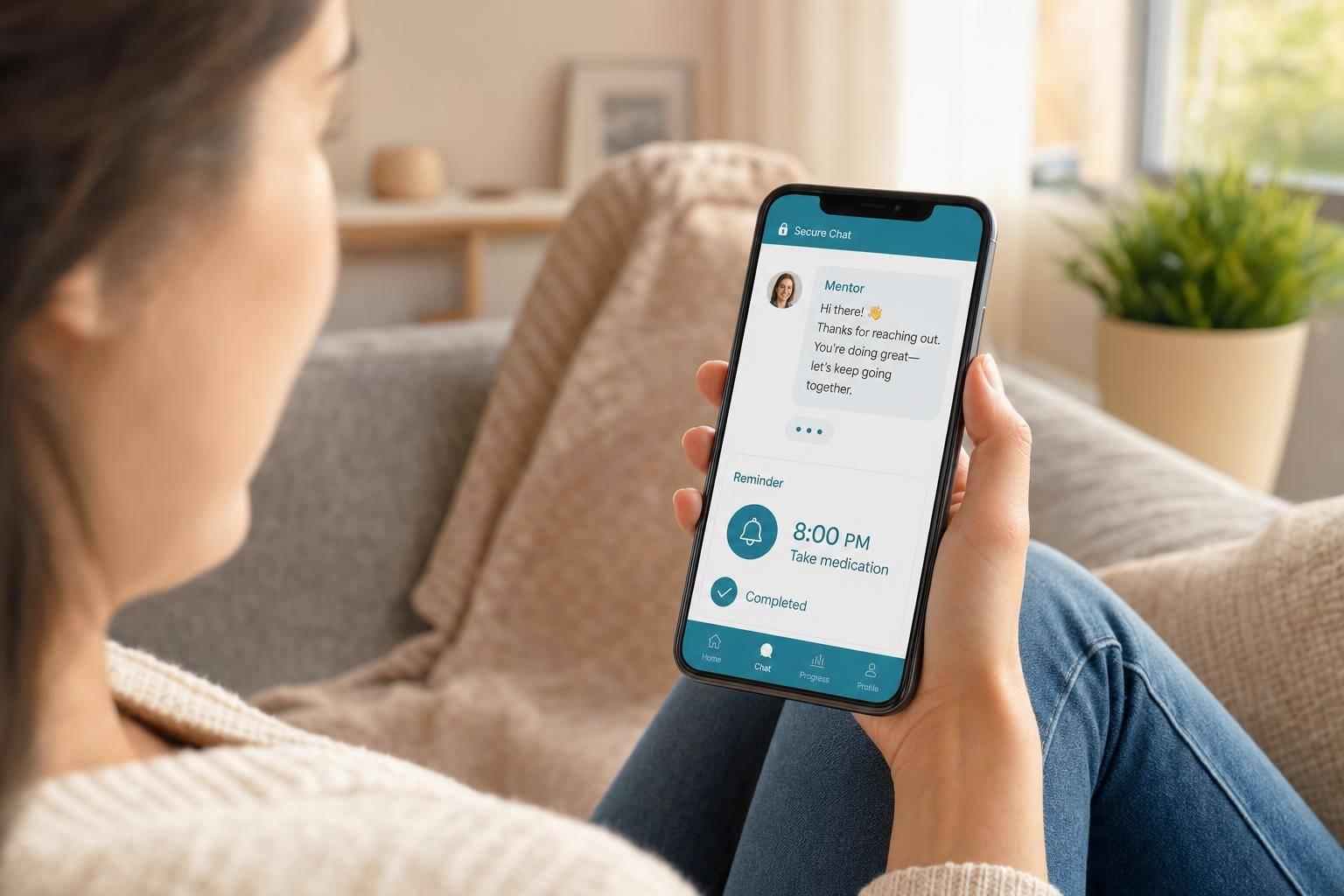
Patients often stop or delay treatment because help comes too late. Mobile support can fix part of that gap by giving people a simple way to ask questions, get reminders, and talk with staff or mentors from their phones.
Here’s the short version:
- 20% to 30% of new prescriptions are never filled
- About 50% of patients on long-term treatment do not take medicine as directed
- 46% of patients say they are left to figure out treatment on their own
- 17.6% of portal messages get no reply within 36 hours
- 62% of patients say long hold times stop them from contacting their provider
For me, the main takeaway is simple: when support is easy to reach, patients are more likely to stay on track. Mobile tools can help with:
- Secure messaging for non-emergency questions
- Reminders for doses, refills, and follow-up steps
- Short education messages sent at the right time
- Live mentor or staff support for reassurance and guidance
- Clear response rules so patients know when they’ll hear back
This article also points out a key difference between phone-only support and mobile support: phone systems often mean hold times, callbacks, and missed messages, while mobile tools fit more easily into daily life and give care teams a better view of where patients get stuck.
Using Mobile Health Tools
sbb-itb-8f61039
Quick Comparison
| Area | Phone-Only Support | Real-Time Mobile Support |
|---|---|---|
| Access | Often limited to office hours | Available through mobile tools any time |
| Help speed | Hold times and callbacks | Chat, alerts, and self-service options |
| Patient effort | High; patients must stop and call | Lower; support fits into daily routines |
| Adherence help | Mostly after a problem starts | Reminders and timely check-ins |
| Visibility for care teams | Limited | Better view of patient activity and drop-off points |
If I had to sum it up in one line, it would be this: mobile support helps patients get answers sooner, feel less alone, and stick with treatment more often through personalized mentorship and digital tools.
What Patients Face Without Mobile Access
A lot of patient questions show up after hours, when the office is closed and help feels out of reach. And when support only exists during business hours, a small concern can snowball fast.
Delayed Answers Raise Anxiety and Slow Treatment
If a patient notices a side effect at 9:00 p.m. or forgets dosing instructions on a Saturday morning, waiting until the next business day can feel like a long time. That gap creates stress. It also makes patients more likely to pause treatment or miss a dose.
The numbers back that up: 46% say they are left alone to figure out treatment, and only 17% feel empowered to advocate for themselves in the current healthcare system.
In-Person-Only Support Adds Time and Cost Burdens
When support depends fully on in-person visits, patients have to clear a few hurdles just to get help. That can mean:
- Long travel distances
- Transportation costs
- Time away from work
For people in rural or underserved areas, those hurdles are even harder to deal with. Getting care isn't just about asking a question. It's about whether someone can afford the trip, make the time, and get there at all.
Fragmented Communication Leads to Missed Doses and Drop-Off
Phone calls that go to voicemail and portal messages that sit unread leave patients stuck in limbo. And that kind of broken communication has a direct effect on treatment.
17.6% of patient portal messages receive no response within 36 hours. On top of that, 62% of patients say long hold times discourage them from contacting their provider altogether.
When answers don't come, confusion grows. A simple question about side effects, timing, or dosing can turn into a missed dose or stopping treatment altogether.
These gaps make the case for real-time mobile support pretty clear.
How Real-Time Mobile Support Addresses These Problems
Real-time mobile support helps close these gaps with faster answers, timed reminders, and person-to-person guidance. In practice, that means patients get help closer to the moment they need it instead of trying to piece things together on their own.
On-Demand Guidance Helps Patients Act Faster
When a patient notices something unusual and can't reach the care team right away, secure mobile chat gives them a fast way to get answers to non-emergency questions. Average response times for non-emergency questions through secure mobile chat are usually under 4 hours, compared to 24 to 48 hours for a return call on standard office phone lines.
That difference matters. A shorter wait means less guessing and less stress. It also helps patients make a clearer call on what to do next: wait and watch, send a message, or get urgent care. The same mobile channel can also send education and reminders right when they make the most sense.
Mobile Education and Reminders Improve Follow-Through
Mobile platforms can send short, stage-based instructions at the exact point patients need them. For example, a message like "Day 3: What to expect with your incision" is much more useful than a broad brochure someone read weeks earlier.
Reminders work the same way. A prompt such as "Tuesday, July 14 at 9:00 AM - Take your medication" cuts down on confusion and makes the next step clear. Programs that use this approach have shown a 25% increase in adherence. And for some patients, information alone still isn't enough. That's where mentorship comes in.
Real-Time Mentorship Adds Human Reassurance
Peer mentorship’s impact on patient decision making brings a level of reassurance that instructions by themselves often can't provide. PatientPartner connects patients with experienced mentors who can guide them in real time through a mobile interface, helping reduce fear and support long-term adherence throughout the treatment journey.
Patient Benefits and Program Value of Mobile Real-Time Support
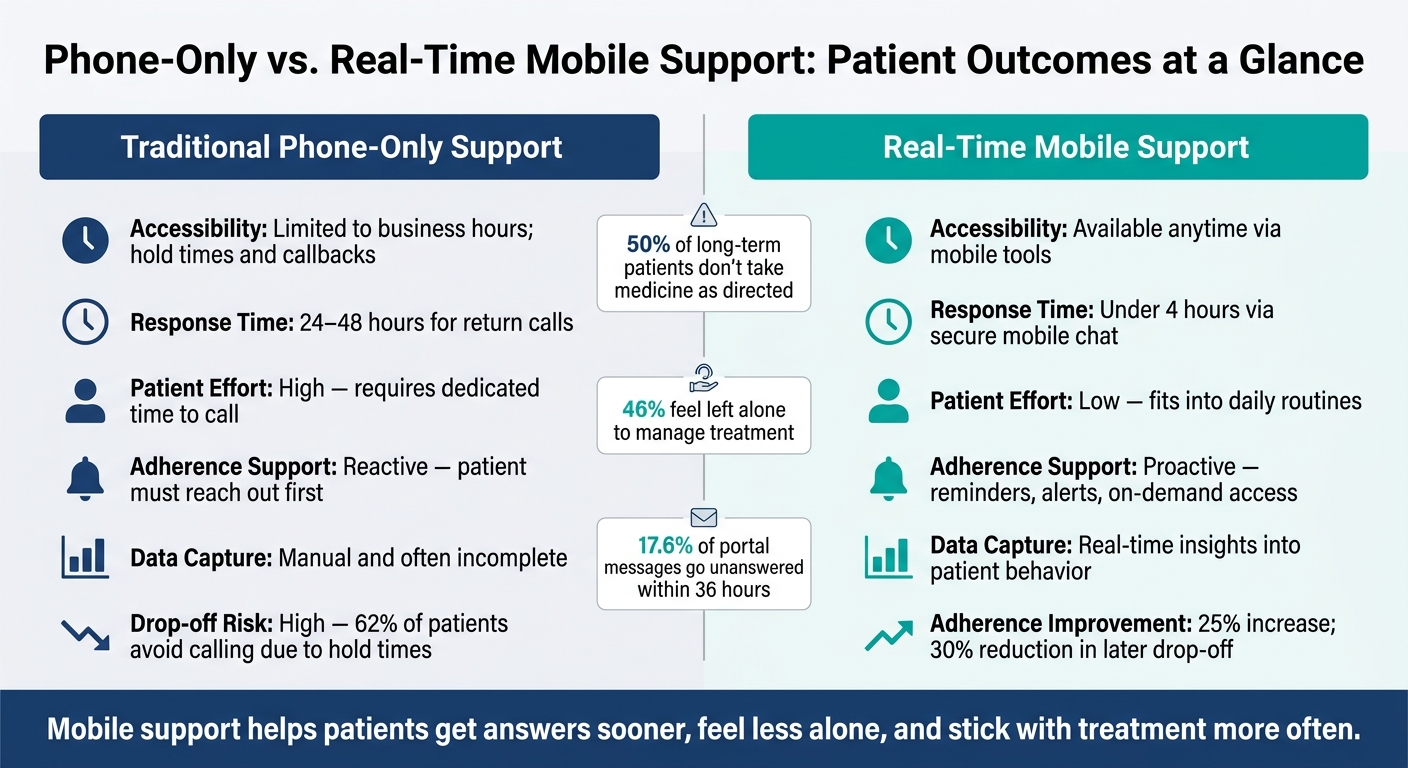
Phone-Only vs. Real-Time Mobile Support: Patient Outcomes at a Glance
Those patient-facing gains show up in the numbers enterprise teams care about most. Real-time mobile support can improve patient experience while also moving the metrics organizations watch closely: faster help, fewer delays, and stronger follow-through.
Higher Confidence, Better Adherence, and Lower Drop-Off
Mobile support focuses on one of the biggest risk points in the patient journey: the stretch between prescription and first use. Mobile support can reduce first-fill drop-off by 2% to 6% and later drop-off by 30%. Those numbers point to fewer early drop-offs and longer persistence.
When patients can get answers fast, message a nurse or case manager, or get affordability support without sitting on hold, the whole process feels less heavy. They know what to do next. And that sense of control often leads to better follow-through.
More Personalized Support Across Diverse U.S. Patient Groups
Phone-only support leaves a lot of patients waiting too long for help. SMS, mobile web, and apps make it easier to reach people with different language needs, reading levels, and device habits. It also gives teams a clearer view of where patients slow down or stop.
Phone-Only Support vs. Real-Time Mobile Support: A Side-by-Side Look
The gap between phone-only and mobile-first support is easiest to see when you line them up across the areas that matter most for patient outcomes.
| Feature | Traditional Phone-Only Support | Real-Time Mobile Support |
|---|---|---|
| Accessibility & Response Speed | Limited to business hours; involves hold times or callbacks | Always-available self-service access with real-time chat and instant alerts |
| Patient Experience | High friction; requires dedicated time for calls | Smooth; fits into daily routines |
| Adherence Support | Reactive; relies on the patient reaching out | Proactive; uses reminders, alerts, and on-demand access |
| Data Capture | Manual and often incomplete | Real-time insights into patient behavior and service usage |
Those insights should guide program design, especially when teams set usability and response standards.
What to Consider When Building a Mobile Support Program
Usability, Privacy, and Clear Response Standards
Those upsides depend on how the mobile program is set up.
A mobile support program only works if patients can use it fast, without friction. That means large tap targets, fast load times, simple navigation, and simple workflows across iPhone and Android. The language matters too. Use plain U.S. English, and spell out medical terms instead of assuming patients will know them. Accessibility also needs to be built in from the start, including screen reader support, readable color contrast, and adjustable text size so patients with different abilities can use it.
Privacy can't be treated as an afterthought. Secure messaging can be HIPAA-compliant, but teams should complete a prelaunch risk analysis so the right controls match the use case. That usually means encryption, authentication, access controls, and audit logs. Before protected health information is shared through mobile messaging, document consent and give patients a simple way to opt out or manage their preferences.
Teams also need clear response standards. Patients shouldn't have to guess who will reply, how long it may take, when coverage is available, or what happens if symptoms feel urgent. Clear standards cut uncertainty and help patients feel comfortable using the channel.
How PatientPartner Supports Enterprise Patient Programs
For enterprise teams, the next step is figuring out how to deliver this kind of support at scale.
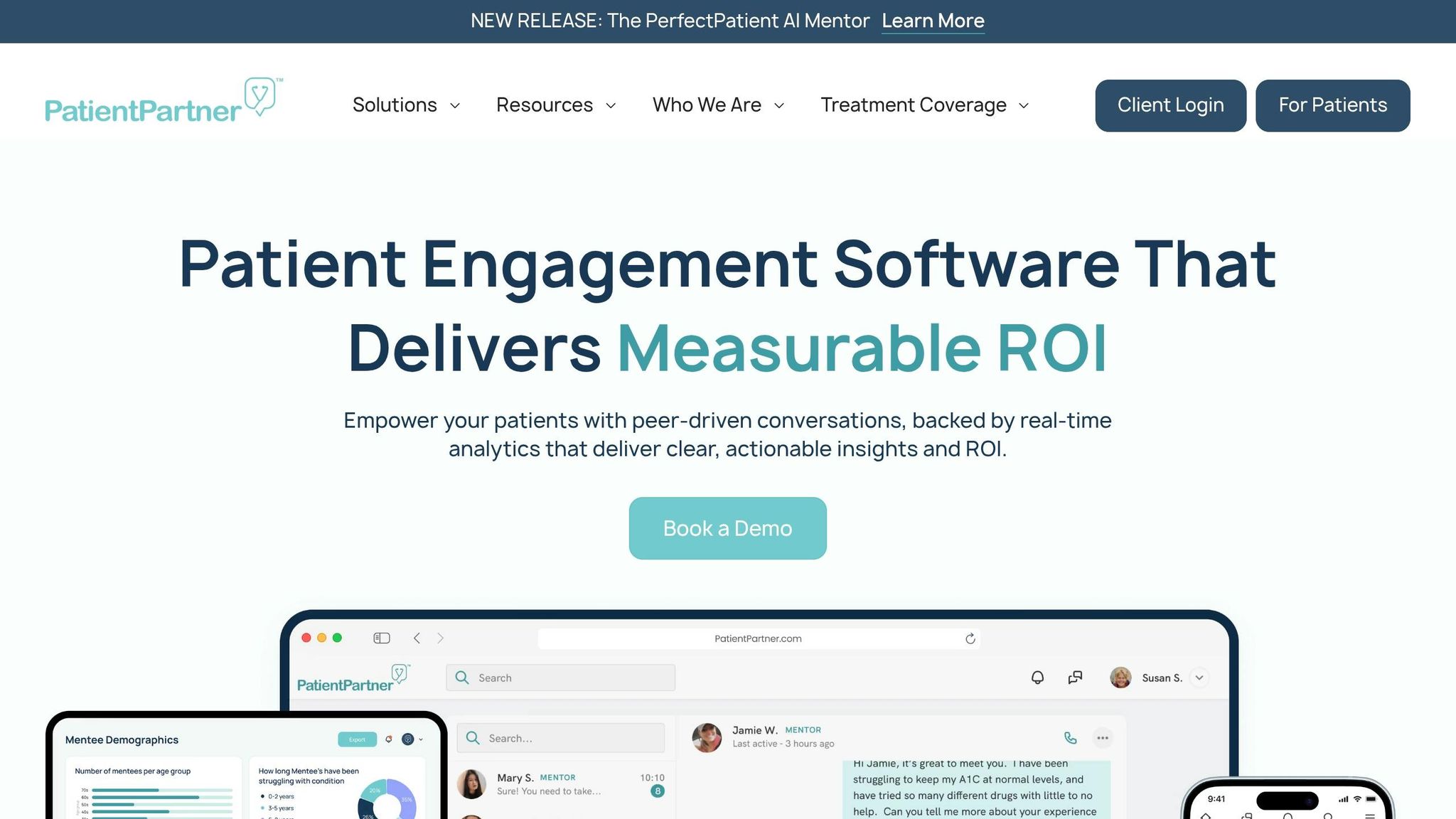
PatientPartner is an pharma marketing services and digital solutions for enterprise teams. It connects patients with mentors who provide real-time guidance from treatment start through long-term adherence. PatientPartner supports new patient starts, improves treatment adoption, and provides sentiment analytics that show where patients slow down or disengage - helping program managers step in before drop-off happens.
Conclusion: Mobile Access Makes Patient Support Faster and More Human
Once those basics are in place, the patient experience becomes much easier to trust and use.
Without mobile access, patients often deal with delays between appointments, scattered communication, and unanswered questions. Those gaps may seem small, but they can quietly lead to drop-off. With real-time mobile support, patients get faster answers, clearer next steps, and the kind of human reassurance that helps them stay confident and engaged with treatment.
Automation handles reminders and routine questions. For more advanced engagement, an AI mentor can provide empathetic, compliant support at scale. Mentors step in for moments that call for empathy and lived experience. Together, that mix makes mobile support faster, clearer, and more human.
FAQs
Is mobile support for emergencies?
No. Mobile support is not meant for medical emergencies.
Instead, it gives patients steady help throughout their healthcare journey. That can include remote monitoring, educational resources, and mentorship, such as guidance from PatientPartner.
In plain terms, it helps patients handle treatment, deal with side effects, and stay on track with care plans when they’re outside formal clinical hours.
What makes mobile support better than phone-only help?
Mobile support fits into patients’ daily routines instead of locking them into scheduled calls. That’s the big shift. Rather than relying on phone-only help, patients can get 24/7 access to information, secure messaging, and on-demand resources right from their devices.
It also cuts down on phone tag, which makes day-to-day support feel a lot less frustrating. When a problem comes up, patients can get guidance in the moment instead of waiting for the next call. Features like real-time tracking, automated reminders, and mentorship through PatientPartner make support feel more personal and steady.
How can mobile reminders improve adherence?
Mobile reminders help people stick to treatment plans because they cut down on forgetfulness, which is a major reason for non-compliance.
Automated alerts such as text messages, emails, and push notifications can prompt patients to:
- take medications
- log vitals
- track symptoms
- complete daily exercises
The timing matters. These prompts make it easier to weave treatment into everyday routines instead of letting it slip through the cracks.
PatientPartner also helps with adherence by connecting patients with experienced mentors who can offer personalized guidance.